Philippine Pavilion’s ‘Structures of Mutual Support’: From the Biennale to Bulacan
From an old armory in Venice to a barangay in Angat, the award-winning community library goes home to the people who helped build it.
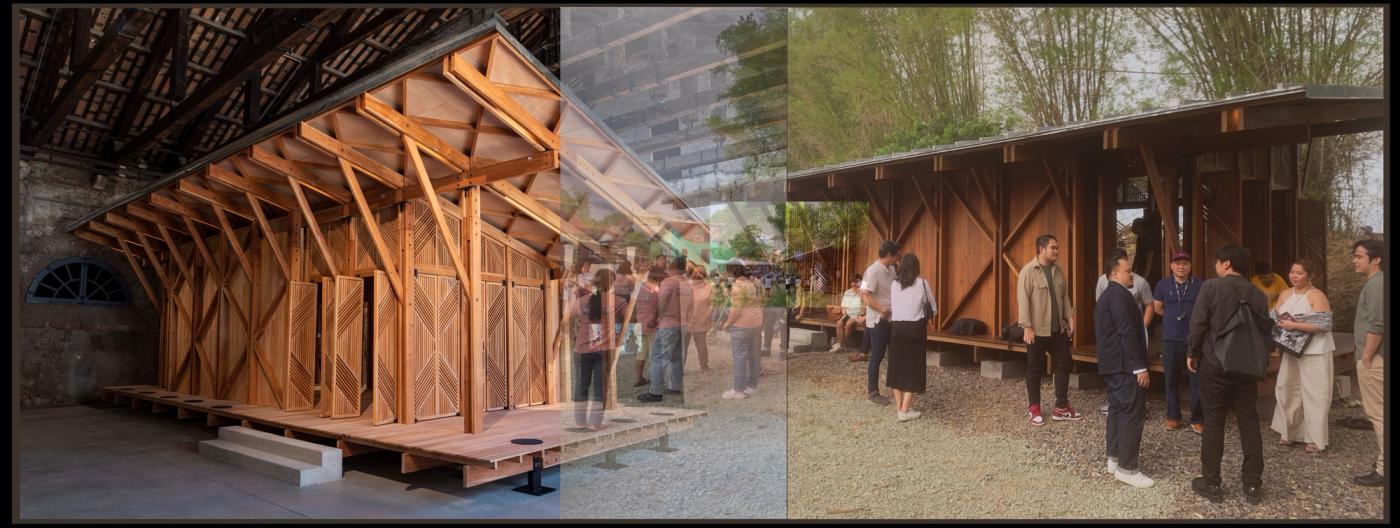
ANGAT, Bulacan — How architecture is realized, materializes out of blueprints and AutoCAD interfaces, and goes beyond the aesthetic and the theoretical illustrates that, at its core, it is a practical discipline. A piece of architecture is defined by its context and the circumstance in which it finds itself, and yet somehow transcends it and becomes something entirely different as defined by the people for which it was built.
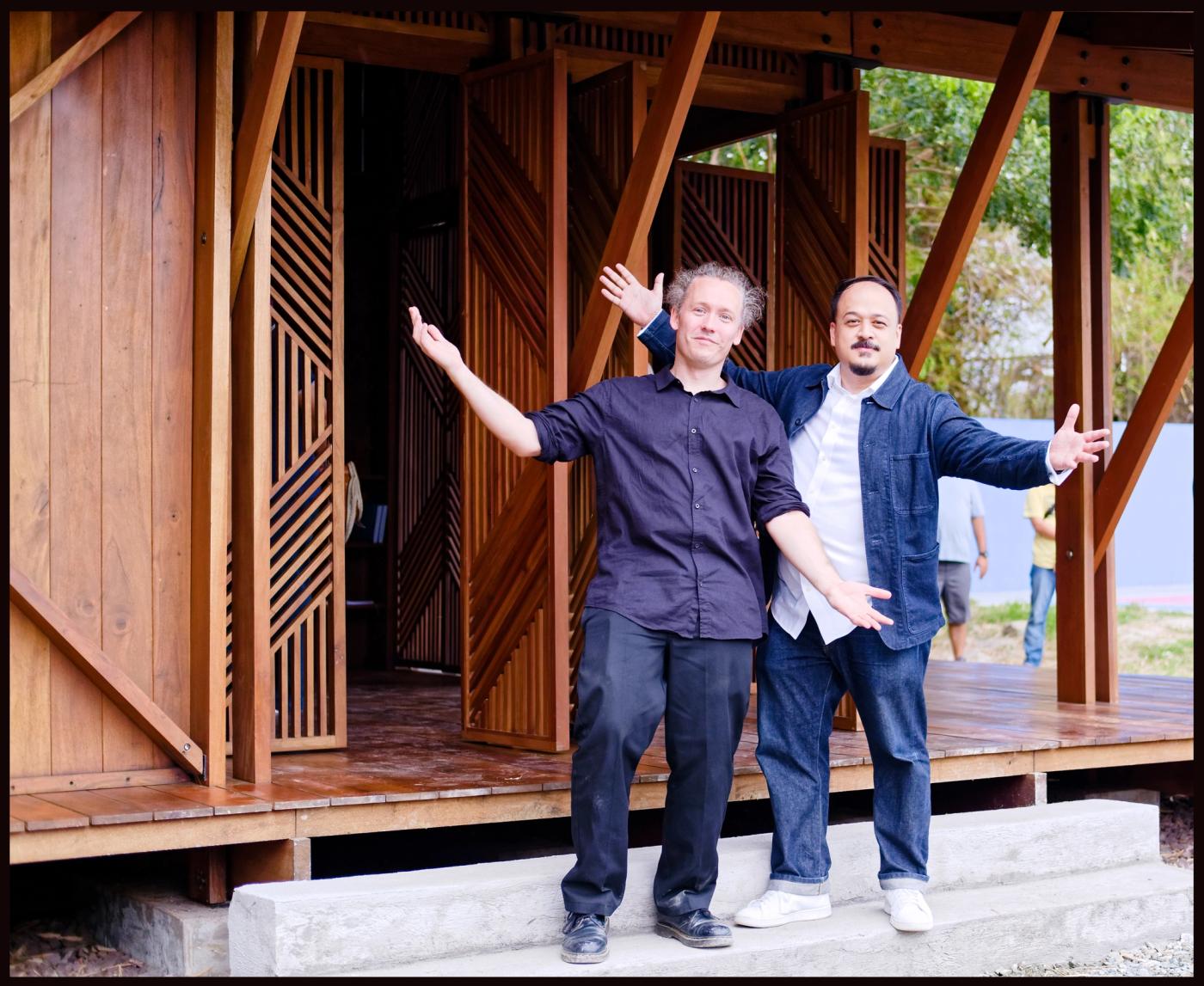
“Structures of Mutual Support” — the featured exhibition of the Philippine Pavilion at the 17th Venice Architecture Biennale in 2021 — has had a long, strangely captivating history. The curators of the winning project proposal, architects Sudarshan Khadka Jr. and Alexander Eriksson Furunes, worked with the Gawad Kalinga Enchanted Farm in Bulacan from Oct. 21 to Nov. 28, 2019, gathering members of the community and conducting a series of workshops where they exchanged knowledge and had open discussions. This allowed the curator-architects to conceptualize, reflect and ultimately build a structure for the community. A community library was constructed, dismantled, packed and shipped to Venice, Italy on March 6, 2020.
And then COVID hit. There transpired a series of postponements to the opening of the biennale. On the day of the vernissage a year later, National Pavilions were allowed to have opening ceremonies in designated areas in the Arsenale and Giardini, but only with limited audience count. The tempestuous process had a triumphant outcome with the Philippines receiving its first-ever award at the biennale with a Special Mention for “its exemplary community project promoting collaborative construction practices.”
So, from one context to another: “Structures of Mutual Support” goes from being exhibited in an old converted armory called the Artiglierie in the floating city of Venice, to its intended site in Barangay Encanto in Angat near a basketball court put up by the NBA Cares program.
Interesting how a community library was bestowed its own storybook conclusion.
“We’d like to think that the journey or the homecoming is actually, in a way, just a beginning,” points out Sudar. “This is really something that goes beyond us. It’s for the community. We hope that it becomes a part of the life of Gawad Kalinga itself.”
He adds how their design has no finality. It also grows with the way the community changes.
Eriksson agrees. “Everything is a process. So, this one will have a continuous life as well and will change and adapt.”
Sudar points out how buildings are frameworks, flexible. “It’s all about creating that space where people understand how the building was created. It’s not only (a product) of our minds, but theirs as well.”
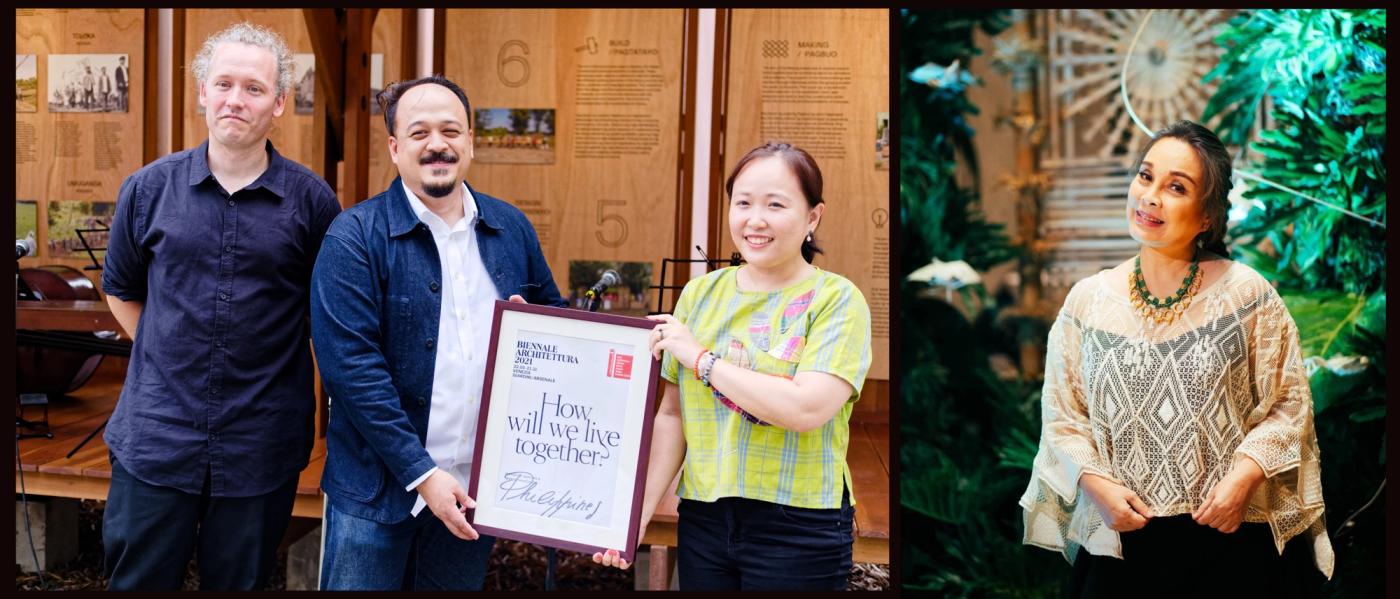
“‘Structures of Mutual Support’ stands as a powerful symbol of what we can achieve through collaboration and community spirit,” explains Senator Loren Legarda, the visionary behind the Philippines’ participation in the Venice Biennale. “This project not only reflects our rich cultural heritage but also our commitment to sustainable development and environmental stewardship. As we welcome it back to the Gawad Kalinga Enchanted Farm, we celebrate the collective effort and shared vision that brought this remarkable structure to life.”
Victorino “Ino” Manalo, chair of the National Commission for Culture and the Arts (NCCA) says, “The NCCA commends the Gawad Kalinga Enchanted Farm community and the curators for their innovative approach to architectural praxis, and we look forward to seeing the positive impact of this exhibition on the community.”
For Eriksson, the starting point was talking about bayanihan, which epitomizes the spirit of mutual support and collective action, and its implications in current events as well as in the future. “How can the making of this building help us rethink what the bayanihan practice can be for us as a community.”
Interesting to note how the ritual of gathering as well as fostering and functioning within a community had been put in peril during the corona crisis. Eriksson explains, “We started this before, during and after COVID…it seemed like an entire lifetime. Seeing how society was closing down for a period, it (underscored) how important it is to have these collective practices — working together and helping each other out when things fall apart. I think there is a global relevance to it.”
Sudar sees another aspect of the practice. “We theorize about the process of coming together during a disaster — we say it, but sometimes we don’t really feel it. But when the time came to put it into practice, the term ‘bayanihan’ and the Norwegian ‘dugnad’ really hit home. The term ‘mutual support’ became part of the national discussion.”
To go from the Biennale to Bulacan, Sudar calls it a “long but beautiful journey.” For the curator-architects, for the supporters of the Philippine participation in the Venice Biennale (the National Commission for Culture and the Arts or NCCA, the Office of Senator Loren Legarda, et al), and for the people in the Gawad Kalinga community, the structures themselves only tell half of the story.
Eriksson concludes, “The things that we make possess a different value when we make them collectively. I hope this library will help us remember that we did this together.”
Inside the library, a boy from the community picks up a book and starts perusing. So begins another journey.
A version of this story first appeared in The Philippine Star, 2024. Print edition.


