Nick Lizaso: 10,000 stories and one heart for the masses
After a life on stage and screen, the NCCA chairman calls himself simply an audience member now, watching people watch performances.
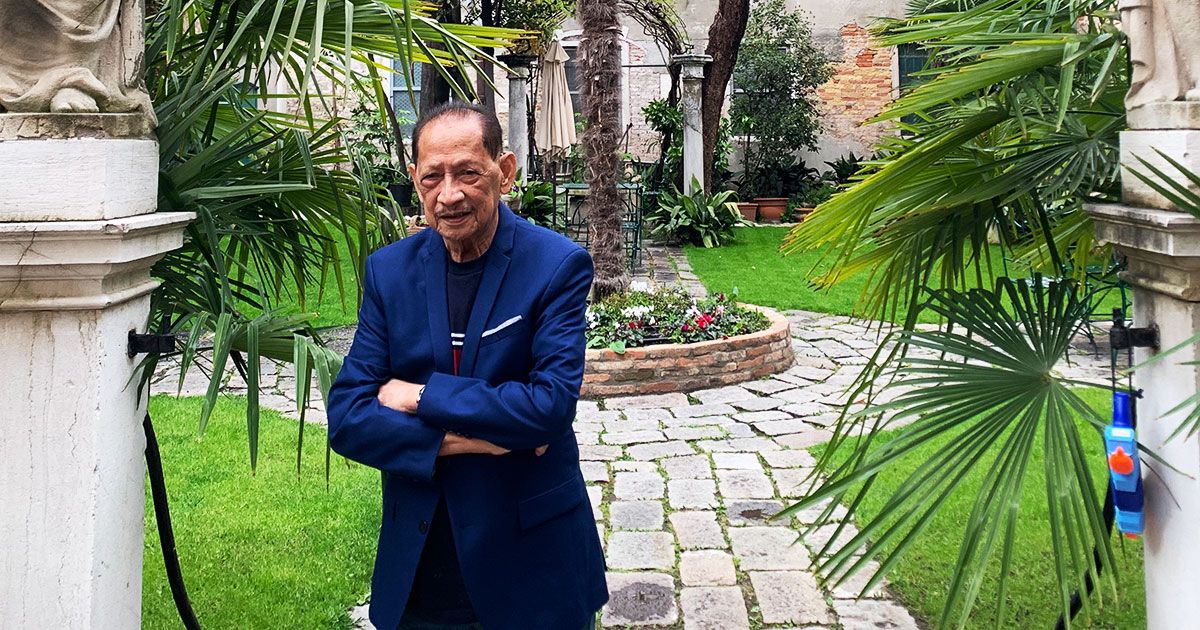
We are in a city where there is a whiff of both the immortal and the ephemeral.
Venice, they say, is sinking; even if the city has been battling rising waters since the fifth century. Imagine a future world without it (only crumbling cities inhabited by people with dry mouths and crushed hearts). But the artworks here and inspired by its gloriousness are unsinkable. Traces of artistic presences still roam its piazzas, immovable ghosts of what everything was. Time is measured differently in its ever-flowing canals and sighing bridges. An afternoon with Arsenio “Nick” Lizaso, chairman of the National Commission for Culture and the Arts (NCCA) and commissioner of the Philippine Pavilion at the Venice Biennale, stretches into infinity with fascinating stories and his life’s dramatis personae.
My Fair Lady at the Assumption Convent’s Mother Rose Hall directed by Fr. James Reuter started it all for Nick, who played Prof. Henry Higgins. Doors opened when he became the recipient of art grants. In America, he was able to watch Lee Strasberg (the mentor to De Niro and Pacino) at the Actors Studio. In Britain, he had access to the Aldwych Theatre to watch the Royal Shakespeare Company. In Stratford-upon-Avon (the birthplace of Shakespeare), Lizaso watched everything from rehearsals to plays and marveled at the fog so thick it felt like clouds on the ground. Think of all the actors he met and saw through the years — such as Paul Newman and James Dean in NYC. Nick was in the front row six times as Laurence Olivier played Othello (which, according to the actor, was not “blackface” in the minstrel-like sense); Anthony Hopkins also, at The Old Vic. Back in Manila, when Cecile Guidote (-Alvarez) recruited Lizaso for her show Balintataw to work alongside Lupita Aquino (-Kashiwahara), the man never looked back. His entire world revolved around acting and directing, even co-founding the first directors’ guild in the country.
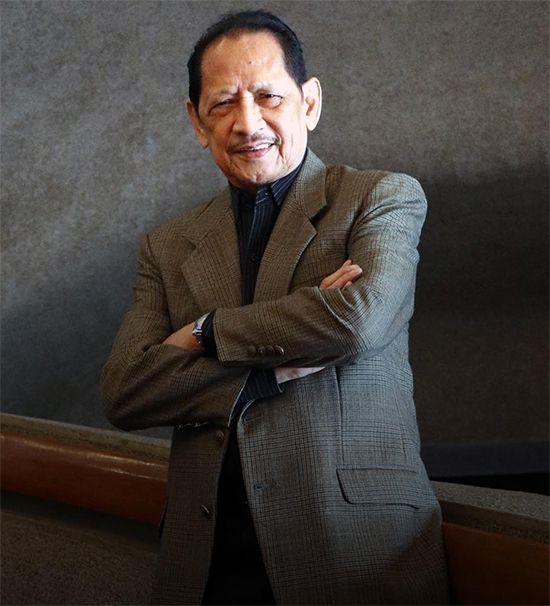
But his most treasured and inspiring role, so far, is helming the NCCA in its crusade of bringing art closer to the Filipino masses.
When Lapulapu, Ang Datu ng Mactan was staged at the newly conserved Metropolitan Theatre (MET) in Manila in October 2021 while the country was still reeling from the pandemic and its attendant restrictions, Lizaso was the only audience member. “Napaiyak ako,” confesses Lizaso, adding that more Filipinos should be able to watch theatrical productions at this level. “Audiences elevate the performance.”
Lizaso should know, having been an actor-director himself for many decades. But being an agent of culture is ultimately more challenging, especially when your advocacy centers around making performances accessible to all.
“When we tour around the country with CCP (Cultural Center of the Philippines), PPO (Philippine Philharmonic Orchestra), Ballet Philippines, and Bayanihan, etc., we always tell the audience: Ito pong mga kasama ko ay hindi mga musiko or mananayaw lamang, sila po ay mga guro at mga alagad ng sining na nakapaglakbay na sa iba’t-ibang bansa. At hindi po sila magiging ganyan kung hindi dahil sa inyo. Kayo po ang nagbabayad ng taxes. At dahil hindi kayo makarating sa Cultural Center, kami po ang pumupunta sa inyo. Because they belong to you.”
Who knows, mulls Lizaso, it might inspire the children of the people in the provinces they visit to consider a career in the arts.
“I do not look at the performers; I look at the audience,” he shares. “Kasi nakikita ko sila na masaya — nakangiti, pumapalakpak. Sa Lipa, Loboc, Antique, Iloilo, Davao, Nueva Ecija, Baguio, kahit saan kami magpunta. Nung pumunta kami sa Bacolod, may mga umupo at nanood sa may damuhan. Yung isang babae dun ay market vendor daw siya. Ay tuwang-tuwa ako. Market vendors, tricycle drivers, students, 15,000 of them — sama-sama. Saan mo makukuha ang ganung klaseng fulfillment?”
CCP and NCCA chairpersons come and go, but is there a continuity of programs to ensure that whatever good was initiated will be continued well after the changing of the guards?
“I don’t think so. (To be an agent of culture), you need to have a passion for people. Not if your passion is only for those na naka-barong Tagalog sa lobby ng Cultural Center na every week sila rin ang audience mo,” laments Lizaso, who says his focus has always been on outreach, outreach and outreach.
He remembers an orchestral concert staged in December 2021 by CCP in front of the Philippine Post Office (“PPO at PPO”). The lights went up and the audience — composed mostly of people living in and around the area — heard the most beautiful tunes in the most unusual of places. “Ang saya ko nun.”
With all his achievements on stage and on film, the NCCA chairman proudly proclaims that he is simply an audience member now, watching people watch performances.
With that, Nick Lizaso goes out into the garden of Palazzo Abadessa, and in an hour or so will walk the streets of Venice to be surrounded by waters, stars and stories.
A version of this story first appeared in The Philippine Star, 2022.


