Backstage at the Biennale
Talking art with the curator and artists of the Philippine Pavilion over liters of Birra Moretti in the beautiful sinking city.
VENICE, Italy — An artist, a curator and a musicologist walk into a bar… Wait, no punchlines are thrown around in this place called Bacarandino near the Arsenale, one of the sites for the 59th Venice Biennale along with the Giardini. Only discussions of that ever curiouser and curiouser concept of contemporary art, more confounding and confusing in this post(?)-pandemic age. (The plague may look “washed” in this part of Europe, what with Biennale attendees walking around mostly mask-less and unafraid, but we visiting Filipinos in this floating Italian city are still cautious. Cautious yet optimistic — buoyed by Aperol and the sight of the Canalazzo).
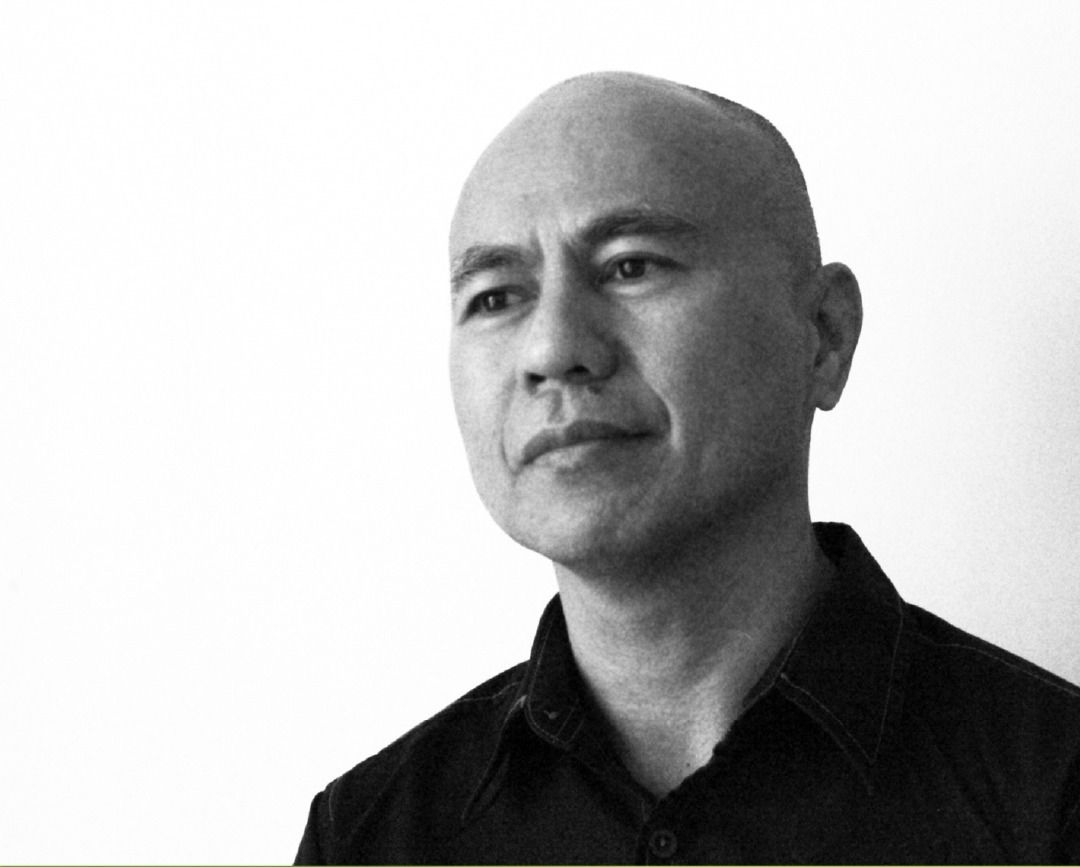
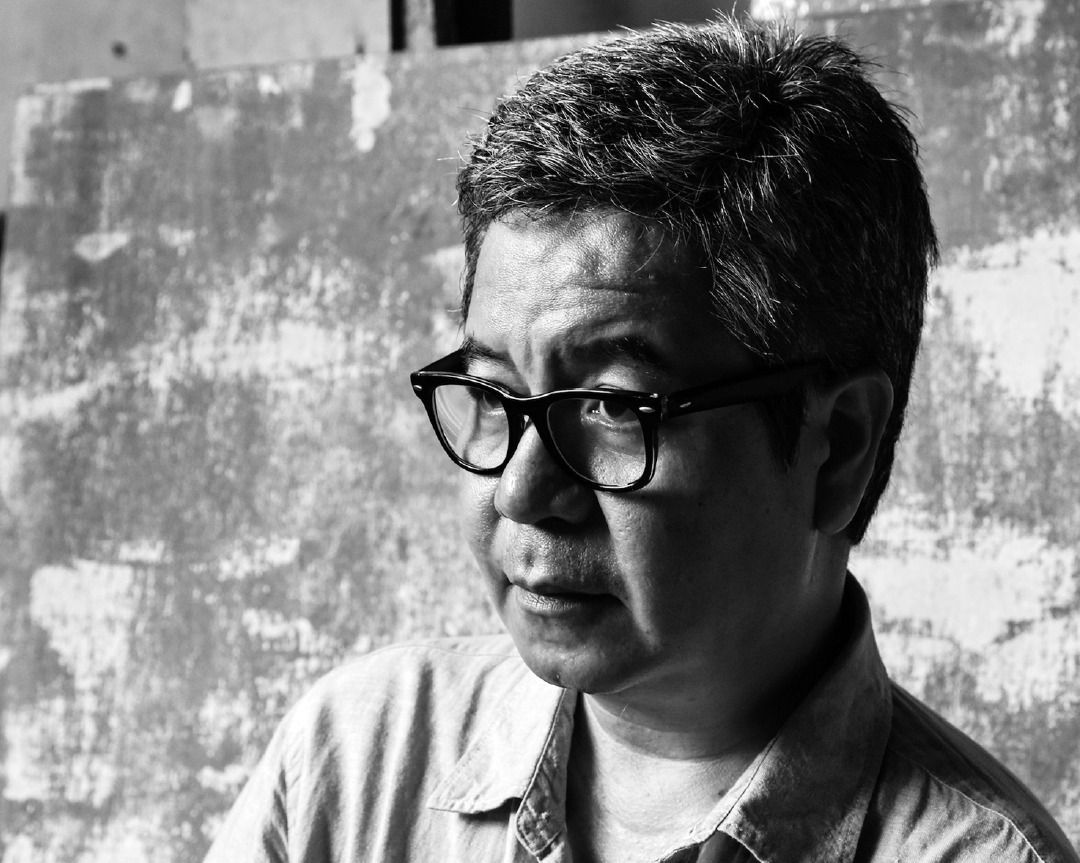
The artist present, Gerardo Tan, is not one to hawk around paintings of Filipino women in ternos, zero fracks being given to the paymasters of nostalgia. He is more of an artist who shapeshifts from one strategy into another. At one time, he used live chickens for an exhibit. The artist fed them every day so they could poop out, uhm, abstracts. And when asked to participate in a Berkeley show in California, Tan sent an envelope with a stamp that he painted himself. Inside it was a small note that said, “This is my work…” The title: “It’s Not Hard To Put a Painting in a Mailbox.” Just imagine how art traveled half a world away with a fake Philippine Butterfly stamp, a veritable err mail. His Golden Cargo gallery-of-sorts holds exhibitions of A4-size drawings by various artists in a bank’s safety deposit box. Tan says the security guards would look quizzically at him whenever he entered the bank with a stash of artworks. Who knows what else Gerry has up his sleeves?
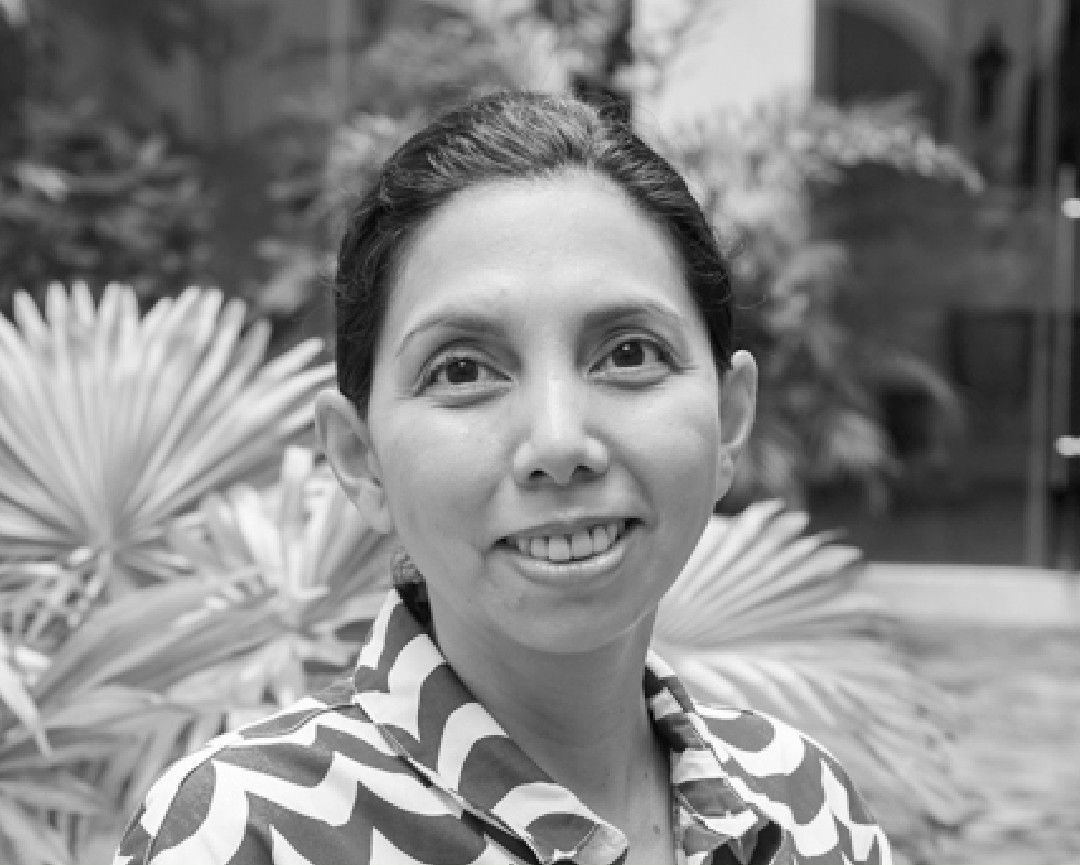
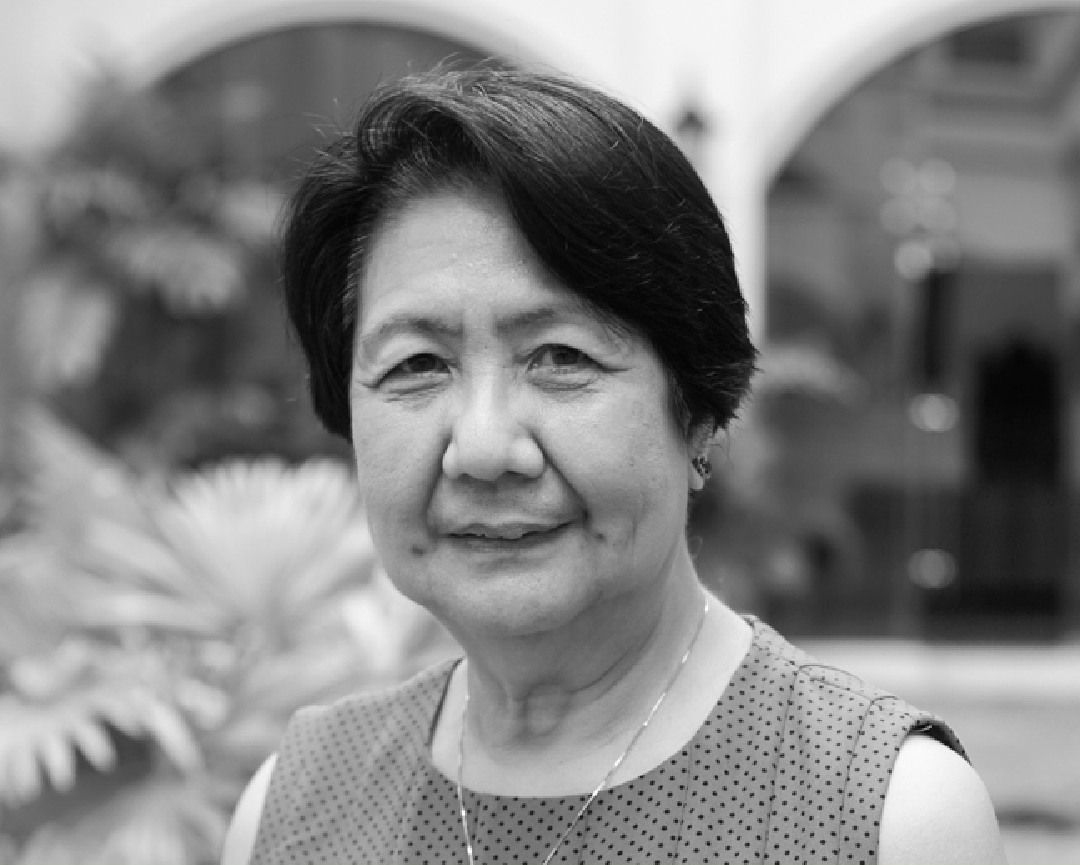
The musicologist, Felicidad Prudente, has scoured the archipelago to record indigenous music. Imagine a time where this classically trained music professor lugged around a reel-to-reel tape recorder to preserve various aspects of Philippine music: “epic singing, vocal polyphony and gong culture.” Her very first field assignment in ’74 involved recording the music of the Negritos of Mariveles, Bataan. There was a wedding ceremony (ambahan) and “they were chanting for several nights in their settlement.” For her masteral thesis, she journeyed to Cuyo Islands in Palawan to visit the Kuyunons. Her love of sonatas and symphonies composed by the German Stem gave way to a passion for tribal backbeats and ancestral grooves from the Mountain Province.
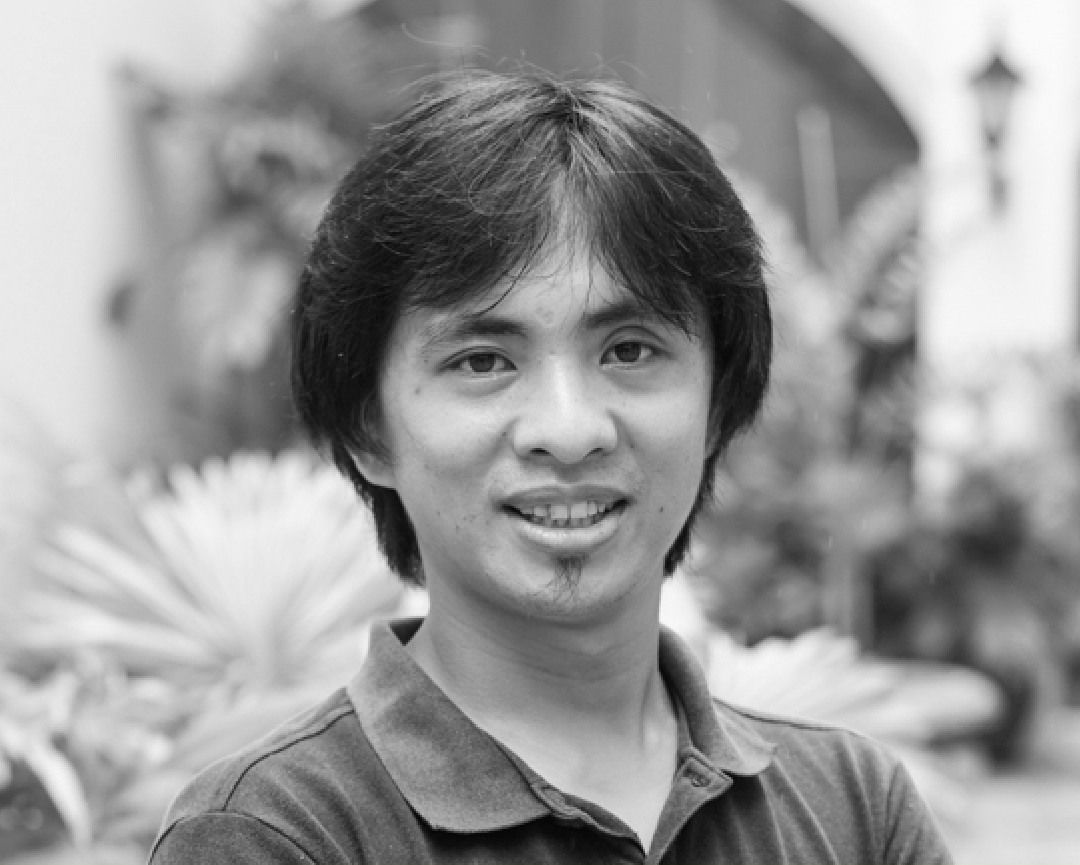
Along with master weaver Sammy Buhle, conceptual artist Gerry Tan and ethnomusicologist Fe Prudente are featured at the Philippine Pavilion in this year’s edition of the Venice Art Biennale. “Andi taku e sana, Amung taku di sana/All of us present, This is our gathering” is co-curated by Yael Buencamino-Borromeo with Arvin Flores, and it features the collaborative works of the aforementioned three. How Gerry, Fe and Yael found themselves in Venice for the “Milk of Dreams”-themed biennial curated by Cecilia Alemani which imagines — according to Artsy.net — “a future beyond the end of the world” is a long and winding weave. (The pandemic, the war in Ukraine, the revenge of the political Siths… it sure feels like the Dark Ages, only with TikTok and those pop-up Lazada-Shopee ads.)
First a description of the objects that are inside the pavilion, and afterwards we can go into what is beyond (within, above, behind) the objects themselves.
A two-video channel projection shows Tan’s tongue doing a painting in squid ink of Prudente’s transcription of a Madukayan chant. The “Speaking in Tongue” installation takes the phrase “painting language” to a whole new level. Or as Tan would naughtily say, he was merely being a “cunning linguist.”
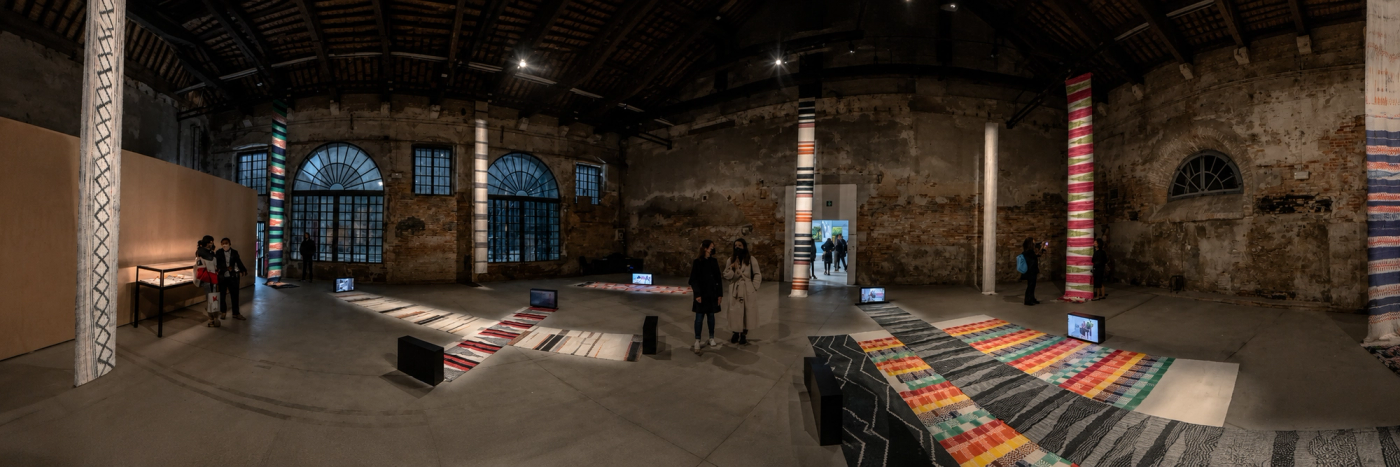
Pieces of intricately hand-woven textile collectively titled “Renderings” hang from the ceiling of the Artiglierie of the Arsenale while others are spread on the floor. Each of them hums a story, sings a particular tale.
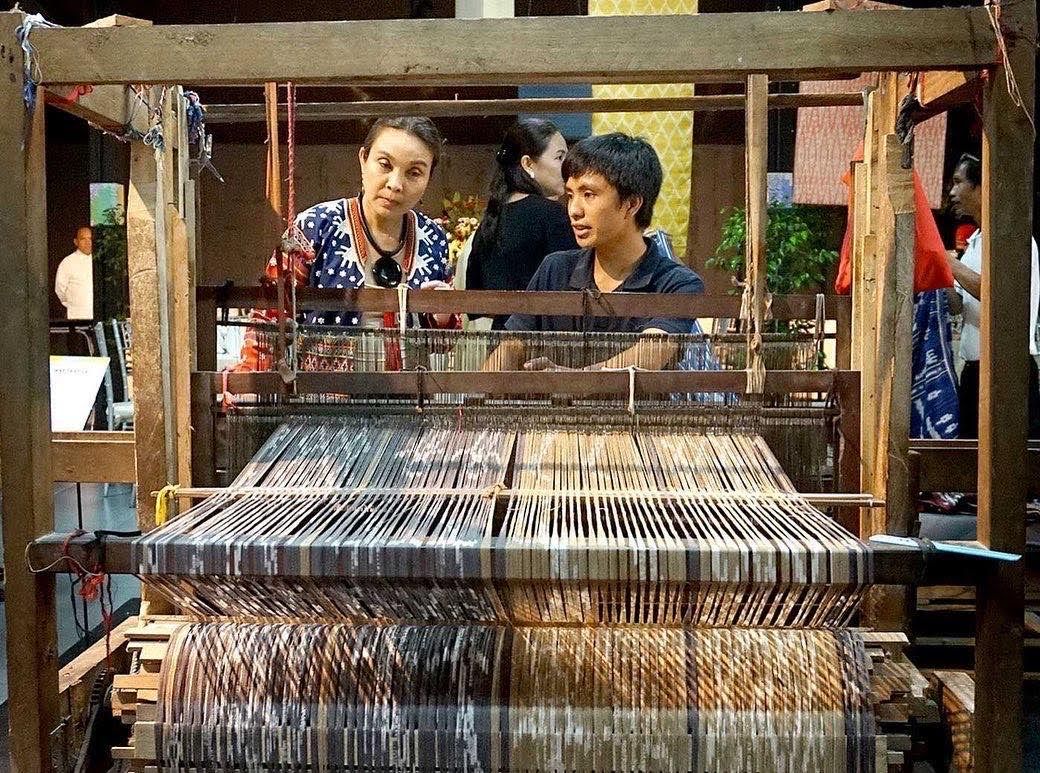
A couple of years back, Gerry Tan visited a pottery place and weaving house in Miag-ao, Iloilo and was mesmerized by the sound: the propulsive rhythms of the pedal loom. It reminded him of the minimalist music by Steve Reich or La Monte Young. He asked himself: “What if (the weavers) were weaving the sound that their looms were creating?” What if music were rendered visible? What if tapestry could intone? Tan approached Prudente to transcribe the bits of found sound he recorded. The latter was aware of non-western notation employed by the likes of John Cage and other avant-garde musicians; thus, in doing her transcription, she devised a simple pattern at first (solid color for loud, light color for soft, etc.) which would become more complex as work went on (putting a jingling sound symbol, for example, in the T’boli weave). The next step was asking master weaver Sammy Buhle to apply those patterns on a loom via the ikat method. The weaver quickly surmised that he could not proceed in the conventional sense, but should rather go rogue and think outside the box in this undertaking: improvisational, unconscious and, in effect, more revelatory. After all, the point is to encode the culture of weaving into fabric itself. The collaborative project became “Visualizing Sound,” which was on view in early 2019 at Jorge B. Vargas Museum. Yael attended the show and had the idea of submitting a proposal for the art biennale.
The rest, as they say, is woven into the fabric of art history.
Before the vernissage in Venice, the team had a lot of help back home in fleshing out their vision for the exhibition. Aside of course from Deputy Speaker and Congresswoman Loren Legarda and the members of the Philippine Arts in Venice Biennale Coordinating Committee (PAVB-CC) of the National Commission for Culture and the Arts (NCCA) who gave their 100 percent to the project, figures such as Manuel Ocampo, Jaime Ponce de Leon and Trickie Lopa gave their support. Migs Rosales, who helped with the exhibition layout, suggested that they put the large tapestry on the floor. The team was able to do a mock-up at the San Ignacio Church in Intramuros with the help of the PAVB. The layout went through several iterations and permutations before it became what is currently on view at the Arsenale until Nov. 27: textile, video monitors, and piped-in sound dominate the spaces of the old Italian armory. Indigenous and immediate at the same time.
How does the exhibition relate to the Venice Biennale theme of “Milk of Dreams”?
“Well, (our exhibition is) not linear, it’s cyclical, and there is the element of the unconscious…” answers Yael. “There is rationality to what is done, but what Gerry Tan thought of in reinterpreting sound… it’s instinctive.” There is something also surreal in the sense of the incongruous pairings in the “Andi taku e sana, Amung taku di sana” exhibition. As Tan puts it, “What does the tongue have to do with textile?”
Fe shares how the T’boli people from Lake Sebu are known as dream weavers: the designs of their T’nalak textile are brought to them in their dreams by Fu Dalu, the spirit of the abaca.
“Well, Sammy also dreamt when he was working on the T’boli weave,” interjects Gerry. “He dreamt that his work was already finished, but when he woke up it still was not done (laughs). (Maybe instead of ‘Milk of Dreams,’) it’s more like the ‘Squid Ink of Nightmares.’” All of us — the artist, the curator, the musicologist, and I the human tape recorder — laugh. Good to be talking about art and other artful threads over liters of Birra Moretti in this beautiful sinking city instead of the end of the world as we know it.
Sammy Buhle would finish the piece in time, though. And it would occupy a special spot in the Arsenale with its neighboring pavilions from Latvia with its porcelain oddities to Malta with its rain of fire. The weaver dreamt it into existence.

The Philippine participation at the 59th International Art Exhibition – La Biennale di Venezia is a collaborative undertaking of the National Commission for Culture and the Arts (NCCA), the Department of Foreign Affairs (DFA), and the Office of Deputy Speaker and Congresswoman Loren Legarda. The commissioner of the Philippine Pavilion is Arsenio “Nick” J. Lizaso, chairman of the NCCA. The Philippine Pavilion will also be made accessible through its digital programs and virtual tours. For information, visit philartsvenicebiennale.org. See updates on Facebook and Instagram via @philartsvenice.
A version of this story first appeared in The Philippine Star, 2022.


