People, events, dead centaurs, places
A family of dead centaurs in the Danish Pavilion, a German floor torn up to its Nazi-era joints: pavilion-hopping at the 59th Venice Biennale.
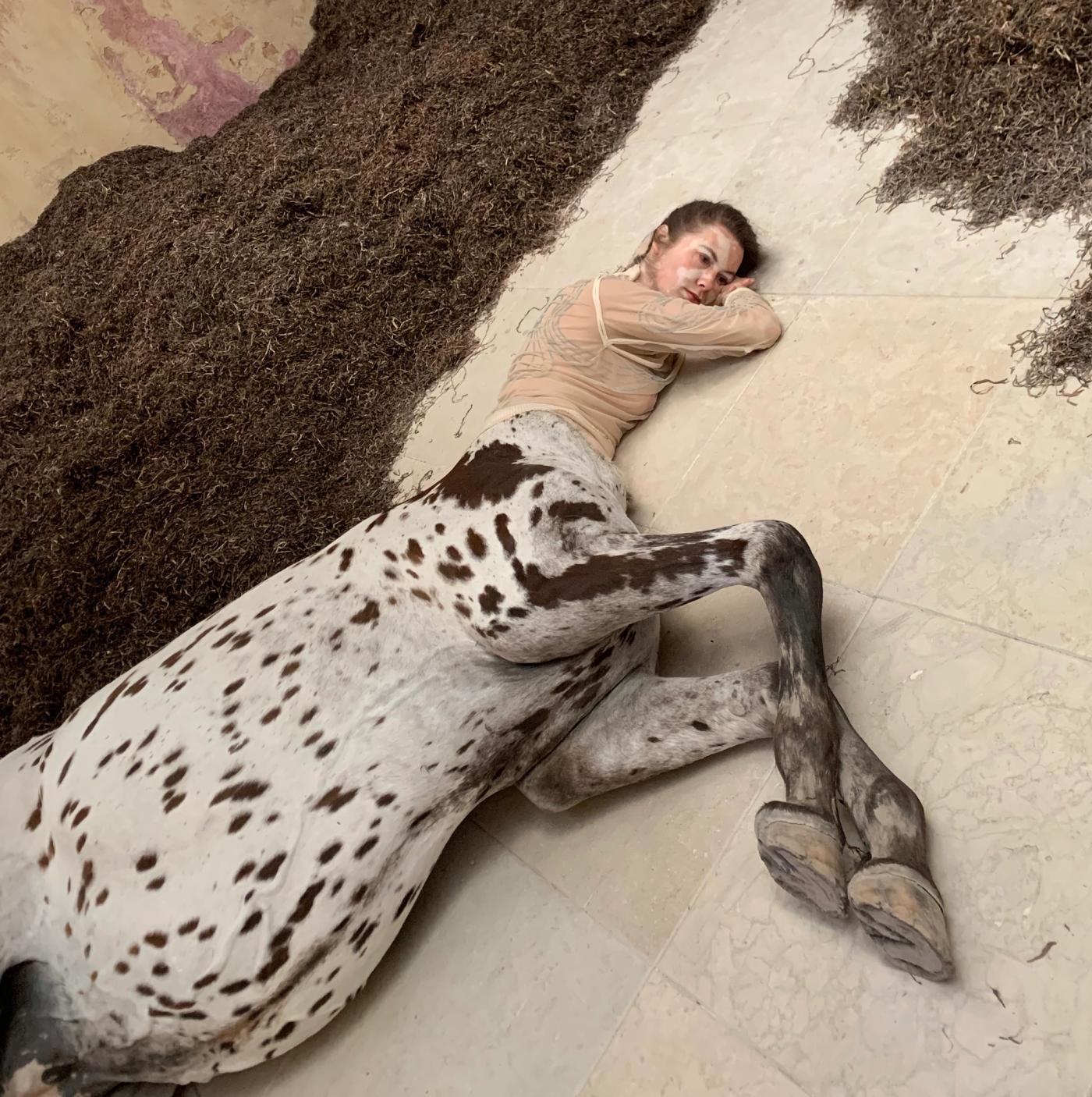
We were there and all was unwell.
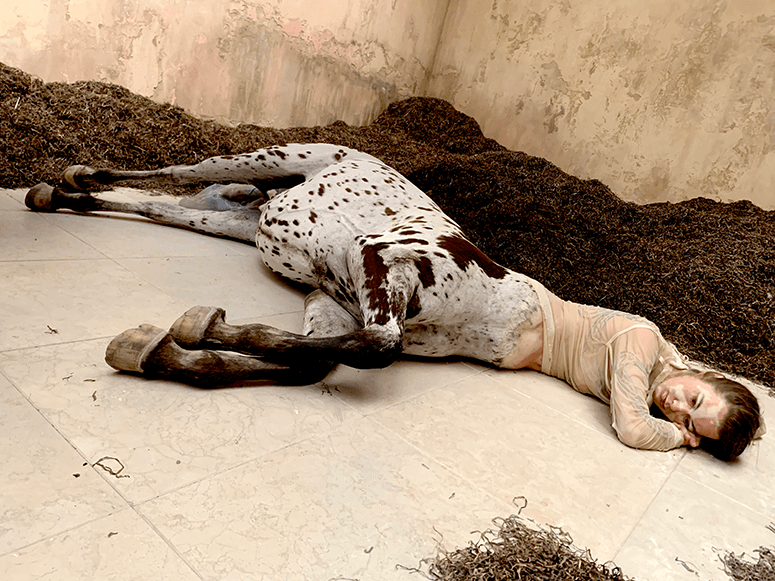
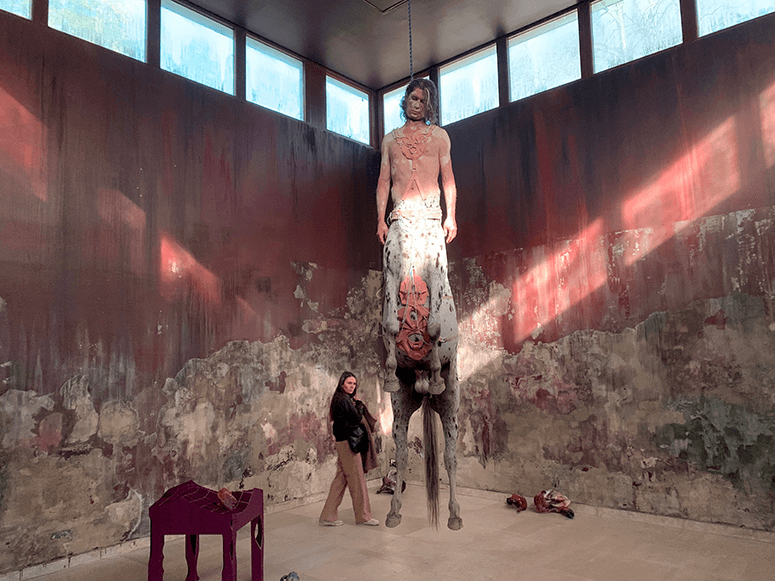
A dead centaur hung from the ceiling, unidentifiable organs strewn on the ground; the other had just given birth to a mutated hybrid, horse manure, and eelgrass edging the borders of that bizarro pastoral space. Lest you thought you had stumbled onto the set of an intriguing dystopian TV series that will never get made (while crap like The Rings of Power, She-Hulk: Attorney at Law, and another Star Wars bastardization get shoved down our throats) or, worse, installed yourself into a gothic, Nordic farmhouse from hell, rest easy that the centaurs were merely hyper-realistic sculptures. This is art, all right. And—unlike the wall décor of flowers, portraits of socialites, impasto abstracts, or the cutesy collectible creatures you would normally see in galleries in our own neck of the woods—it is art that makes you ask questions and encourages you to imagine rich, rich stories that go even beyond what the artist intended. Rorschach it all you want. Come to think of it, we all are half-human and half-something else. So, take note of the artist’s name: Uffe Isolotto. His installation at the Danish Pavilion titled We Walked The Earth—curated by Jacob Lillemose for the 59th Venice Art Biennale, which ended its run in November last year—was almost always jam-packed and we had to needle our way in to get a glimpse of the family of dead centaurs.
That was, in a mutant nutshell, our experience at the biennale. It was mostly awe-inspiring with smatterings of “WTF”: from the aforementioned presentation by the Danes to Maria Eichhorn’s “intervention” at the German Pavilion. Maybe “intervention to the structure that houses the pavilion itself” is the more apt yet dizzying phrase, what with the way the artist had parts of the floorings removed and walls stripped to expose the joints between the original architecture and the Nazi-era modification. Now that’s what you call site-specificity. (Back home, we have artists who consider their work “site-specific” when all they do is draw on walls, pffft.) The idea of actual excavation is important in this era where we all are getting buried under a pile of bullshit.
Society is becoming weirder and more alienating. Books in the speculative fiction section are becoming tomes of undeniable facts before our eyes, even prompting Margaret Atwood to tell The Guardian that she’s “sorry to have been so right.” Not so blessed is the fruit, all right. George Orwell must be fist-bumping Nostradamus in a pub at the edge of Infinity as the goat Muriel watches, always watches. The more you dig into old reruns of Twilight Zone, the more you realize this is, indeed, the eve of the end. It is the last two minutes of the fourth quarter and Russell Westbrook has the ball.
You have the banning and burning of books; the rise of more despotic leaders, the rampant crushing of dissent and curtailment of information; the systematically deranged curation of history, etc. “Everything happens so much,” as that horse meme so cryptically yet rightfully told us. Pretty soon we’ll probably meet up in Room 101 at the Ministry of Love. Bring snacks.
Curiously, artists either respond accordingly—make even weirder, even more polarizing, but still arresting art that approximates or even encapsulates what the hell is happening around us (Banksy, Ai Weiwei…. are more forthright than CNN or Fox). Others react as if the world is not at all burning. Thus, you get more and more collectibles, luxury items, and auction staples that do not mean squat—while their creators strut about like Kanye, Gaga, or BLACKPINK’s Lisa. I met this trying-to-be-stylish sculptor recently who said his art patron brought him to a sculpture garden where the sculptor’s current piece (which usually resembles a crumpled piece of palara from a discarded pack of Champions) sat prominently with the works of icons like Fernando Botero and Henry Moore. “Cool story, bro.” Eyes rolled accordingly. Dear sirs and madams, we are hearing the last, frantically bowed gasps before the Titanic sinks and we are still partying like it’s 2000-one-and-nine, posturing as if we are in a typical Hexflix series where the protagonist handles adversity super easily and with “barely an inconvenience.”
Not sure what the point of all this is. Blame it on the centaurs. That’s what great art does. It slaps you silly into realization and a sense of alive-ness. (Imagine your consciousness as the face of Chris Rock and the denouement is Will Smith’s palm.) We have lived through a plague. We are witnessing the atrocities of war. Our planet is quickly dying. And, one day, those who will be escaping it all by shuttling to Mars exclusively will be the billionaires, politicians, celebrities, influencers, and their ilk. Good luck restarting civilization with that crew.
As we, the half-human and half-something beings who have been left behind, will do a Rod Serling and start collecting clues as to the why’s, the whats, and the where’s. “We will not end the nightmare, though,” says the narrator, “we’ll only explain it.” And with that, we will snatch the few remaining packs of instant noodles and cans of sardines before the rest of the starving centaurs descend upon the last operational sari-sari store in Metro Manila.
A version of this story first appeared in The Philippine Star, 2023.


