Queen of Pain revisited
Alanis Morissette is light years past the grrls she gets lumped with, but ‘Under Rug Swept’ leaves her where we found her, and overdue a reinvention.
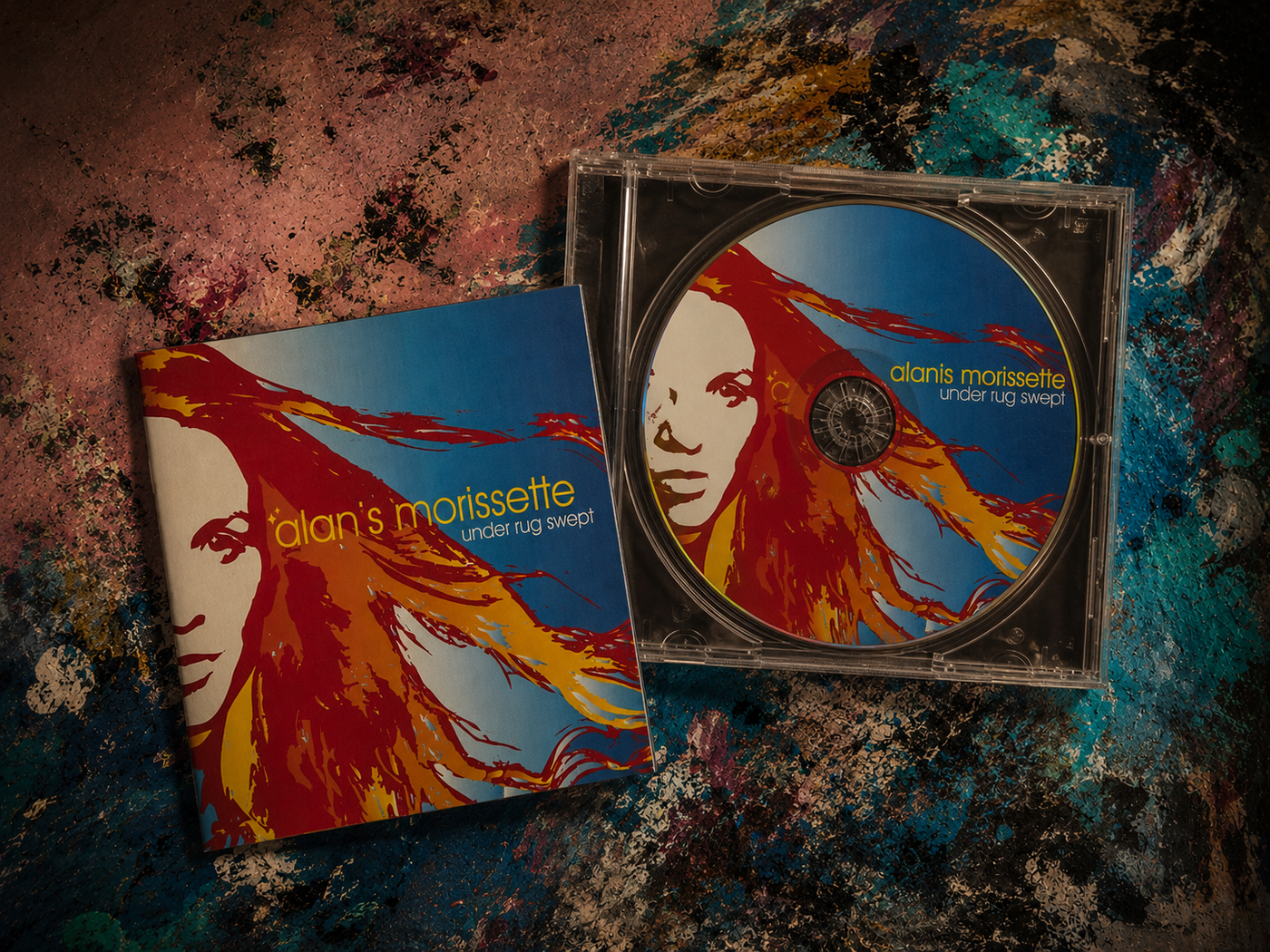
- Artist
- Alanis Morissette
Quick, somebody get this girl Madonna’s reinvention kit. Alanis Morissette is in the same dark funk we found her last. She played the role of angst-ridden woman to the hilt in “Jagged Little Pill,” an introspective singer-songwriter dabbling with spirituality in “Supposed Former Infatuation Junkie,” a superstar playing stripped-down music in “Unplugged.” In her third studio platter, Alanis purveys the same cathartic melodies and self-confessional, stream of consciousness lyrics she does best, the kind that will leave fans elated and critics dismayed.
Don’t get me wrong. I think Alanis is light years ahead of artists like Jewel, Fiona Apple, Shakira (ugh!) and other grrls! she has been lumped with; and it’s quite obvious she’s more Joni Mitchell than Michelle Branch. I still remember my first Alanis Morissette moment: my friends and I were in a beat-up, vomit-orange Brasilia and suddenly a voice wafted from the car stereo (“I want you to know that I’m happy for you/I wish nothing but the best for you both”) frantically pursued by atmospheric guitars, insistent drums and a fat, syncopated bassline. When the singer started raging, exorcising personal demons, spewing metaphors and diatribes (with the F-word thrown in for good measure) against an ex-lover whom she hates to disturb in the middle of dinner, those of us inside the car felt we’re eavesdropping on a woman undergoing therapy.
Ah, to be male just like Mr. Duplicity and still love Alanis just the same, isn’t that ironic? The problem is, if Alanis doesn’t follow the vagabond road the way innovative, Protean artists such as Joni Mitchell did in the past and Madonna does in the present — and stray away from labels and convenient categorical boxes — she’ll become a facsimile of herself, a mere doppelganger, and lose fans like me in the process.
But there are glimpses of a different Alanis in “Under Rug Swept,” emphasis on the word “glimpses.” Morissette, who plays guitars and keyboards on the album, meshes electronica, alt-rock, folk, pop, etc. in a seamless aural package. She also gets a little help from her friends in the Biz: Stone Temple Pilots guitarist Dean DeLeo, bassists Meshell Ndegeocello, Jane’s Addiction’s Eric Avery and Red Hot Chili Peppers’ Flea, who also played on You Oughta Know along with then-bandmate Dave Navarro. Notwithstanding those superstar sessionists, the album is still pretty much Alanis’ aural diary.
(When I bought the album, I was hoping it contained her renditions of Soundgarden’s Black Hole Sun and Radiohead’s Fake Plastic Trees, an outtake from the “Infatuation Junkie” sessions. Isn’t it ironic that a supposed former Alanis junkie would rather hear Morissette perform other people’s compositions?)
The first track, 21 Things I Want In A Lover, which has those distorted DeLeo guitar parts that would be at home in STP’s “Core” or “Purple,” is Alanis’ grocery list of wants. Flinch, my personal favorite, brims with wry observations and eloquent tongue-twisters (“Soon I’ll grow up and I won’t even flinch at your name” and “So here I am one room away from where I know you’re standing”). So Unsexy deals with self-image; Narcissus, self-centeredness; and Utopia, selflessness.
You think Alanis has done away with songs that provoke critics to label them as “boy-trouble letters sent to Seventeen”? You think she’s through obsessing over men and screwed-up relationships? Not by a long shot.
There is That Particular Time, a lilting piano ballad which sounds as if it was written for a lovestruck Sarah McLachlan. There is also the quirkiest song on the album, Hands Clean, the first single. Alanis wrote it as a hypothetical dialogue, a virtual duet between an ex-lover and Alanis’ younger self. It would’ve been better if she got another rocker to sing the male part. (Bono or Michael Stipe, perhaps; not Thom Yorke who’s more at home with Björk). But even if Hands Clean has those confusing schizophrenic lyrics (the song shifts from male to female points of view, Alanis getting inside the heads of both), it’s still one darn catchy number.
After listening to all 11 tracks of “Under Rug Swept,” one can’t help get the feeling that it’s time for a transformation. Maybe Alanis should put to heart Thom Yorke’s story about singing Creep in a gig and getting the feeling he was doing a cover since he felt detached and completely removed from the stuff he wrote in the past. Shortly after, his band Radiohead was able to come up with big, ecstatic and innovative music in albums like “The Bends” and “OK Computer.”
Maybe Alanis should take a break from herself one of these days.
A version of this story first appeared in The Philippine Star, 2002.


