Can Chris Cornell save Rock ’n’ Roll?
Audioslave will be crucified for not being Soundgarden and not being Rage. But pure, visceral rock is exactly what the scene has been missing.
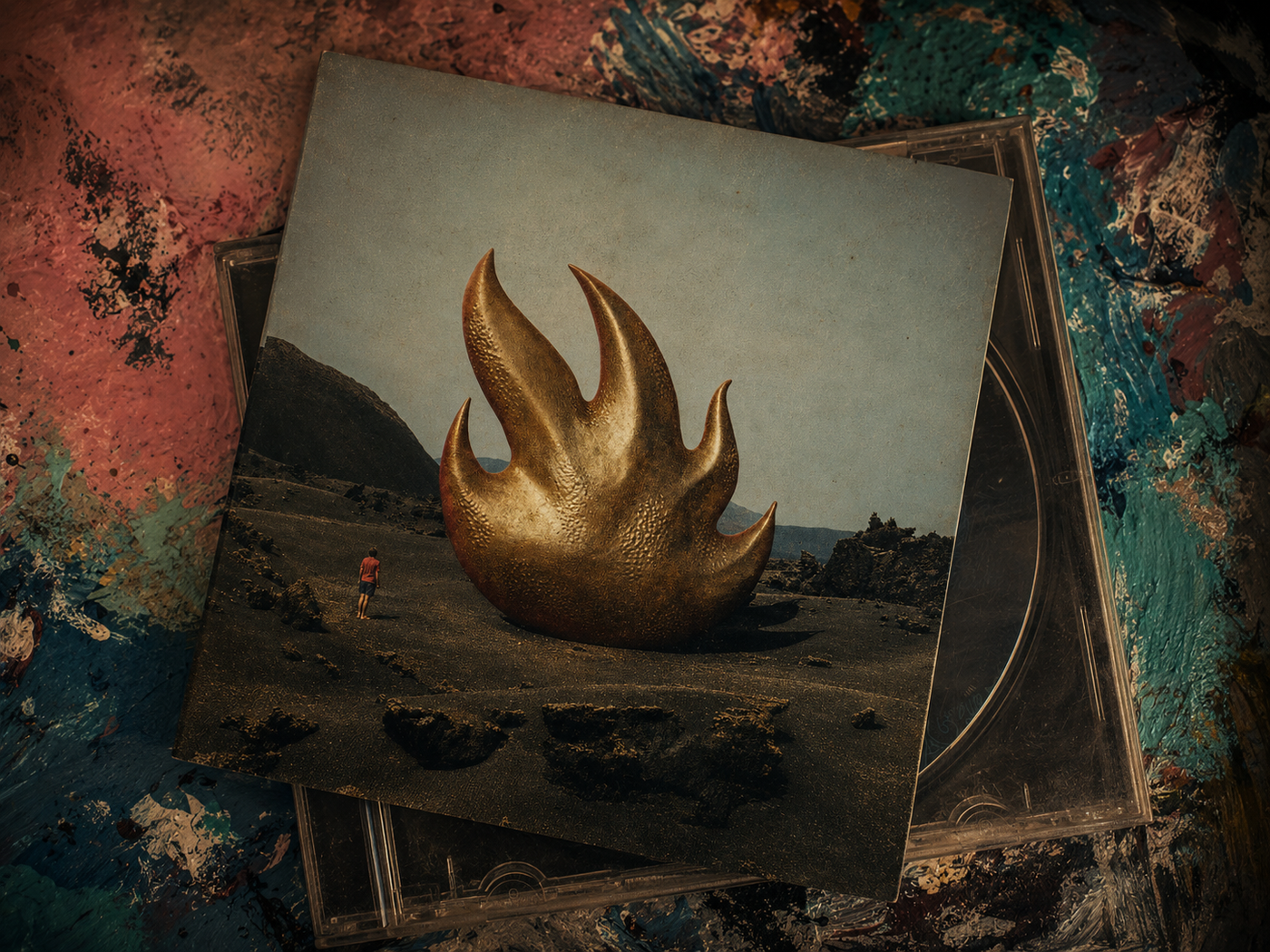
- Artist
- Audioslave
It’s inevitable: Former Soundgarden frontman Chris Cornell — and three-fourths of Rage Against the Machine (guitarist Tom Morello, bassist Tim Commerford and drummer Brad Wilk) — will be crucified for Audioslave, the self-titled album from the much-hyped supergroup. It sounds too much like Soundgarden. Doesn’t depart much from Rage Against the Machine. Not as elliptical or experimental as “Superunknown” or “Badmotorfinger.” Not as angry, angst-ridden or pissed off as “Rage Against the Machine” or “The Battle of Los Angeles.” Not like this, not like that, too much of this, too little of that — plus, an infinite number of etceteras.
Heck, Billboard, which lauds fuck-ups like Eminem and Robbie Williams, even dismisses Audioslave as either Morello re-writing his old licks for fire-and-brimstone Rage-style rock or Cornell confessing about some personal apocalypse. Its verdict: “Anyone looking for more than pure, visceral rock will likely be disappointed.” What’s wrong with just pure, visceral rock, anyway? This precisely is what’s lacking in the scene these days. No wonder rock is in a state of doldrums.
The resistance is to be expected, Audioslave is competing against two great rock bands that spawned it—psychedelic grunge band Soundgarden (which defined Seattle rock along with Nirvana and Pearl Jam) and subversive rap metal militia Rage Against the Machine (the only band that matters in this genre).
After all, Cornell and company are jousting against that powerful windmill: the past. Of course, it’s downright quixotic; they only have a Sancho Panza of a chance. We all know how time and memory tend to make the past more glittering, more interesting, prettier. Blame it on those bitches called Nostalgia, Self-Delusion and Human Nature.
Hey, I remember listening to “Louder than Love” (Soundgarden’s major label debut featuring Hands All Over, Get on the Snake, Big Dumb Sex, Uncovered, etc.), and then ordering copies of the band’s indie releases like “Ultramega OK,” “Fopp” and “Screaming Life” at a time when the public was still jerking off to Bon Jovi, Poison, Warrant and other glam bands equipped with hair sprays, pink Kramer guitars and spandex. (Another great band was still relatively unnoticed at that time — Faith No More.)
When Nirvana fired the first shot of the flannel revolution with “Nevermind,” and Pearl Jam led the attack of the grungy troops with “Ten,” Soundgarden wasn’t given much of the spotlight and was lumped with the darkly despairing Alice in Chains, the springy Mudhoney, and the gritty Screaming Trees, but great bands nonetheless. No matter if Soundgarden had released the quintessential metal record, “Badmotorfinger” — with the dirgy Outshined, the epic Jesus Christ Pose, the evocative Mind Riot, Searching (With My Good Eye Closed) and the punkish Face Pollution — or Chris Cornell’s beautiful elegy (with the help of drummer Matt Cameron and members of Pearl Jam) for Mother Love Bone vocalist Andy Wood called “Temple of the Dog.”
It was not until “Superunknown” that Soundgarden got the attention they deserved mainly due to the MTV hit, Black Hole Sun. People began noticing how great Chris Cornell’s absurdist spin on experience was (dig the lyrics of The Day I Tried To Live, Like Suicide, Fell on Black Days); Kim Thayil’s textural guitars (dig the solo on Fourth of July and the wah-wah-drenched Like Suicide); Matt Cameron’s apocalyptic drumming (especially on Spoonman and Fresh Tendrils) and bassist Ben Shepherd’s quirky compositions (Half and Head Down).
After Down on the Upside, the band broke up and people’s perception of it was altered. Soundgarden was mythified into “our generation’s Led Zeppelin.” (Something which is unfair to both bands that, except for the pioneering spirit and a singer with huge lungs, have really nothing in common.) Not good to be underrated for a time, when Soundgarden was churning out great stuff, and then blown out of proportion afterwards, just as more and more housewives were enjoying the band’s music.
Rage Against the Machine had a different genesis. The band’s rebel yell — a meshing of hip-hop, metal and revolutionary agenda—was quickly accepted by the mainstream. The self-titled debut, featuring incendiary tracks like Bombtrack, Killing In The Name, and Take The Power Back, became widely influential and helped define the parameters of nü metal. (Blame the band for posers like Fred Durst, Kid Rock, P.O.D., Crazy Town and my former co-writer who’s into braided hair, pathetic air drums and shoe conversations.)
But Rage’s music quickly became predictable, formulaic even. No matter how innovative Tom Morello played his turntablesque guitar or how angry Zack de la Rocha raged against the dying of truth and justice in South America, the band was becoming a parody of itself. Zack left. Rage disbanded. And Audioslave was born.
This album is huge, much-hyped, and fans of Soundgarden, fans of RATM, probably even the fans of Renz Verano would go out and buy this album and be hugely disappointed. Because they’ll be expecting Soundgarden, they’ll be expecting Rage, they’ll be expecting a hybrid of the two, they’ll be expecting a paradigm-shifting album in the tradition of “Nevermind” or “Sergeant Pepper,” they’ll be expecting a freakin’ rock ’n’ roll messiah. Who wouldn’t be disappointed with all those expectations?
I’d like to appraise “Audioslave” for what it really is: An excellent hard rock record, much needed these days when acts like Sum 41 (which has a new video parodying the Strokes—the nerve!), P.O.D., Linkin Park, Limp Bizkit, Blink-182 and other motherfu*king dumb acts are shoved down our collective ears. And let’s not go into pop acts currently lording over the music scene. Not only do we have ’N Sync, we also have Justin Timberlake. Not only do we have the Backstreet Boys, we also have Nick Carter. Shakira. Pink. Shania Twain. Shaggy. It’s a mystery why people are so enamored with crap.
The first cut, Cochise, starts out like yer average RATM groove. But at the moment you expect De la Rocha to spew some fiery rhymes, Cornell, er, sings. It’s noticeable how Tom Morello and the explosive RATM rhythm section play differently this time, since Chris’ soulful baritone has replaced Zack’s hydrogen jukebox rapping. The track at times is reminiscent of Let Me Drown, the opening song of “Superunknown,” but groovier.
Like a Stone is unlike any of the stuff Soundgarden and RATM have done in the past. Bouncier, catchier, more upbeat—things seldom associated with either of the two bands. It’s also one of the few times Morello uses an acoustic.
The tasteful Rage guitarist shows more restraint on this album. I like the ambient solo on Gasoline, the call-and-response breaks in What You Are, as well as the science fiction shredding on Like a Stone and Shadow on the Sun.
Worth checking out are Audioslave’s sprawling ballads I Am The Highway and my personal favorite, The Last Remaining Light, which reminds me of Fourth of July. I just love Cornell’s obscure, existentialist lyrics. Curl like smoke and breathe again/Down your throat inside your ribs/Through your spine in every nerve/Where I watch and I wait and yield to the hurt… Stand alone and greet/The coming night/In the last remaining light.
Not as good as the musings in Preaching the End of the World or The Day I Tried To Live, but I like it better than Coldplay’s schmaltzy drivel.
Lyrically, as usual, Chris is still fixated with Jesus Christ metaphors. (Remember Jesus Christ Pose or Wooden Jesus from “Temple of the Dog”?) In Show Me How To Live, he sings, “Nail in my hand/From my creator/You gave me life/Now show me how to live.” He also mentions J. C. himself in the scorcher Set it Off.
On the whole, the album is a strange marriage, really. Imagine Public Enemy recruiting Deep Purple’s Ian Gillan for an EP. The heavy, riff-oriented songs like Cochise and Set It Off go well with the lilting compositions like Getaway Car and The Last Remaining Light—songs that would be right at home in “Euphoria Morning,” the Beatlesque, ELOesque Cornell solo album. There are also two to three electronica-inspired cuts.
So, let the flak fly, I have a feeling time and will be good to Audioslave.
Can Chris Cornell and the rest of Audioslave save rock ’n’ roll from the posers, the pop freaks and a public with tacky tastes? Yes and no. Yes: Audioslave has given those of us disillusioned with the state of rock a reason to be excited about; there is now another band to watch along with Radiohead, the Deftones and Dream Theater. No: The rock scene is beyond redemption; it would take something more powerful than Nirvana and the Sex Pistols combined to usher in a paradigm-shift, to kick the darkness of poser rock until it bleeds daylight.
But I’m not sure if Chris Cornell has a messianic complex, anyway, since he sings in Cochise, “I’m not a martyr/I’m not a prophet/Go on and save yourself/And take it out on me.”
A version of this story first appeared in The Philippine Star, 2002.


