Who’s afraid of Big Bad Prog?
Nearly everyone is afraid of prog rock: the labyrinthine structures, the odd time signatures, the lyrics about topographic oceans. Dream Theater is not.
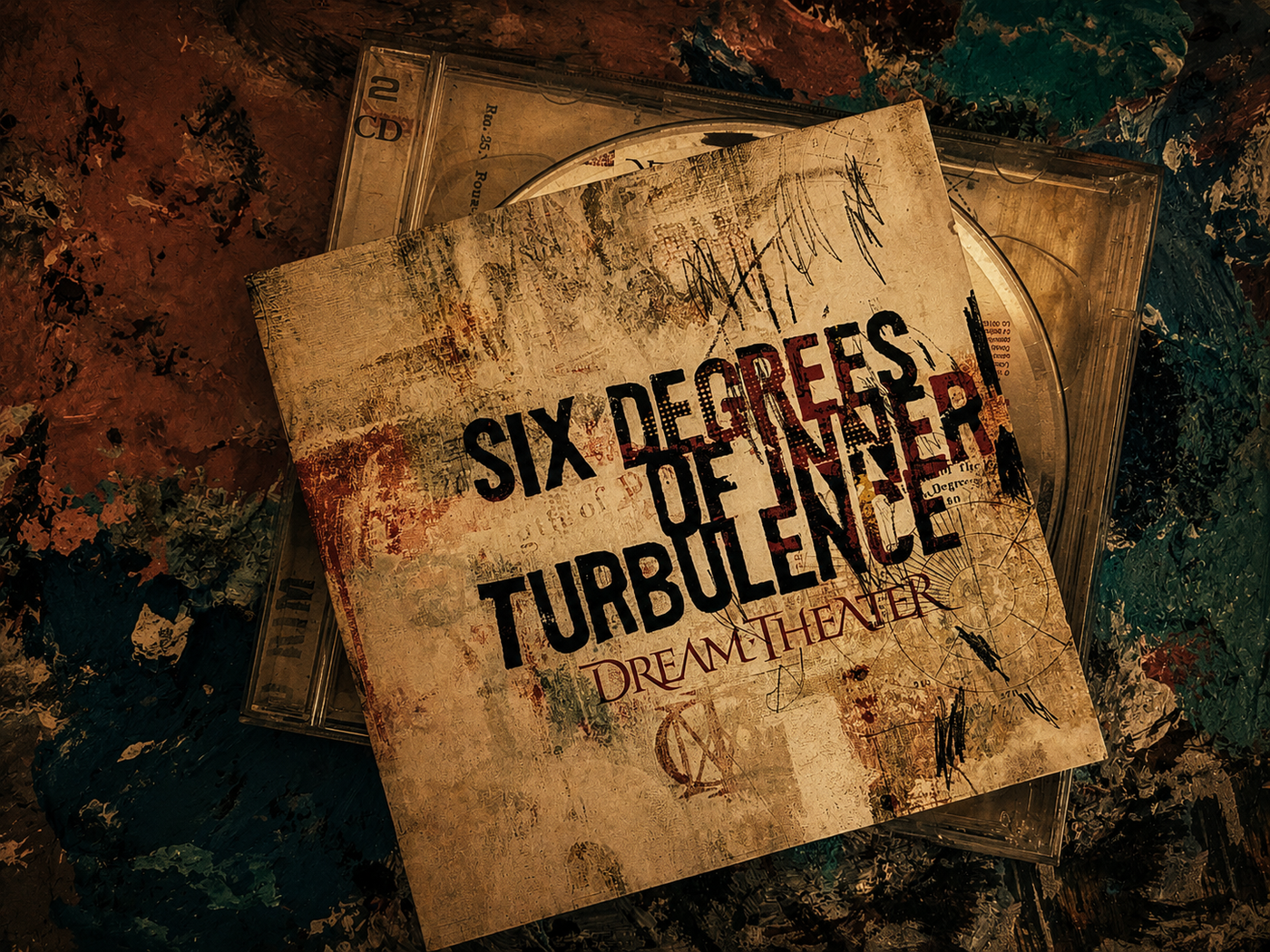
- Artist
- Dream Theater
Who’s afraid of epic, ponderous progressive rock? The average listener is. So is his classmate who has the bent of wearing Roberta Flack cornrows and whose idea of great rock and roll is Fred Durst and his poser posse composed of P.O.D., Staind and friends. So is his girlfriend who’s into designer coffee and who thinks Blink-182 and Sum 41 are genuine punks, insulting in the process the avatars of the genre such as the Ramones, the Clash, the New York Dolls, the Minutemen and, yes, the Sex Pistols. So is his tubercular Physics professor who’s into Shakira because of her lovely iron belly. So is his niece who’s into Regine Velasquez and her Mariah Carey posturings. So is his father and his mother who brush the dust and years off old Mel Tormé and Matt Monro vinyls every now and then and torture the neighbors with the unspeakable. So are those very neighbors who fight back with Michael Learns to Rock. So is… well, practically everybody.
It seems the average listener loves prog rock the way he adores Rasputin, the dentist’s drill or evil concentration camp scientists. Maybe it’s because of the genre’s labyrinthine song structure, odd time signatures and esoteric lyrics. Idiotic lines like “Near, far, wherever you are” or “I did it all for the Nookie/So you could take a cookie and put it in your ass” rarely, or to be more precise, never at all figure in progressive rock discography. Instead, prog rock bands purvey heavy meditations on topographic oceans, aqualungs, strange villas, and dark sides of the moon.
Guitar Player defines progressive rock as a genre characterized by bands with names that are odd and terribly unpronounceable; songs that are ten minutes long (Jethro Tull’s “Thick as a Brick” — all 40-plus minutes of it — occupies a whole CD); songs arranged in several movements or chapters (just like classical pieces); album covers featuring sages, gnomes, nymphs or mysterious abysses (check out Yes’ “Relayer” and “Drama”); as well as foreboding voice-overs (even Stephen Hawking lent his voice to a Pink Floyd track). This is heavy enchilada, indeed.
So it’s not surprising many are afraid of listening to music that’s as perplexing and as laborious as German philosophy; the average listener already has his hands full figuring out Theology professors/Machiavellian bosses, CMT/the BIR, inscrutable girls/women who have the same zip code as Stonehenge, life in general. Many equate the tedium of listening to prog music with writing a term paper on Nietzsche or The Lord of the Rings. Many are turned off by bands like Yes, Rush, Pink Floyd, early Genesis, King Crimson, Jethro Tull, Kansas and Dream Theater — except for prog rock musicians themselves and a handful of geeks like me.
I got into Dream Theater when I was bumming around after college. It was the time of the Great Grunge Hangover: Seattle bands like Nirvana, Alice in Chains and Soundgarden were burning out instead of fading away. On MTV were disenchanting bands like Bush, Offspring, Silverchair, No Doubt and other acts that virtually “killed” rock by repeating the same tired shit over and over again. I found out the aural innovations were happening elsewhere: in electronica and on Dream Theater albums.
No one noticed Dream Theater was tweaking with progressive rock until “Images and Words” (the band’s sophomore effort) achieved mainstream success. For me, this album packs a wallop like an aural Joe Frazier with epic, metal-inspired tracks like Take the Time and Pull Me Under. DT’s music stuck out like a hobbit in a boyband factory; I think Green Day and the Cranberries were lording it over the charts at that time and there was this band churning out anachronistic stuff like Metropolis Part I.
“Awake” is darker and heavier. The themes of splintered identity and spiritual crisis slink through the album. My favorite tracks are Erotomania and Space-Dye Vest with its Pink Floydian voice-overs and cryptic lines (I saw the future dressed as a stranger/Love in a space-dye vest).
What DT released next was surprising: a 2-LP set composed of a really long original (A Change of Seasons) as well as Elton John, Deep Purple and scorching Led Zeppelin covers. In The Big Medley, Dream Theater proved it could be the heaviest, most instrumentally adept bar band in the world by covering Queen, Pink Floyd and Kansas standards in one fell swoop. The medley has snippets of Bohemian Rhapsody, Carry On Wayward Son, In the Flesh and even a schlocky Journey song.
“Falling into Infinity” turned many of the Dream Theater faithful off because it’s too “song-oriented,” something you’d normally associate with Billy Joel and U2. I didn’t buy “Scenes from a Memory” because I feared DT was on a self-destructive Queensrÿche mode. Too bad, because critics said it was the band’s most cohesive. Until “Six Degrees of Inner Turbulence” came along.
Dream Theater’s latest release practically jumped out of the racks as I was pointing out to my girlfriend the sheer number of Billy Crawford and Pink CDs in a record bar at SM.
“Inner Turbulence” is big, bold, unwieldy, laborious, overbearing, rapturous, self-indulgent, and prog rock geeks in general and Dream Theater fans in particular will love it. The current line-up of John Petrucci (guitars), Mike Portnoy (drums), James LaBrie (vocals), John Myung (bass) and newest member Jordan Rudess (keyboards) carry the music to where their prog legs would take them.
The standout cut for me is Misunderstood with its slow, dirge-like pace and Roger Waters insight (How can I feel abandoned when the world surrounds me/How can I know so many, never really knowing anyone), as well as The Great Debate which tackles the Hydra-headed issue of cloning.
The title track (a 42-minute, album-long, eight-part opus; the ultimate prog rock statement) will make listeners salivate or cringe depending on what music they dig. It’s a suite about characters on the brink of madness (a war veteran, a loner, a depressed solitary girl, etc.). In Six Degrees of Inner Turbulence, Dream Theater meanders through different musical genres and styles in order to present their stock Floydian storyline: orchestral music, trashy metal, jazzy piano passages, art rock and folksy pop.
No matter the blistering chord changes, nothing new has changed for Dream Theater: the band finds itself on the margins of the mainstream, as usual. This prompted an armchair critic to pop the question: Which is more gutsier, Eminem slamming another teen-pop star or DT dissing every style of music that came after 1976?
Dream Theater living in a musical vacuum? I think otherwise. In the latest platter, Dream Theater not only pays homage to prog rock titans (Kansas, Yes and King Crimson), it also gives props to relatively newer bands like Tool and Pantera. Proof that Petrucci and co. are tuning in to what can be considered good rock these days.
“Inner Turbulence” is not for everybody, which is a damn shame. Those who want to get into prog rock better check out more accessible, bite-size fare such as Yes’ “Highlights,” “The Best of Kansas,” and Rush’s “Chronicles.” For those who dare, they can check out Yes classics like “Fragile,” “Relayer,” “Close to the Edge,” “Tales from Topographic Oceans,” as well as all the aforementioned Dream Theater discs.
Who knows, these albums might take you straight to the gates of sweet delirium.
A version of this story first appeared in The Philippine Star, 2002.


