The brats of Beat
Kerouac with Steve Allen on piano, Ginsberg howling, Burroughs on a hip-hop record. The spoken-word albums of the Beats, for freaky times.
Bugged conversations, politicians flitting like evil butterflies, congressional hearings that go to infinity and beyond, Amay Bisaya hamming it up in overzealous rallies, TV news reports that take on the characteristics of a mockumentary, etc… During times that make us ordinary, peace-loving Filipinos feel like lost souls swimming in a toilet bowl, we need good hallucinogens. Not the illegal kind, though, just something that will allow us, in the words of Jefferson Airplane, to “feed our heads,” or something to take our minds off the existential shit we’re mired in.
In my cockroach condominium unit as big as a shoebox, I’m proud of my stash of books – the survivors of the Gestapo-like termite invasion on our Malabon house a few years ago. Samuel Beckett. Tom Robbins. Thomas Pynchon. James Joyce. Haruki Murakami. Jorge Luis Borges. Alan Moore. Friedrich Nietzsche. Michel Foucault. Dilbert. Charles Bukowski. It is great to get an appointment with these guys occasionally (every day, if the schedule permits) to read the mind-altering sorceries they conjure with the printed word.
Borges will tell you we are holograms all along, and that somewhere old gods with yellow teeth are having a press conference. Pynchon will detail the story of how Tyrone Slothrop gets an erection every time Germany drops a V-2 rocket at the height of World War II. Joyce will expound on how a bloke in Dublin on a typically turgid day gets to relive the adventures of Odysseus. Nietzsche will philosophize about the superman and the eternal recurrence of events, while urinating a rainbow of piss over dead gods and even deader ideologies.
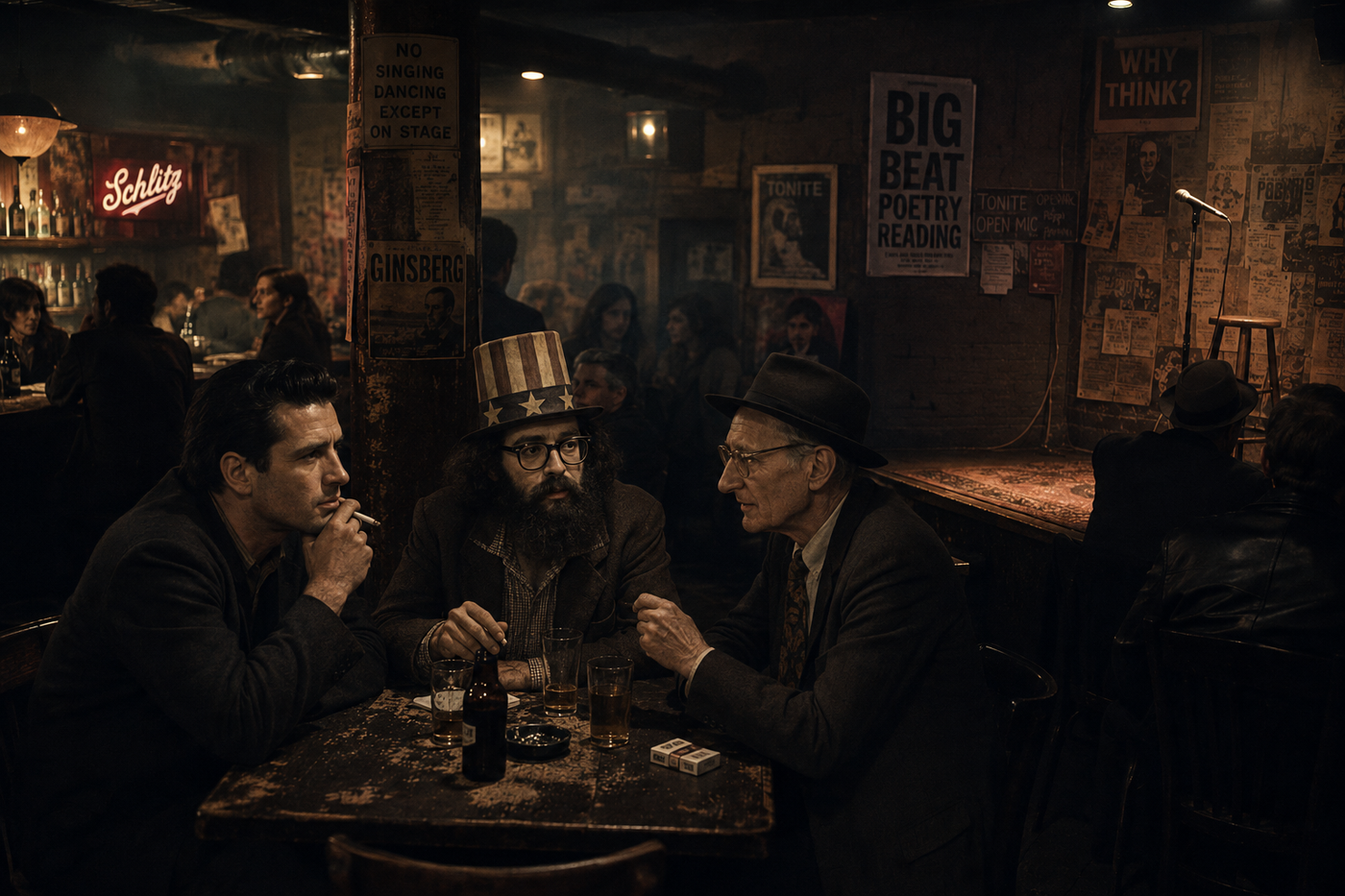
And then there is the trio of doom of American letters: Jack Kerouac, Allen Ginsberg and William S. Burroughs.
Kerouac traveled across broken-down and beatific America, hitchhiked across his own psyche, and reported it all in On The Road (the bible of the Beat Generation) and other seminal works. He also waxed a couple of albums: “Poetry for the Beat Generation,” “Blues and Haikus,” and “Readings by Jack Kerouac on the Beat Generation.”
The first one was recorded with Steve Allen playing introspective jazz piano. It contains Kerouac’s tribute to bebop legend Charlie Parker, which is the 29th chorus of Mexico City Blues: “Charlie Parker looked like Buddha.” Other cuts include “The Sounds of the Universe Coming in my Window,” “October in the Railroad Earth,” as well as excerpts from On The Road and Visions of Cody.
He cut “Blues and Haikus” with tenor saxophone titans Al Cohn and Zoot Sims. While “Readings” features Kerouac alone, dishing out meditations on the origins of bop, his visions of Neal Cassady, the Three Stooges, and Westinghouse elevators, etc.
(Trivia: Eddie Vedder, Tom Waits, Primus, REM, Aerosmith, and Hunter S. Thompson pay tribute to Kerouac in “Kicks Joy Darkness.”)
Allen Ginsberg was responsible for the Beat manifesto called “Howl,” the centerpiece of the influential Howl and Other Poems. A demented version of American bard Walt Whitman, Ginsberg wrote shamanic, free associational verses that speak of the dark night of an alienated American soul.
The poet also made a number of albums containing songs and spoken word performances. Ginsberg recorded “The Lion for Real” with avant-garde musicians Bill Frisell, Marc Ribot, and Steve Swallow, among others. “Hydrogen Jukebox” features the music of Philip Glass. Other musicians who collaborated with Ginsberg include free jazz stalwart Don Cherry, John Coltrane Quartet drummer Elvin Jones, and even Bob Dylan, who was featured on tracks such as Vomit Express and September on Jessore Road. The poet also jammed with The Clash on an incendiary protest piece called Capitol Air.
(Trivia: Rage Against the Machine once performed a Ginsberg poem in a gig. Dig Zack De La Rocha spewing fire-and-brimstone verses.)
“Hitman for the apocalypse in his trench coat and snap-brim fedora,” was how J.G. Ballard described William Seward Burroughs, whose outsider role was so extreme it constitutes “extraterrestrial status.”
Burroughs claimed that after one look at this planet, any visitor from outer space would say, “I want to see the MANAGER!” But the manager, the writer added, is harder to find than the Wizard of Oz. His masterpiece is the darkly satirical Naked Lunch, a literary blitzkrieg bop of greed, junk and lust. It is Alice in Wonderland rewritten by Jack the Ripper and with a foreword by Dr. Goebbels and Rasputin.
Burroughs recorded an excellent album with the Disposable Heroes of Hiphoprisy titled “Spare Ass Annie and Other Tales.” The title track tells the story of Annie who has an “auxiliary asshole in the middle of her forehead, like a baneful bronze eye.”
Included in the album is a piece from Naked Lunch called Did I Ever Tell You About The Man That Taught His Asshole How To Talk. Also in there are The Junky’s Christmas, the sickening Dr. Benway Operates, and The Last Words of Dutch Schultz.
The author was featured in the X-Files soundtrack, singing Star Me Kitten with REM minus Michael Stipe. He also appeared as himself in a U2 music video holding a strange, apocalyptic spotlight; he is the man who ushers in Armageddon and writes “finis” in God’s pink cosmic diary.
(Trivia: Burroughs recorded with musicians from Sonic Youth to Kurt Cobain. Try to look for the “Priest They Called Him” CD featuring the high priest of cut-up prose and the grunge legend.)
Blessed are the Beats.
God bless our damned nation.
My apologies to Gerry Alanguilan’s friend who attended the Neil Gaiman writers’ forum for a comment made in last week’s column.
A version of this story first appeared in The Philippine Star, 2005.


