The SpY who loved graffiti
A four-metre mirrored sphere at Giza, a globe inflated until it burst in Bilbao: the Spanish artist SpY brings his interventions to Art Fair Philippines.

Seeing uninspired, by-the-numbers abstracts and figurative paintings—the ones bandied about in exhibitions and art fairs—is a dulling experience. We are watching dried paint, literally. But how many art installations have you encountered that involve the Pyramids of Giza? Yes, the flipping pyramids.
Featured in this year’s Art Fair Philippines is Spanish artist SpY, who started his career in the mid-’80s Madrid as a graffiti artist before going into large-scale conceptual and urban art interventions. In October 2022, he installed “Orb” in the Egyptian desert: a four-meter mirrored sphere that captured its surroundings, including the pyramids, in fragmented reflections.
“Working in such an important setting, surrounded by so much cultural and historic heritage, was a fantastic challenge,” SpY says. The piece, he explains, was conceived as “an allusion to the ‘pi’ number, concealed within the geometry of the pyramid.” A sudden and unexpected thunderstorm—Cairo’s first in 20 years—added an unplanned layer of drama. “Tens of strikes of lightning illuminated the sky above the pyramids. We spent that night inside a van, enjoying the spectacle and documenting those unique moments.”
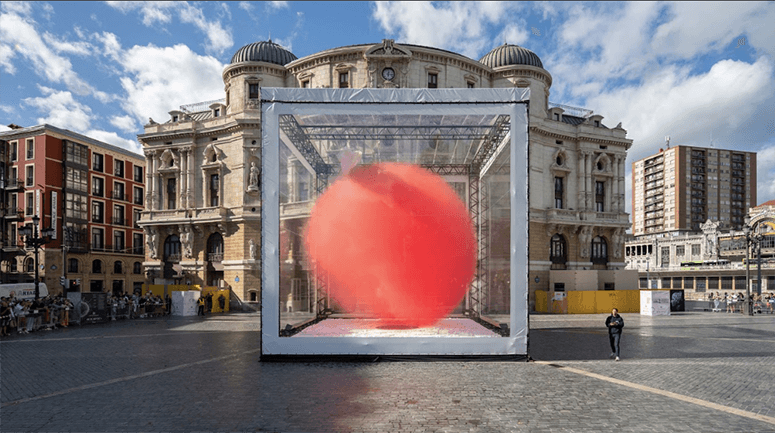
SpY is a conjurer of urban mirages. His works do not simply exist within public spaces—they infiltrate them, embed themselves in the collective consciousness of passersby like stray bits of forgotten dreams. He has spent decades manipulating the visual grammar of the modern metropolis. Surveillance mirrors become sculptural artifacts, barrier tape transforms into kinetic ephemera, and the city itself turns into a breathing, thinking organism. “Cities are not aseptic spaces,” he says, rejecting the sterility of galleries and museums. “They are in constant evolution.”
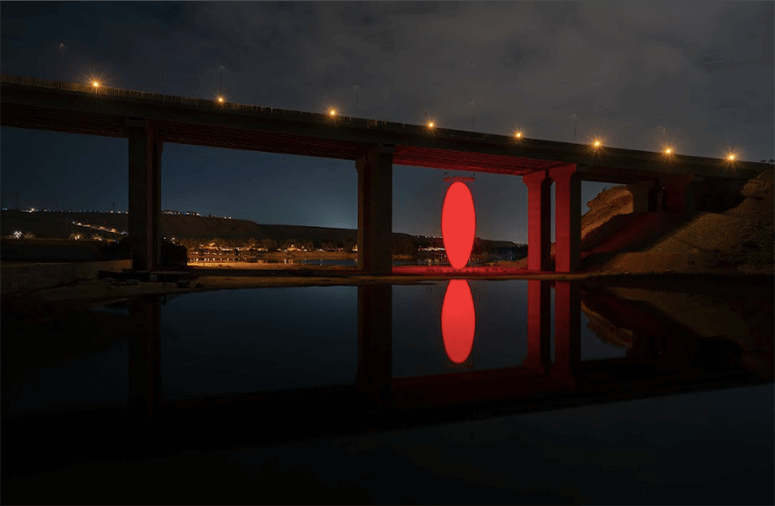
SpY’s interventions—often playful yet politically charged—reimagine everyday urban objects arranged in ways that create “a novel situation for the viewer and spark an intriguing first impression.” It’s a strategy designed to disrupt routine and encourage reflection. “Rarely do we find artistic representations that break into the everyday life of cities to generate dialogue between creators, cities and citizens,” he says.
The transition from solo street artist to running SpY Studio was a natural one. “This path eventually led to the founding of SpY Studio, born from the need to work in very large formats and collaborate with different professionals in the production of international projects,” he explains. The studio, much like the artist himself, is fluid—adapting to the challenges of each new project.
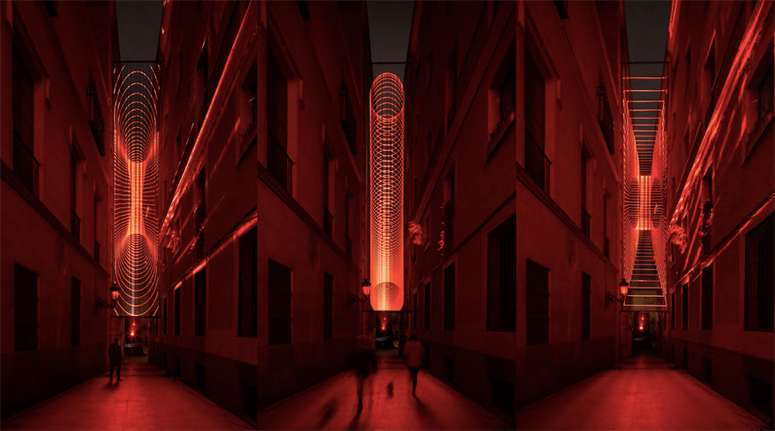
Despite their minimalist aesthetic, SpY’s works often carry a strong conceptual weight. “I’d like my pieces to convey important questions that we as a society should be aware of,” he says. His installations engage with themes of surveillance, control, and hyperconnectivity—issues that define contemporary urban life. “We are drowning in the abundance of standardized images. I think that art has the responsibility to create new concepts and more demanding experiences on the interpretative level.”
Kinetic cities
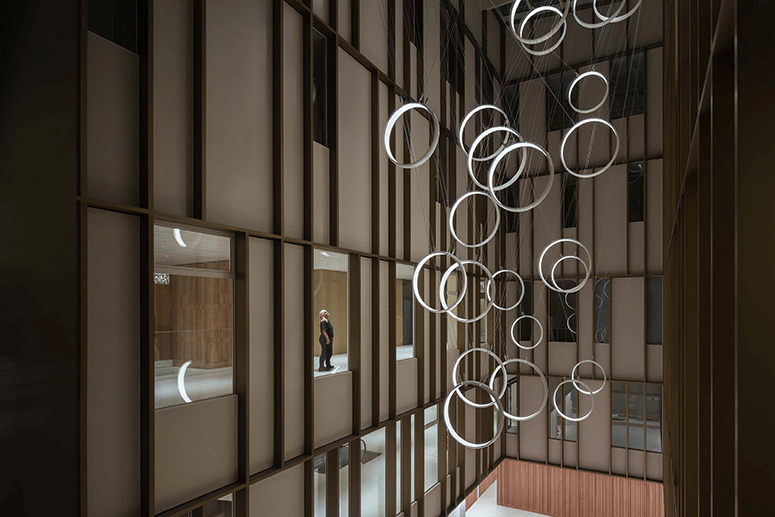
Technology plays an increasing role in SpY’s practice, particularly in his recent experiments with kinetic art. “We are researching and experimenting with new tools and mediums that combine digital, mechanical, and even natural elements,” he says. He describes his approach as a fusion of four elements: the form itself, the audience’s interaction with it, movement (whether mechanical or natural), and time. “Each moment of observation of the piece meets a particular instant in its formal progression—literally a new artwork is discovered in a blink of an eye.”
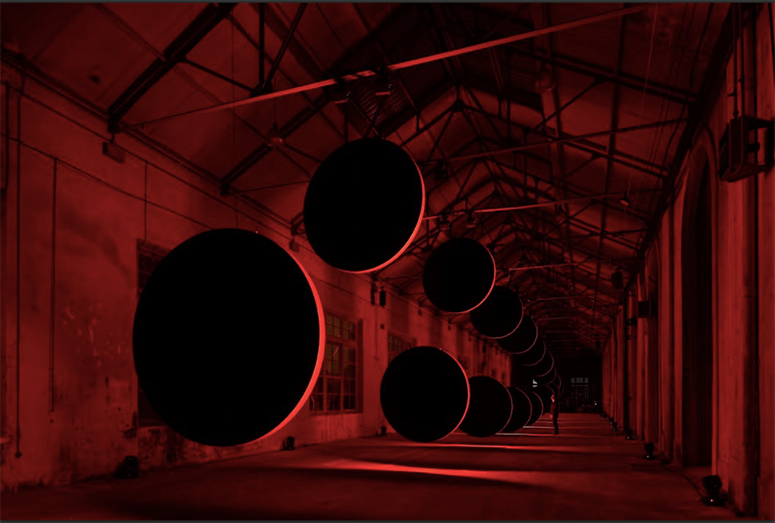
One recent kinetic work, permanently installed in Switzerland’s largest hospital, took more than two years to develop. “I started by questioning myself: ‘How can art work positively within a hospital and nurture its dwellers emotionally?’” The result, he hopes, is an artwork that transforms its setting, offering an emotional and psychological refuge.
SpY talks about his participation in Art Fair Philippines: “I hope my proposal in Manila will be remembered as a catalyst for curiosity and reflection. If my work leaves an imprint on the memory of those who experience it—encouraging them to stop, question, and reflect—I believe it will have served its purpose.”
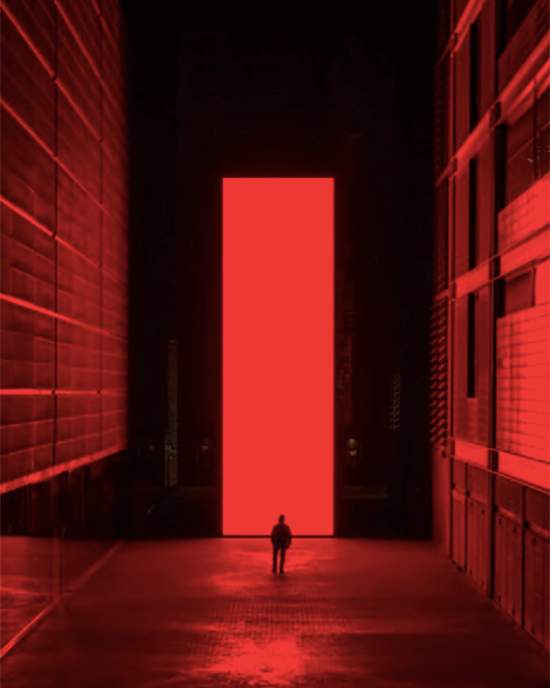
It will be his first time in the country, but he is already eager to explore. “I will keep my eyes open and my mind awake to discover the city and be actively inspired.” And given SpY’s track record, inspiration will not be in short supply.
In the end, SpY is an urban ghost—here one moment, gone the next, leaving behind only traces of his presence in reflections, in patterns, in the ways we suddenly perceive the city differently. He does not impose meaning; he teases it out, nudging us toward questions we might have otherwise ignored. His interventions do not scream for attention—they linger, they haunt, they unravel in time. One can only imagine what strange and beautiful disruptions he will conjure from Manila’s tangled streets. Perhaps an illusion so subtle it will be mistaken for a trick of the eye. Perhaps a disruption so profound it will be impossible to forget.
He is probably on the prowl now. This phantom of an artist reshaping the very tangle of stones and steel of whatever cityscape he finds himself in. His face and movements, forever ghostly.
A version of this story first appeared in The Philippine Star, 2025. Print edition.


