Andreea Medar’s love letter to a lost village
Andreea Medar connects those drawn to the ghostly, the abandoned and the disappearing with all the lonely voids where love used to be.
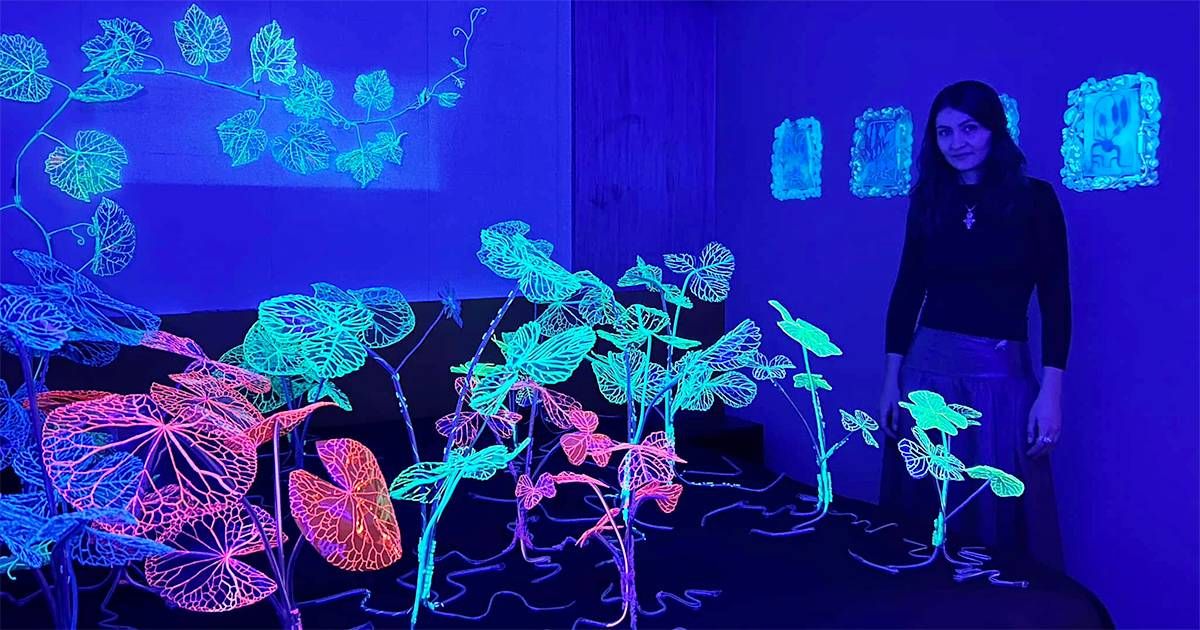
The transformation came like a thief in the night. At first the villagers began replacing their traditional communal items such as wooden spoons, clay bowls and clay mugs with plastic. The facades of houses were transformed, too. Same with the traditional, hand-carved wooden furniture.
Artist Andreea Medar remembers growing up in the isolated village of Racoți in the Oltenia region of southern Romania. This area has a rich history of practicing old customs and traditions spanning centuries. She witnessed how her old village in post-communist Romania embraced modernity and eventually turned into a dilapidated one to be abandoned slowly by its villagers.
“My contact with the village world, with its customs, traditions, and local practices, had a significant impact on both my personal and professional development,” explains Medar, whose art projects are inspired by her upbringing.
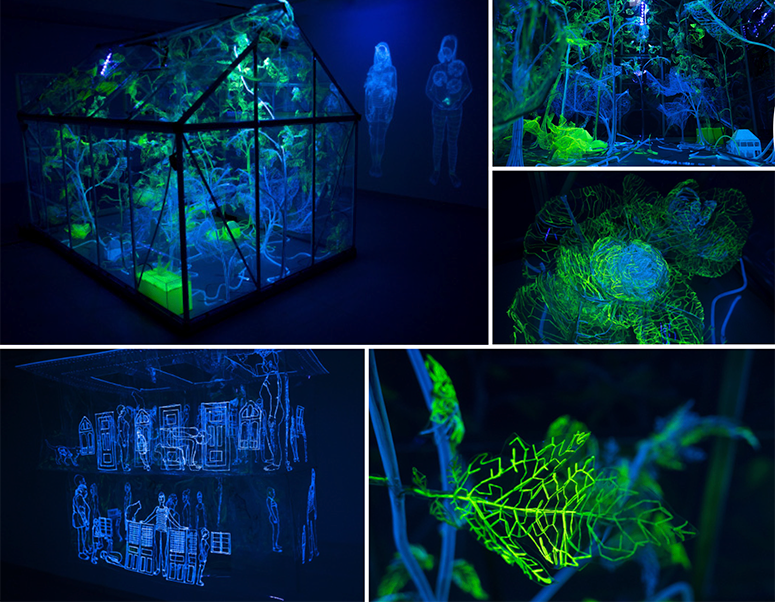
“Through my works, I strive to carry on, in a symbolic form, traditions such as hand-sewing or gardening. The projects I propose illustrate the image of that place but are also imaginary scenarios where the garden persists in the absence of the gardener or has the ability to travel through time and space, connecting future generations with their origins. Realizing that the village is on the verge of disappearing, I try to create works that illustrate scenarios placed outside of time, as if in a temporal loop, precisely to preserve what remains of that place on the brink of vanishing.”
She currently does studio work in the cities of Târgu Jiu and Timișoara. Her work schedule is very intense because most of her recent pieces are entirely hand-sewn, using fluorescent and phosphorescent threads, as well as glass or plastic beads, glass crystals and natural stones.
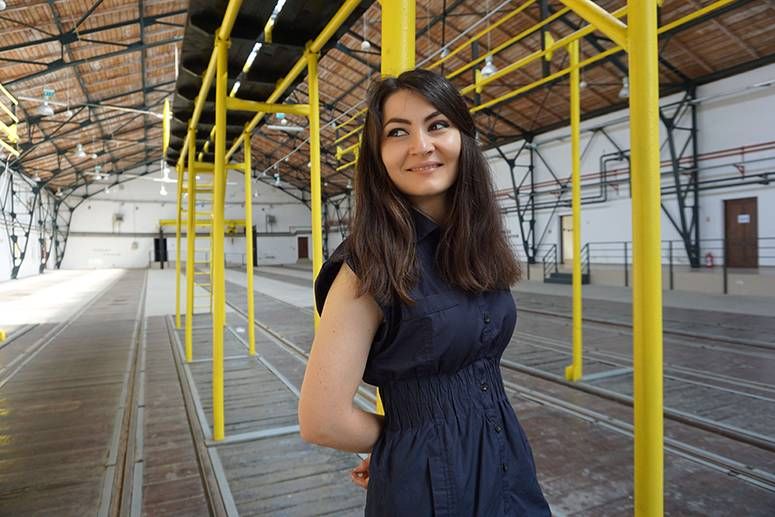
“In addition to my studio work, I frequently visit the village for research, to take photographs and videos, or interact with the place and its locals. I consider physical interaction with that location to be very important; some of the pieces are partially sewn in my grandmother’s house.”
The materials Andreea uses are predominantly transparent and semi-transparent, having a specific significance for the artist. The transparent plastic she uses is usually used in rural areas as a protective layer for authentic tablecloths, placed over the old, traditional tablecloths sewn in the past by the household’s great-grandmothers. Through hand-sewing, she aims to revive the lost tradition of manual sewing in the village.
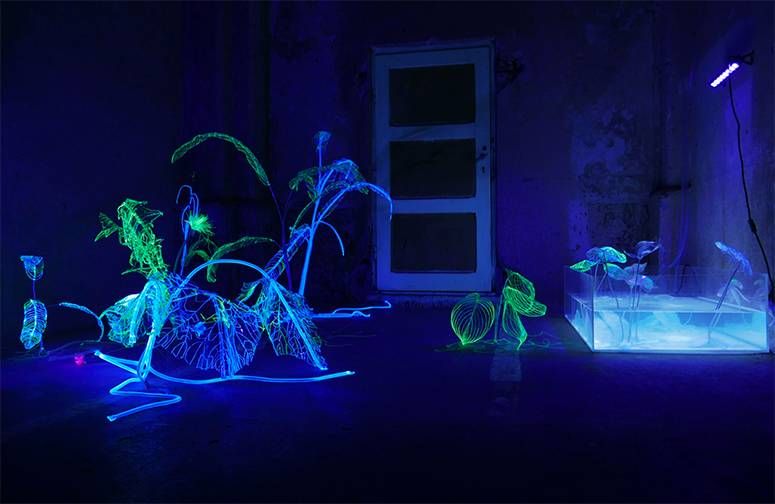
Alongside this transparent material, she also uses other types of semi-transparent or matte or shiny plastic, commonly used in the fashion industry today. She stresses, “Through the materials I utilize, I try to continue local traditions but incorporate modern materials.”
Her “The Forever Garden” series was inspired by their family garden, which had the same layout for 150 years, with plants meticulously arranged the same way. When her grandfather—the last family gardener—passed, the space designated for gardening became covered with wild vegetation.
“This is why, symbolically, I recreated my grandfather’s garden using the hand-sewing technique and placed the plastic plants, in a performance, in the same positions they were originally placed.”
In her imagination, “The Forever Garden” is not a reproduction of a garden that existed before; instead, it is a spiritual garden capable of transcending time and space, envisioning a dystopian, post-apocalyptic future, connecting the descendants of her family with their origins.
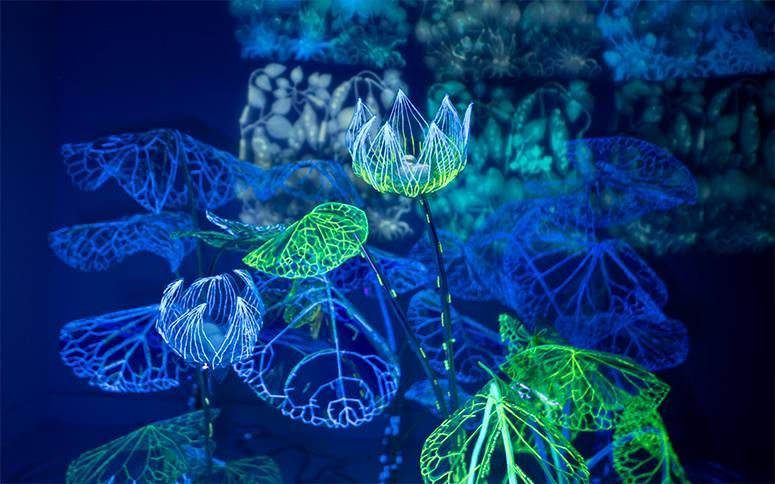
Filipino art lovers have the chance to immerse themselves in Andreea Medar’s re-imagined garden as Art Fair Philippines presents the artist’s “Leftovers from the Future” as part of its ArtFairPH/Projects.
She says, “I want to make the situation of Racoți known to the Filipino audience, as well as that of isolated villages in southern Oltenia. I have encountered individuals who have been deeply moved, precisely because they found themselves in the story illustrated.”
“Leftovers from the Future” was inspired by the image of the garden one year after the land had ceased to be cultivated. A variety of vegetables grew randomly among the wild plants, serving as a reminder of the garden’s past. According to the artist, despite the absence of the gardener, the garden persisted.
Medar concludes, “My vision is more dreamlike and idealistic because, through the installations I create, I attempt to depict the image of a timeless place, similar to a temporal loop aimed at preserving what still remains, realistically speaking, as the village is expected to be deserted in the next 20 years.”
Expect Andreea Medar to connect with those of us who are fascinated with the ghostly, the abandoned, the disappearing, all the lonely voids where love used to be.
Art Fair Philippines 2024 takes place from Feb. 16 to 18 at The Link Car Park, Ayala Center Makati.
A version of this story first appeared in The Philippine Star, 2024. Print edition.


