The empire state of Maria Angelica Tan’s art
A Filipina in her early twenties, a Hudson Square gallery, and leftover adobo before the bus: Maria Angelica Tan distills New York into paint.
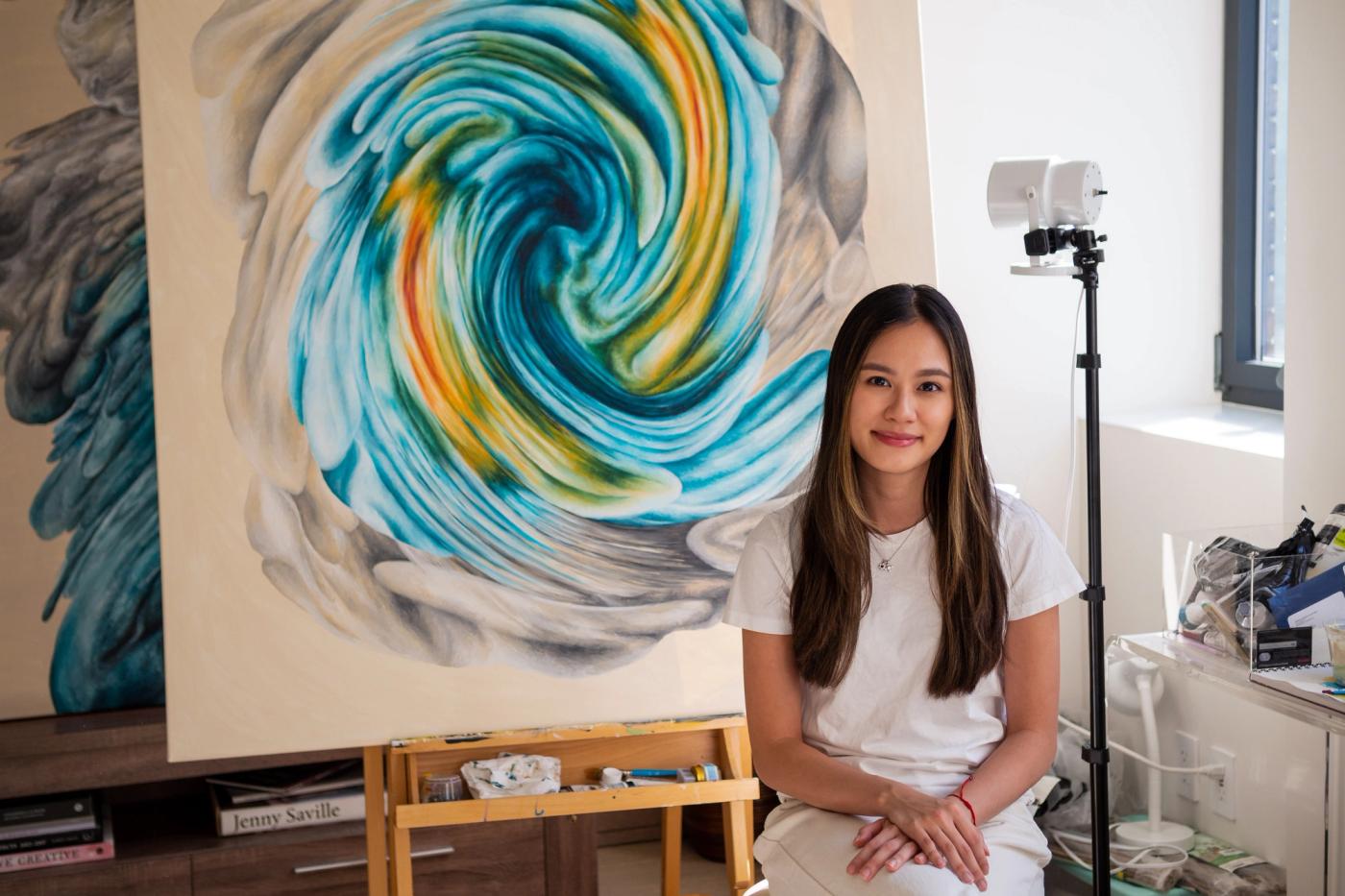
For a moment there, Maria Angelica Tan was the only living girl in New York: staring at Monet’s Water Lilies at Room 515 of the Museum of Modern Art (MoMA), or Edward Hopper paintings somewhere in the City That Never Sleeps. Do you hear flowers dreaming? What is the color of loneliness? What does solitude taste like? Maria says, “When my emotional state is (shattered), when I’m about to break down, I just sit and stare at the paintings.”
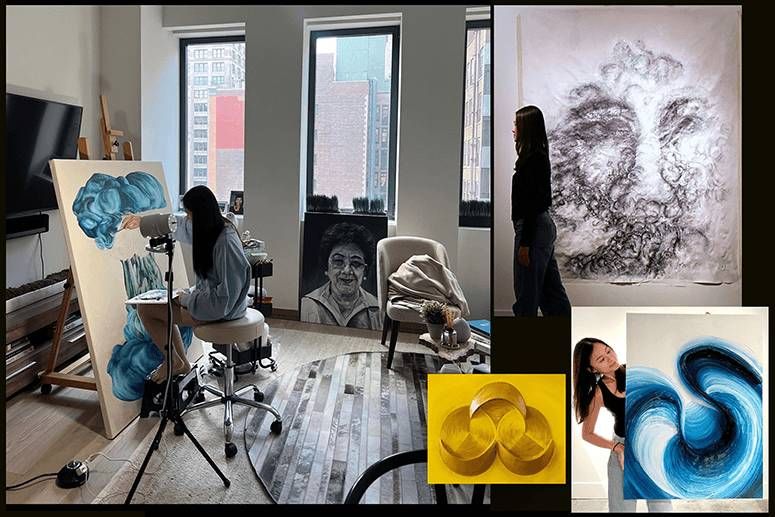
Some will see it as a contemporary fairy tale; others will dismiss it as seemingly mundane. Her routine: The Filipina artist in her early twenties takes the 102 or 103 bus to the West Side gallery in Hudson Square where she is currently exhibiting her artworks, or goes around to buy art supplies. But, before that, she usually eats leftover adobo or sinigang in the apartment that she shares with her sister, April, or opens a can of Delimondo corned beef or a jar of tuyo brought from Manila. She listens to Taylor Swift, digs Jenny Saville, follows basketball news, eats chawanmushi, takes Mandarin lessons online, and samples different coffee beans. Relatively ordinary, right? But how does she as an artist mediate between the mundaneness of contemporary living and the visual sorcery of gestured and impasto-ed acrylics that stand for compelling metaphysical ideas?
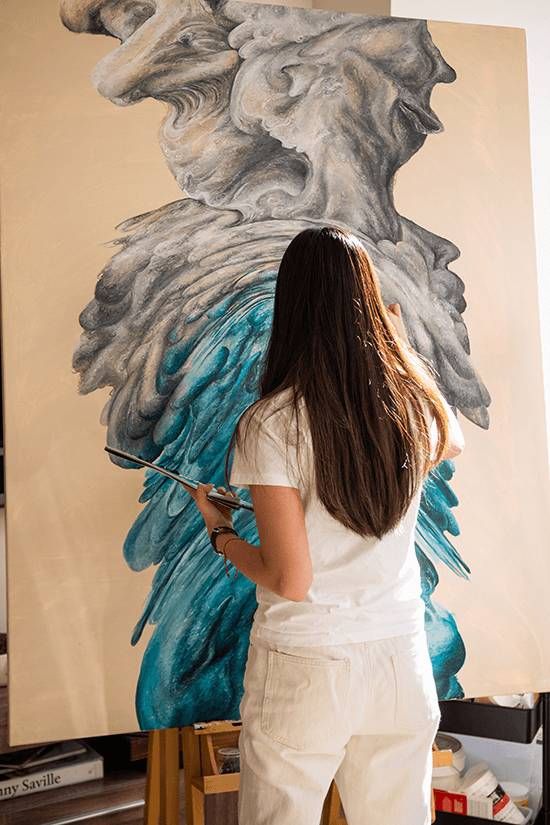
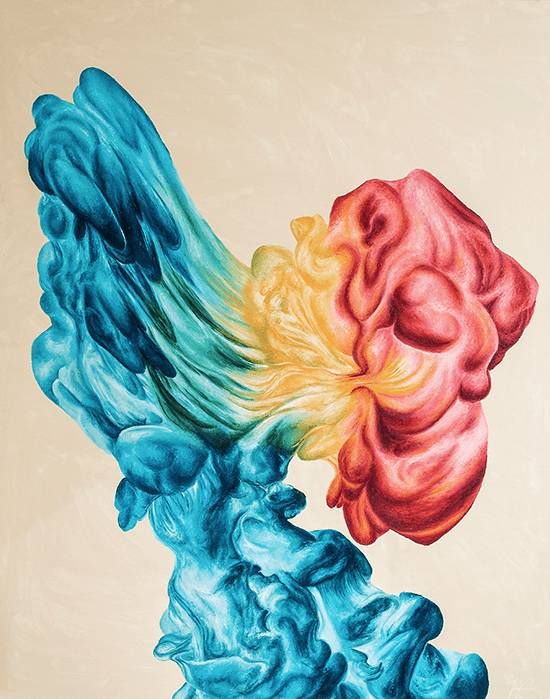
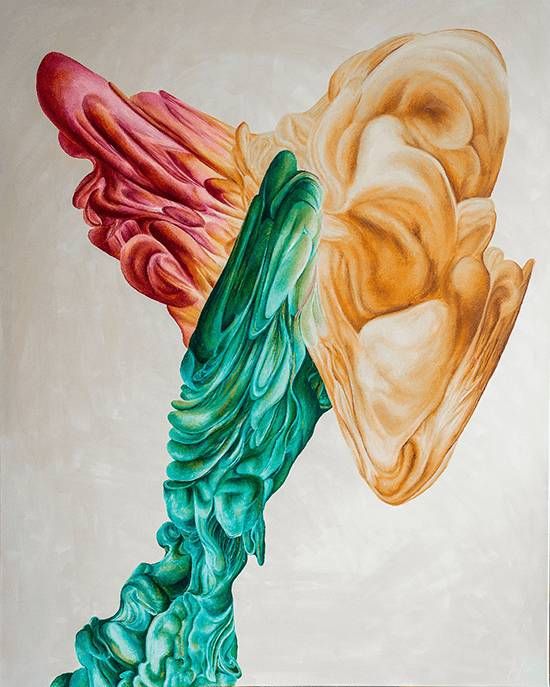
She explains, “I naturally gravitate towards familiarity. But I take elements of what I’m familiar with and the things that I like—Korean dramas, for example—and use them in creating my art. For my color palette, I use a lot of primary colors. Just because they’re primary colors, it doesn’t mean they’re boring. I try to elevate and use them in a different way. (The key) is to reimagine the familiar and make it extraordinary.”
When Maria was still studying at Columbia University, she recalls, at four in the morning, feeling simultaneously conscious and unconscious, in her mind seeing people and places in a spiral or a kaleidoscope. “It was so vivid,” she wrote, “What caused it? Why was it so real? What did it mean? Somehow, instinctively, I know that, through art, the answers will eventually unravel themselves.”
Her father, business tycoon Michael G. Tan, recalls how Maria will visit museums and galleries on her own whenever they go abroad. “She would go to an art store and get lost in it for hours. We never knew she was into art seriously until she mounted a mini-exhibition of her works as part of her presentation in her art class in secondary school. She asked us to visit her and it was such a big, pleasant surprise when we saw her works displayed along the school hallway. Once, when we were scheduled for a family trip to Boracay, Maria didn’t come with us because she felt she needed to stay up for two straight nights to finish a very large portrait—as she felt that her show was missing something special.”
Maria grew up in Manila with four older sisters and a kid brother. Her parents, Michael and Angeline, encouraged their children to explore their passions. According to the father, “We believe that in pursuing their interests, work will not feel like work. We want them to find happiness and fulfillment in what they do.”
Maria considers that something invaluable. “From a very young age, my parents nurtured and celebrated my creative inclinations rather than trying to dissuade or redirect them. Watching my dad work diligently and consistently every day had a profound impact on me. His actions embodied the idea that producing authentic, continuously evolving work requires showing up and putting in the hours with integrity—a philosophy that now fuels my own motivation as an artist. My mother devoted her life to raising our family of six children. It required great personal sacrifice and, because of that, it instilled in me an equally profound appreciation for true commitment.”
Maria also cherishes her relationship with her late grandmother. “My Ama has been a profound source of inspiration throughout my artistic journey. She never missed even the smallest high school showcases, always standing out with her signature bright, printed blouses and distinctive perfume. Looking back, my grandmother’s vibrant presence and unwavering encouragement gave me a lot of confidence.”
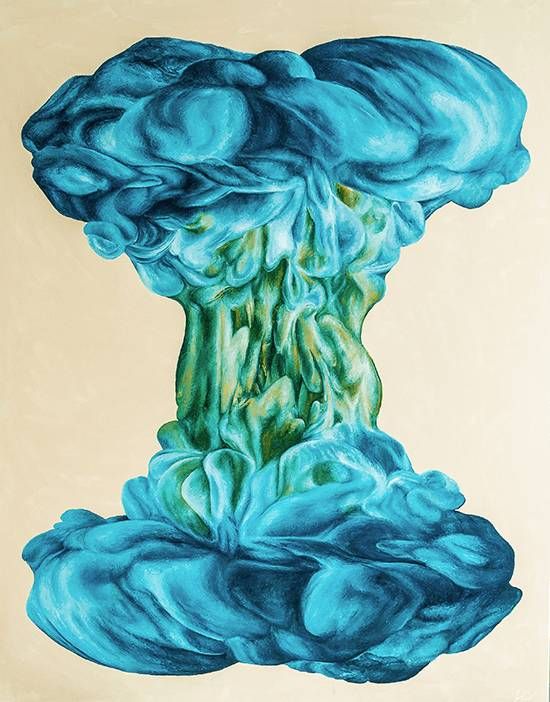
The young Maria took up summer art classes and would decorate what she created during pottery sessions with swirls and glitter. She also did portraits. Her dad fondly remembers how two of their staff-members became the subjects of Maria’s early paintings: Manang Bibing and Manong Duca. Michael says, “These staff had been with us since Maria was born. The portraits were about these people who left their homes and families to earn money serving other people. They depicted the harsh realities in their faces, but, in spite of it all, they are happy people. She wants to show the resilience and grit of these workers who learned to embrace life with much happiness. How they truly embody who Filipinos are and what they’re made of.”
Maria agrees. “I chose to portray them to highlight their unique identities and stories, reflecting the warmth, resilience and collective spirit distinctive to the Philippines. In my more recent works, I delve into themes of Catholicism and purpose, which are deeply ingrained in Filipino culture. These elements continually inspire my thinking and profoundly influence the subjects I choose to represent in my artwork.”
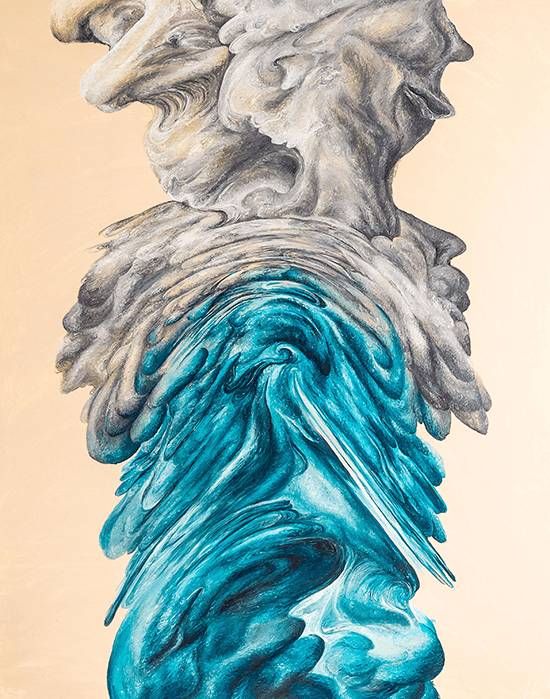
Growing up in a Filipino-Chinese household, Maria was immersed in two rich cultures. This duality has deeply influenced her work, leading the young artist to explore themes of identity and belief systems. Her multicultural background gives her a unique perspective that she continuously explores in her art.
“My creative process often begins unexpectedly, like when observing something as simple as milk swirling into coffee and noticing how the forms and colors blend together. That spark of inspiration leads me to start sketching—first rough outlines, then building up to more detailed drawings until I’ve mapped out the intended composition. Once I have that clear vision, I’ll experiment with color swatches on test canvases to determine the optimal palette and techniques. After that preparation, I can fully immerse myself in painting the final piece, entering an almost trance-like state.”
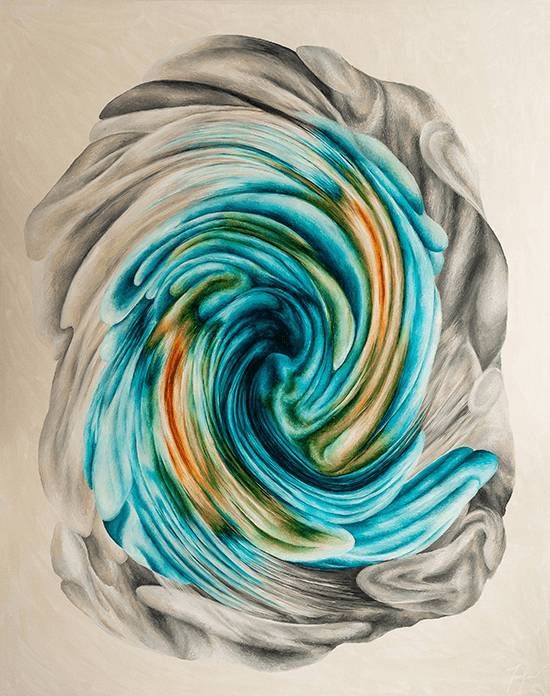
She had to study in New York, because she likes the charisma, aura and allure of the jazzy city with (per Allen Ginsberg) “the supernatural darkness of cold-water flats” as well as “one eyeblink to the horizon in (the) last eternity.”
“I’ve been living in New York for about six years now, and I’ve become accustomed to the hustle and bustle of the city,” says Maria. “It feels surreal. When I first arrived in the city, I spent my days visiting galleries and museums, often alone but sometimes with friends. I used to dream about having my work displayed in the places I explored, imagining it being seen by such a diverse and multicultural audience. Now, having my work exhibited in New York feels like a step towards making that dream a reality. I feel incredibly lucky and grateful for this opportunity.”
New Yorkers are now seeing how this young Filipina has distilled her current state (in that place of movie scenes and pocketful of dreams) to a suite of paintings born out of spontaneity and reflection.
“My paintings examine how spirituality and belief systems change in response to modern influences like science and cultural diversity. This exploration mirrors my own spiritual journey, tracing my evolution from a Catholic upbringing in the Philippines to embracing Buddhist philosophy. The exhibit highlights the dual influences of my heritage and the transformation of my beliefs.”
So, what does it mean for the father to see his daughter get her first show in New York?
“Very proud and humbled,” reveals Michael. “Everything she has achieved she did quietly on her own. She has always carved her own path. She doesn’t let anything get her down in times of struggle. Never asked us for much while she pursued her dreams. We always tell her, ‘Let destiny take you to where it will.’”
Destiny—or, in Maria’s case, that force of letting yourself be silently drawn by the strange pull of what you really love—has led her to an exhibition space all her own in NYC and, ultimately, to approximate what her past artistic heroes have done for her.
She concludes, “In the past, I’ve been deeply touched by the artworks in various forms and by artists from many historical periods and geographies. My hope is to bring a fraction of that experience to my audience, to move people in some way, and offer them a sense of hope, comfort or inspiration.”
Like Monet’s water lilies dreaming of eternally clear mornings.
Maria Angelica Tan’s show at Jutta Gallery is on view from May 31 to June 4. Jutta Gallery is at 104 Charlton St. 1E Front, New York, NY. For information, visit www.jutta.gallery.
A version of this story first appeared in The Philippine Star, 2024. Print edition.


