Tropic of wonder
Kahlo and Rivera hung as part of a region rather than a greatest-hits parade: Tropical at the National Gallery Singapore, 200 works deep.
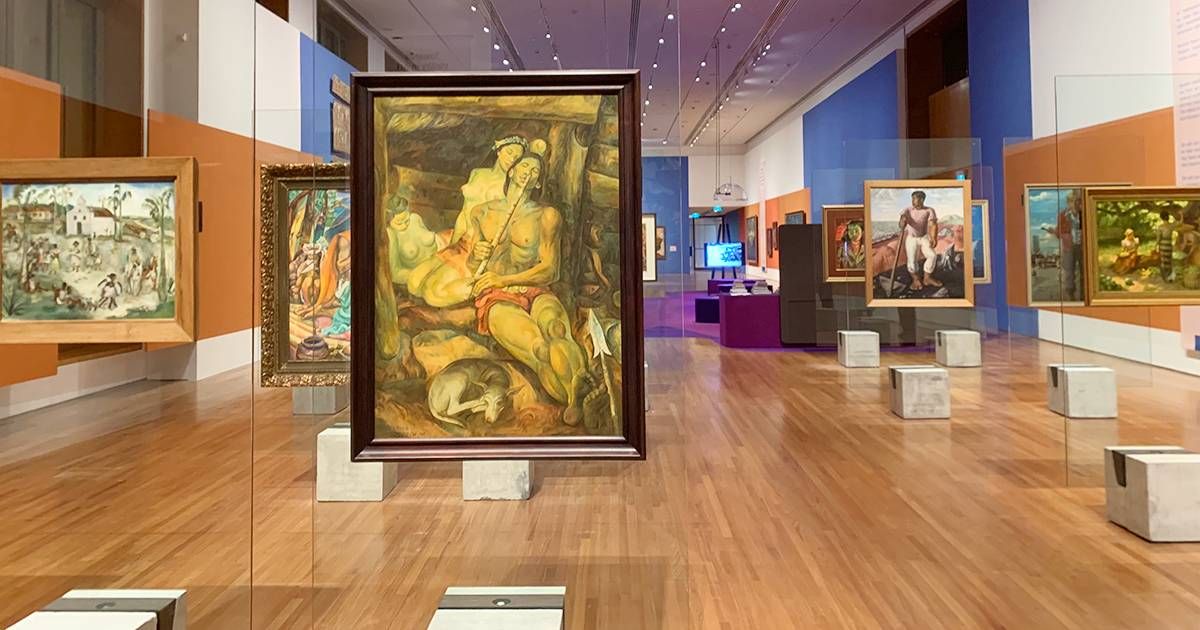
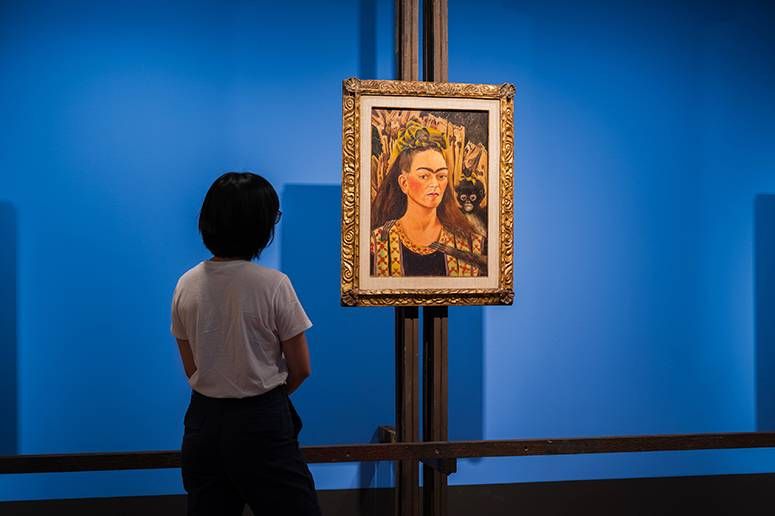
When a Frida Kahlo portrait or a Diego Rivera visual parable on labor does not occupy the sweetest of spots in an exhibition, but is situated as part of a region, a mindset, and an aesthetic in order to trot out a narrative, something thought-provoking…. you know this is not the usual unfurling of the greatest of pop hits.
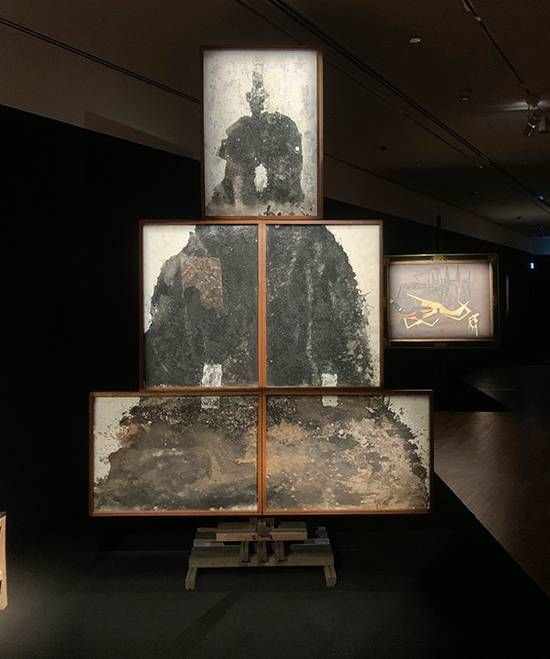
Tropical: Stories from Southeast Asia and Latin America, which is on view until March at the National Gallery Singapore (NGS), traces how artists from Southeast Asia and Latin America challenged conventions in building new vocabularies in modern art. Over 200 iconic paintings, sculptures, drawings, performances, and sensorial installations from the likes of Emiria Sunassa, Hélio Oiticica, Latiff Mohidin, Patrick Ng Kah Onn, Paul Gauguin, Tan Oe Pang, Tarsila do Amaral, our very own David Medalla, as well as Frida and Diego are presented in the world’s first large-scale museum exhibition that takes a comparative approach between the artistic expressions from both regions, surveying their solidarities in the aftermath of colonialism.
The idea of tropicality goes beyond the images of banana trees, mangoes, and occasional monkeys. It is suffused with, according to senior curator Shabbir Hussain Mustafa, “an agitational quality and its potential to open up a dialogue or even a fracture among visitors.”
He stressed how the thrust of “Tropical” is not just to present art vis-à-vis a larger swathe of historical occurrences, but also “the rewriting of the history of art from a Singapore perspective.” Mustafa further explained, “The gallery’s curatorial work has always revolved around this question of Southeast Asia—what makes something Southeast Asian, how does it become that, and how do we then assess it?”
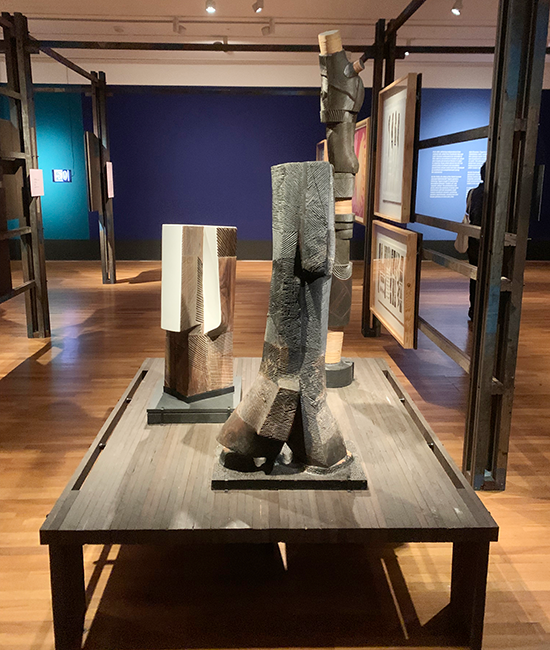
Thus, “Tropical” aims to provide insights into the complexities of the term itself and its artistic and cultural implications, weaving together historical, artistic, and architectural elements in the context of the exhibition. There is also an emphasis on the unique design choices made in collaboration with architect Richard Hassell, which deviate from conventional approaches and allow the audience to explore the space, engage with interactive elements, as well as gain a deeper understanding of the complex narratives presented in the exhibition.
This initiative emerges from the gallery’s sustained efforts to critically reassess modern art from a Southeast Asian perspective.
Dr. Eugene Tan—who is the director of both SAM and the NGS—shared how one of the first shows that they did when the National Gallery Singapore opened in November 2015 was Reframing Modernism.
“We tried to reframe how Modernism started, because we often think of Modernism as something that started from Europe and then spread across the world. So, we wanted to show how it began in Southeast Asia in its own unique ways as well—of course, with influence from Europe. But the local conditions were also quite specific. Then we did things like Between Worlds by Raden Saleh and Juan Luna, the first major solo shows of these two 19th century artists, who also had connections with Europe at the time.”
Tan continued, “We were showing how Southeast Asian artists figured within larger global art histories. So, that’s one particular strand of our special exhibitions: looking at Southeast Asia in an international context. Then the other (direction) is really focusing on Southeast Asia itself, looking at some of the key artists within Southeast Asia and Singapore. We also had comparative exhibitions, exploring the relationships, connections between art histories and the art scenes of countries in the region. So, one interesting exhibit I can think of was Suddenly Turning Visible, which looked at Bangkok, Manila and Singapore from the ’60s to the ’90s.” This show aimed to illuminate the intersection between art and architecture in three key cities.
The “Tropical” survey was supposed to be mounted early on in the National Gallery Singapore’s programming, but got delayed because of the pandemic.
“Mustafa started talking about this as far back as nine years ago,” recalled Tan. “He’d been researching and then building up his curatorial team to work on this for a long time.”
How important was it for “Tropical” to see the light of day, so to speak?
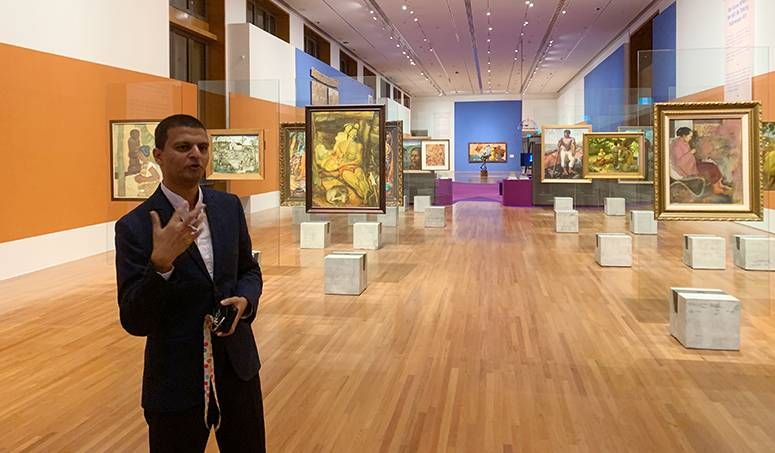
Senior curator Phoebe Scott chimed in, “I suppose it’s this idea of decolonizing our art histories. I think many countries are going through this process of decolonization as well. When we first set up the permanent gallery we were thinking about decolonizing Southeast Asian art history away from the West. But as time goes on, we have to think more and more about what has been marginalized within Southeast Asian art history itself, and to look at the marginalities or internal colonization.”
The Myth of the Lazy Native in Gallery 1 emphasizes how the stereotype of the “lazy native” was an invention of colonial rule. A painting by Paul Gauguin can get critics scoffing with its romanticized, particularly Eurocentric, exotic constructs. By way of contrast are works by artists from the region who actively strove “to challenge exotic depictions by painting a more ‘truthful’ representation.” A towering example is the collaboration among Filipino masters Victorio Edades, Carlos “Botong” Francisco and Galo Ocampo titled Mother Nature’s Bounty Harvest, as well as by other artists who used their art as “a means of reclaiming their cultural heritage,” with the word “tropical” becoming an emblem of empowerment.
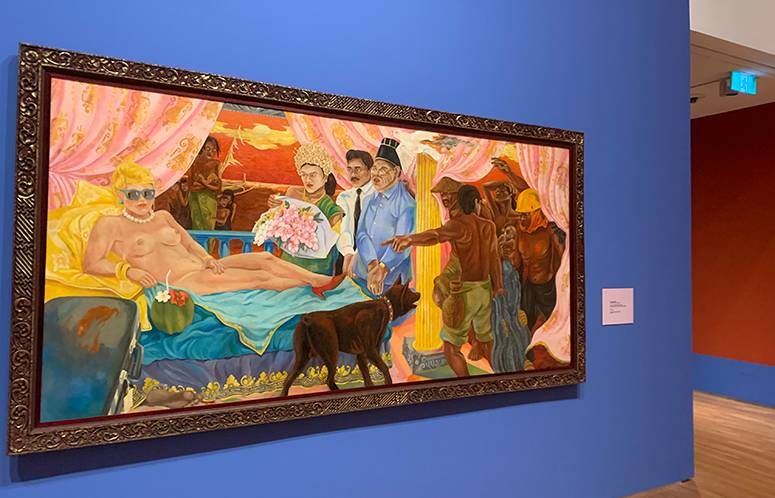
Indeed, the most remarkable aspect of “Tropical” is the confluence of narratives in presenting artworks from the two distinct regions of Southeast Asia and Latin America not just in crisscrossing dialogue of sorts, but in a totally new light.
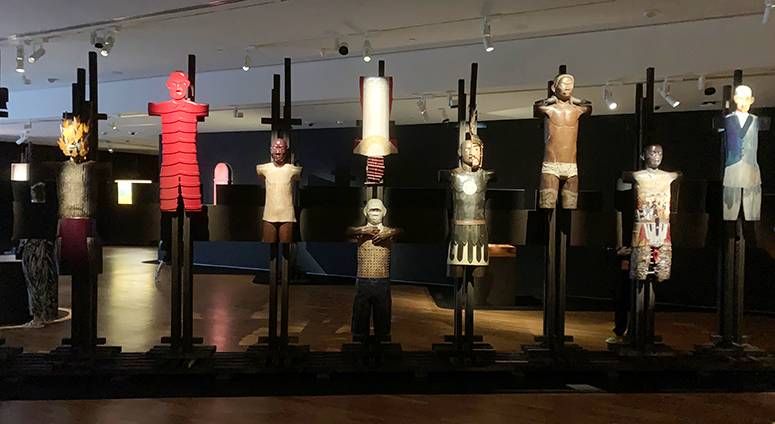
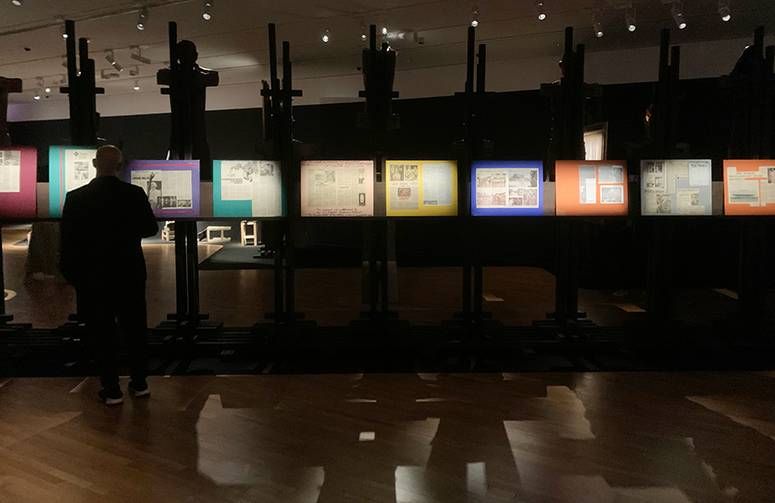
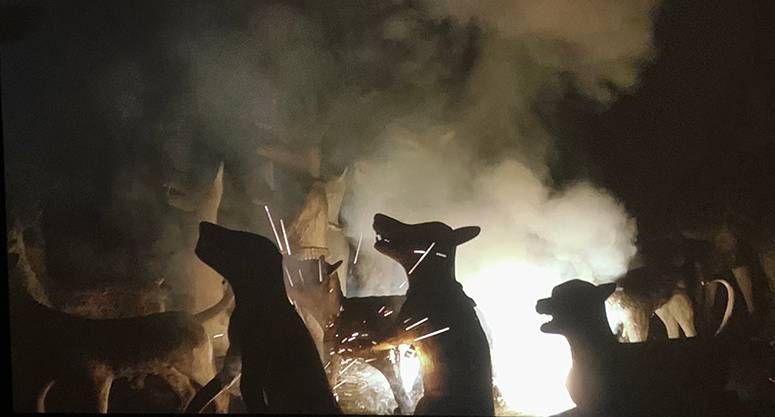
What spurred David Medalla to line up all those newspaper clippings that banner social paradoxes and borderline dystopia? What were the first mind-grains for his Sand Machine? What’s the tale behind the decapitated warriors whose head is ablaze in Roberto Feleo’s Ang Retablo ng Bantaoay? In 1981 at the Bandung Institute of Technology in Indonesia, artist Semsar Siahaan dragged a torso sculpture by his art teacher, Sunaryo, to the central courtyard of the institute; set it on fire; wrapped the charred remains with banana leaves as a symbol of healing; and retitled the work. Semsar felt that he was appropriating an appropriation.
Just a few of the sights and stories in a veritable tropic of wonder.
For information, visit nationalgallery.sg/Tropical. National Gallery Singapore Address is 1 St. Andrew’s Road, Singapore 178957. The gallery is situated in the center of the Civic District, inside two famous buildings, City Hall and the old Supreme Court.
A version of this story first appeared in The Philippine Star, 2024. Print edition.


