‘The Imagination peoples the air’: PHL prepares for literary spotlight at Frankfurt Book Fair
As Guest of Honour at the 2025 Frankfurter Buchmesse (FBM), the Philippines is boldly scripting a new chapter for its literature on the global stage.
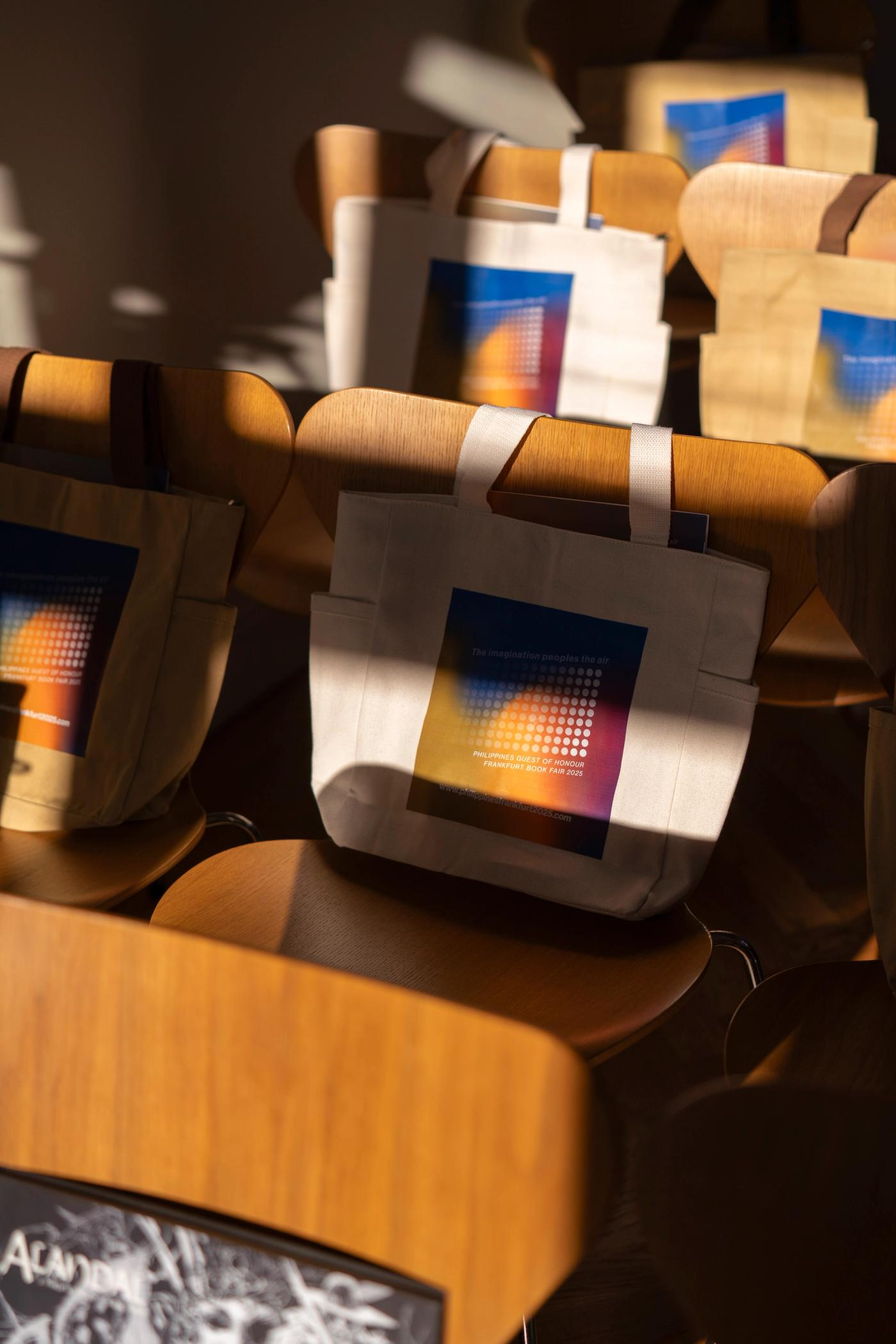
As the Philippine literary contingent returns to Germany — a country deeply intertwined with our country’s own literary history — the nation is poised for a landmark year as we take center stage as Guest of Honour at the 2025 Frankfurter Buchmesse (FBM) in October. Kicking off with its inaugural national stand at the Leipziger Buchmesse in March and a dynamic cultural program already in motion, the Philippines is boldly scripting a new chapter for its literature on the global stage.
At a recent press talk in Berlin, Senator Loren Legarda, a long-time advocate for Philippine arts and culture, spoke in a video message with conviction about the journey to this moment. “It is quite ironic for a nation, whose independence was inspired by books, to be late at the world’s oldest book fair,” she remarked, reflecting on the country’s long hiatus from the event. “We waited a hundred years after our freedom from colonial rule to participate in the FBM.”
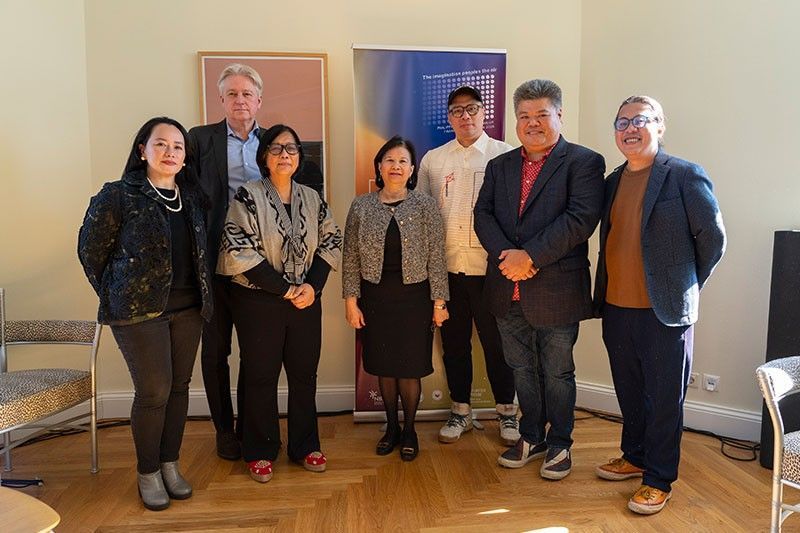
The Philippine Guest of Honour delegation was represented by National Book Development Board (NBDB) executive Karina Bolasco, curator of books and head of the literary program; Daryll Delgado, who introduced the new German edition of her climate fiction novel Remains; J. Philip Ignacio, presenting his historical graphic novel Alandal; alongside representatives from the National Commission for Culture and the Arts (NCCA).
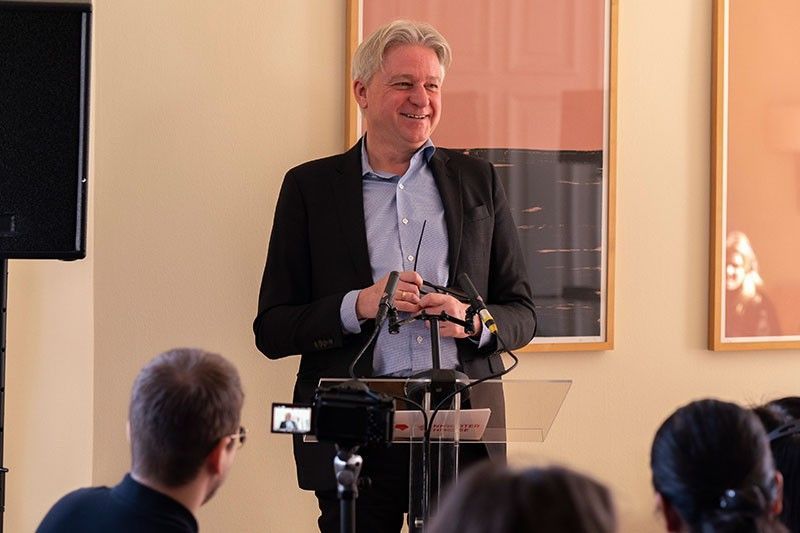
The road to Frankfurt has been anything but accidental. It was the senator who, nearly a decade ago, helped secure the Philippines’ re-entry into the Frankfurt Book Fair after a 15-year absence. In 2017, she met with fair officials and signaled the country’s ambitions to become Guest of Honour — a bid finally formalized in 2023.
This wasn’t just about logistics or representation; it was about reclaiming cultural space. The campaign wasn’t merely bureaucratic. It was a way of taking our rightful spot in the story of world literature. It symbolized an assertion: that our narratives, shaped by centuries of history and a diverse linguistic heritage, belong on the global stage.
“From Rizal’s Berlin to Frankfurt’s grand halls, the Philippine story continues — written in ink, lived in memory and, now, voiced on the world’s largest literary stage,” Senator Legarda said, invoking our nation’s most iconic literary figure, Dr. José Rizal. Berlin, where Rizal completed Noli Me Tangere, serves as a historic bookend to the Philippines’ modern literary aspirations. “What began as a dream, nurtured by a decade of dedication, has become a defining moment in our literary journey,” she stressed.
The theme for the Philippines’ Guest of Honour role — “The Imagination peoples the air” — is drawn from Rizal’s own work. It’s an apt reflection of a country whose literature springs from a complex confluence of indigenous, colonial and diasporic narratives.
The program is ambitious. Twenty-seven books have already been translated into German through the NBDB’s translation subsidy, and more are on the way. These range from climate fiction and political essays to historical graphic novels and children’s literature. Among the titles are Aswanglaut by Allan Derain, Katrina Tuvera’s The Collaborators, The Singing Detainee and the Librarian with One Book: Essays on Exile by Michael Beltran.
But for Senator Legarda, this literary export is not merely about visibility. “Government funding, institutional support, and policy initiatives are crucial in ensuring that Philippine literature continues to flourish,” she said. “Sustained investment in the art world and creative sphere is essential, as literature is not merely an artistic pursuit but a vital force in cultural diplomacy, national identity and global dialogue.”
This duality — of local roots and global reach — resonates deeply. The Philippines is home to over 135 ethnolinguistic groups and a diaspora of 10 million. Its literary voices echo across a broad spectrum of languages and lived experiences, shaped by history, resilience and transformation.
The senator hopes the Guest of Honour spotlight will be catalytic. “We hope that this central role would open the floodgates for more Filipino authors, translators, artists, and publishers to present our literary wealth,” she said. The Leipzig fair serves as the initial stage, featuring 150 titles — including 14 German translations — and a strong delegation of writers, translators and graphic novelists.
Germany, Senator Legarda noted, is a fitting host. “This country holds a precious place in Philippine history, deeply intertwined with Rizal’s life and work,” she said. “Heidelberg had so captivated him that he dedicated a poem to it. Wilhelmsfeld was where he lived in the vicarage of Pastor Karl Ullmer. Berlin was where his most important work, Noli Me Tangere, was first published. This novel so stirred the hearts of the colonized Filipinos that it ignited a revolution, which led to our inevitable independence.”
And as Rizal once bridged Filipino identity and European thought, so too does this cultural exchange aspire to foster understanding in a fractured world.
“In the steadfast support of a government that understands that words are not just vessels, but bridges of diplomacy, shared humanity and identity,” the senator concluded, “literature thrives.”
The Philippines Guest of Honour presentation (PHLGoH2025) at Frankfurter Buchmesse 2025 is a collaborative undertaking of the National Book Development Board (NBDB), National Commission for Culture and the Arts (NCCA), Department of Foreign Affairs (DFA), and the Office of Senator Loren Legarda. Inspired by a line from Rizal’s Noli Me Tangere, the country’s theme “The Imagination peoples the air” encapsulates the profound intersection of Philippine literature, vibrant culture and rich history.
A version of this story first appeared in The Philippine Star, 2025. Print edition.


