Feeling Rizal hover ‘In the Air’ tonight in Heidelberg
Rizal on bread, cheese and forever potatoes: retracing his Heidelberg addresses with Ambeth Ocampo, from the eye clinic to the river.
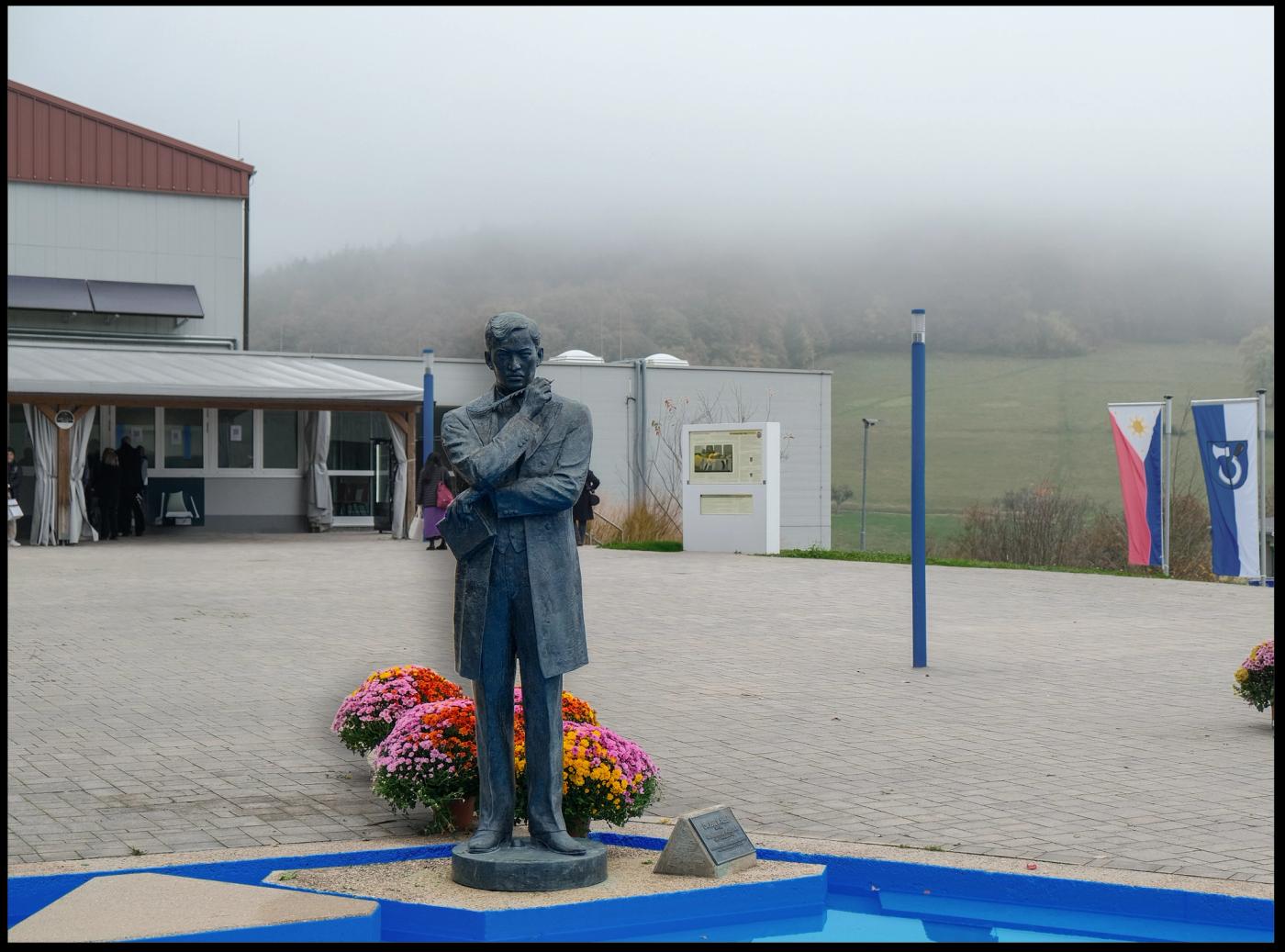
HEIDELBERG, Germany—They say history is not just something we read or study; it is something we walk through. All our movements and moments become, in a sense, historic (with the magnitude of their historicity being relative, of course). History inhabits the air of cities—most especially old, grizzled ones such as Heidelberg in Germany with the hum and thrum of its cobblestones, where we recently echoed the footfalls not only of countless German figures who have shaped history but also of one Dr. José Rizal.
History shadowed our every step.
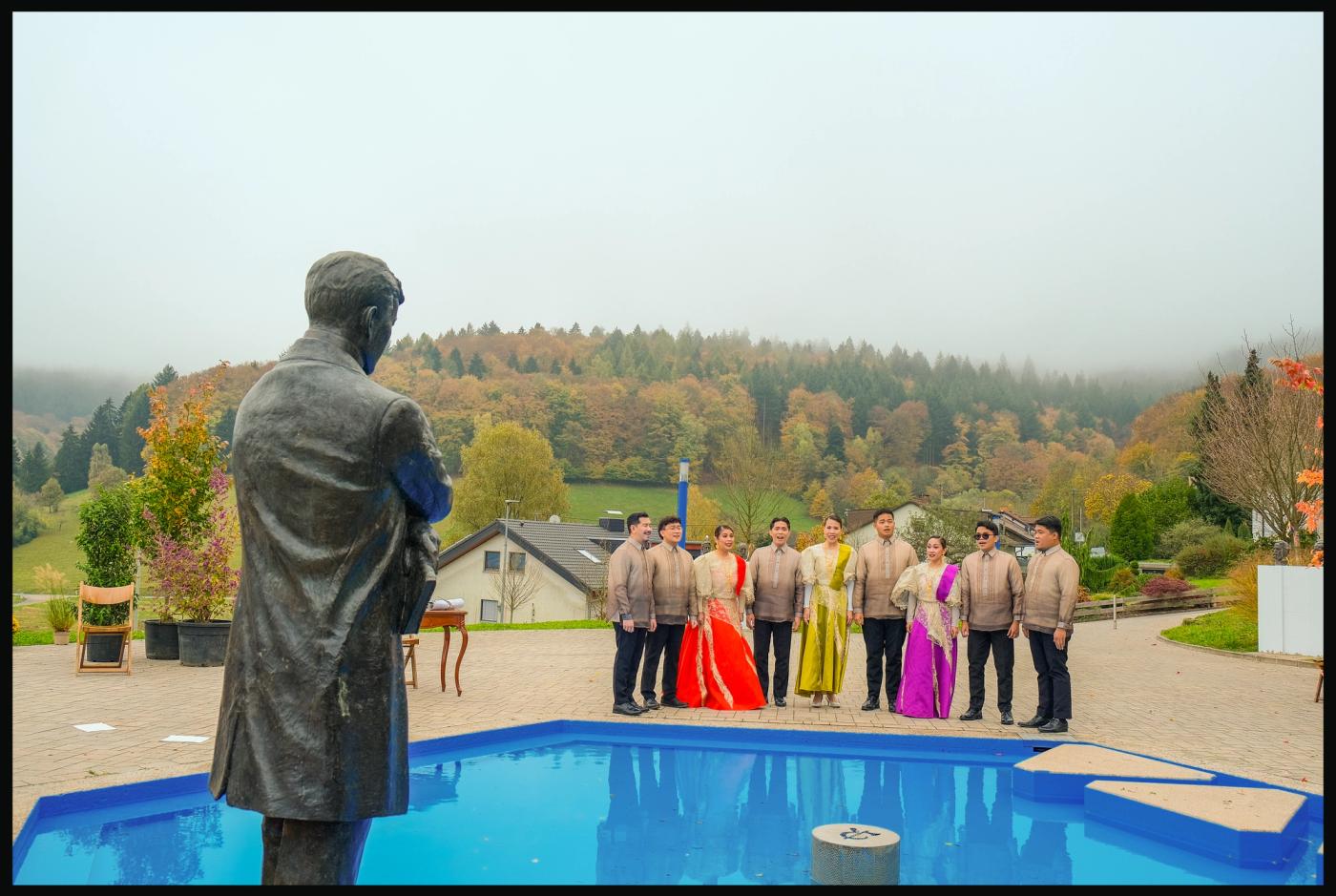
It is fitting how the National Commission for Culture and the Arts (NCCA) chose Heidelberg and Wilhelmsfeld, another place where our National Hero spent considerable time, to present its “In the Air” program, which not only punctuated our participation at the Frankfurter Buchmesse (FBM) but also preludes our Guest of Honour (GoH) role next year in one of the most prestigious book fairs in the world.
“In the Air” was designed to engage participants in an immersive experience of the enduring ties between our country and the German nation. At its heart is the legacy of Rizal, whose time in this part of Europe deeply influenced his writings, ideas, and activism. The program not only explores Rizal’s duality of home and exile but also emphasizes his contribution to international solidarity in Southeast Asia. It further highlights the relevance of his journey to the contemporary Philippine diaspora. The four-day literary and cultural program fostered inspiring dialogues between Filipino and German authors, art talks, theatrical performances as well as historical tours retracing Rizal’s footsteps.
“It’s time to let the world hear Rizal’s voice again,” said Senator Loren Legarda, the visionary and driving force behind the Philippines-as-GoH project, with the NCCA and the National Book Development Board (NBDB) as allied cultural agencies.
“I hope each of you feels that spark—to continue telling Rizal’s story, to let it live in poems, novels, and conversations. His spirit endures in each of us, for the Philippines has always been a nation of storytellers. Our stories flow from the ancient rhythms of our ancestors to the bold, modern narratives of today. And our literature isn’t confined within our islands; it travels far, carried by our diaspora to new lands. It speaks of hope, of struggle, of dreams that refuse to fade. It tells of resilience, of triumph, and of the undying spirit of the Filipino people. And in Frankfurt 2025, the world will witness this through our pavilion.”
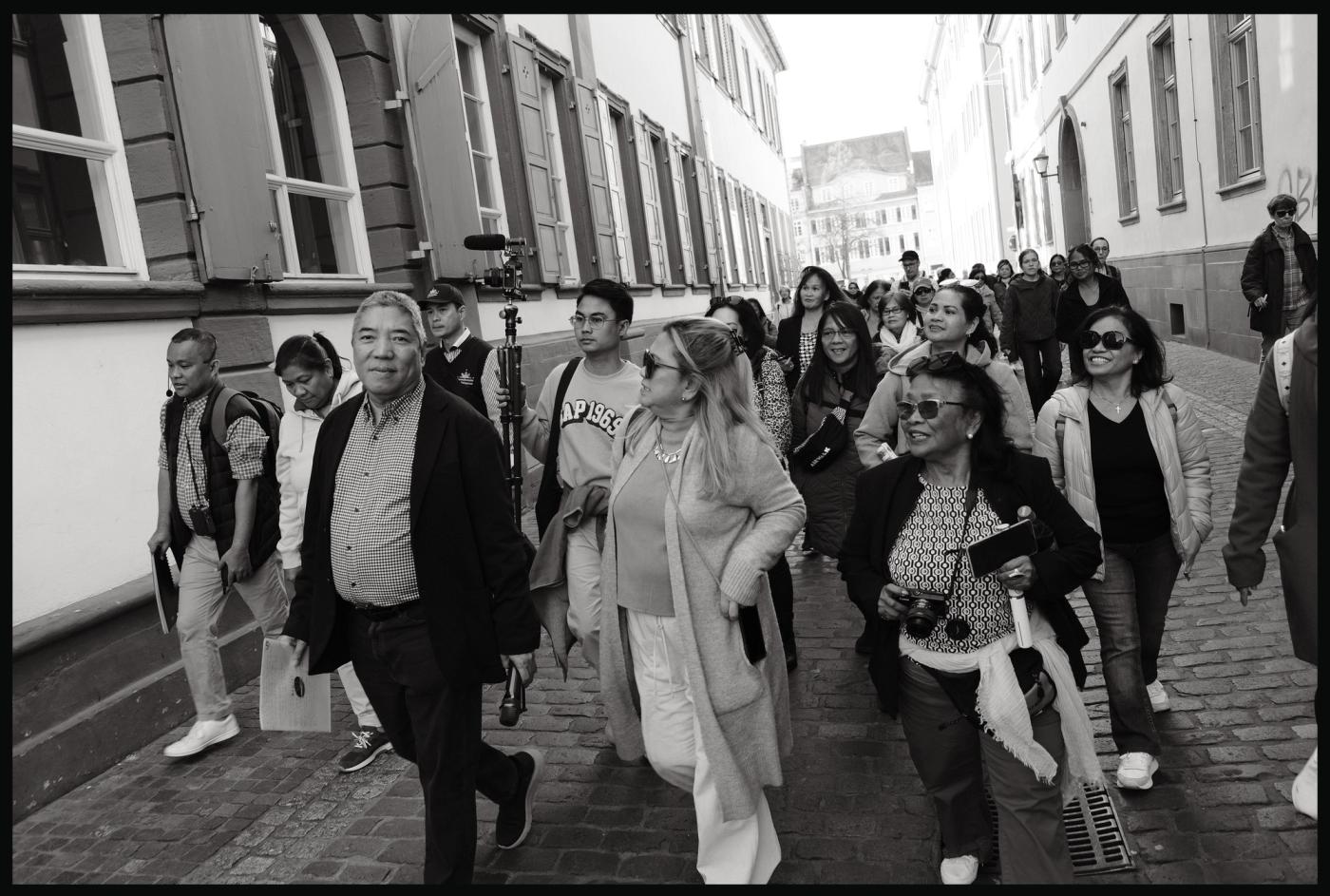
What we were doing was a sort of pilgrimage, according to historian Ambeth Ocampo, the walking wittypedia of all things Rizal and who led us through our hero’s old digs and haunts in Heidelberg where he arrived in the winter of 1886, and where he would start weaving lines about foreign flowers planted by the traveler along the way. Ambeth insisted that Rizal is the poster boy of the Philippine participation in the Frankfurt Book Fair.
“Rizal was a reader, writer, translator, and a publisher. Many of you were born or came from the Philippines, and you know that José Rizal is everywhere: in every town, every plaza, there’s a statue of him. So we all study about him in school, but we really do not know him. Rizal is everywhere but he is nowhere.”
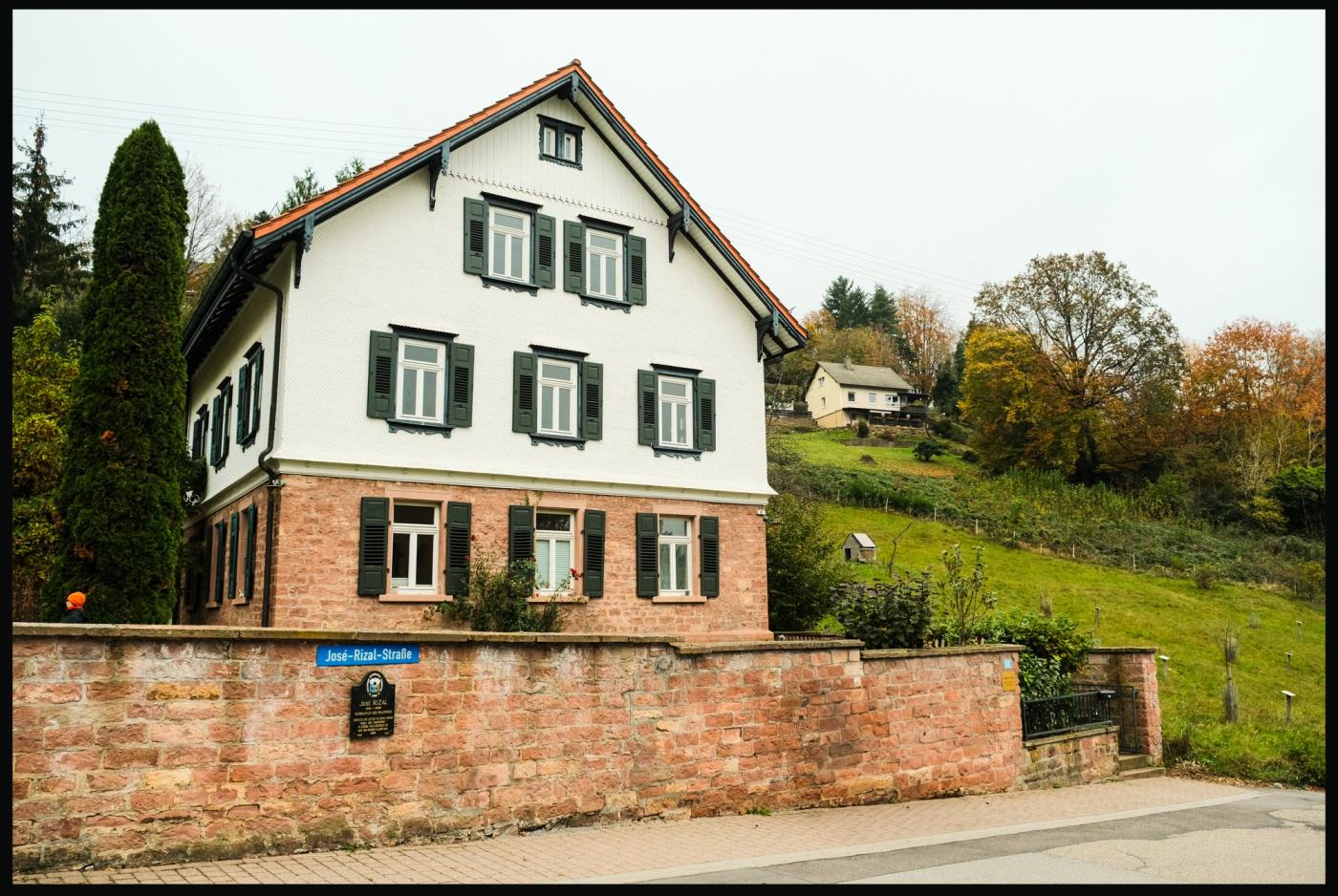
As we visited each Rizal-related site (from modest rooms on Karlstrasse 16 and Obere Neckarstrasse 11, near the river where he penned “To the Flowers of Heidelberg,” to the eye clinic of his mentor, Dr. Otto Becker, on Bergheimer Strasse 20), you would realize that the image of Rizal presented in Philippine schools—of a perfect, untouchable hero—is incomplete. Rizal was human, with struggles, flaws, and moments of doubt. Most of the time he was broke in Germany (well, just like me). Rizal adhered to a tight budget, subsisting on bread, cheese, and omnipresent potatoes. He allocated his meager funds for books, tuition, out-of-town trips (to Berlin, Leipzig, and Dresden, among other places) as well as regular visits to libraries. He was an intellectual powerhouse, a man who mastered multiple languages, including German, French, Latin, and even classical Greek. This linguistic prowess was not just a testament to his intellect but also a tool he used to navigate his life abroad, where he often communicated in languages foreign to him.
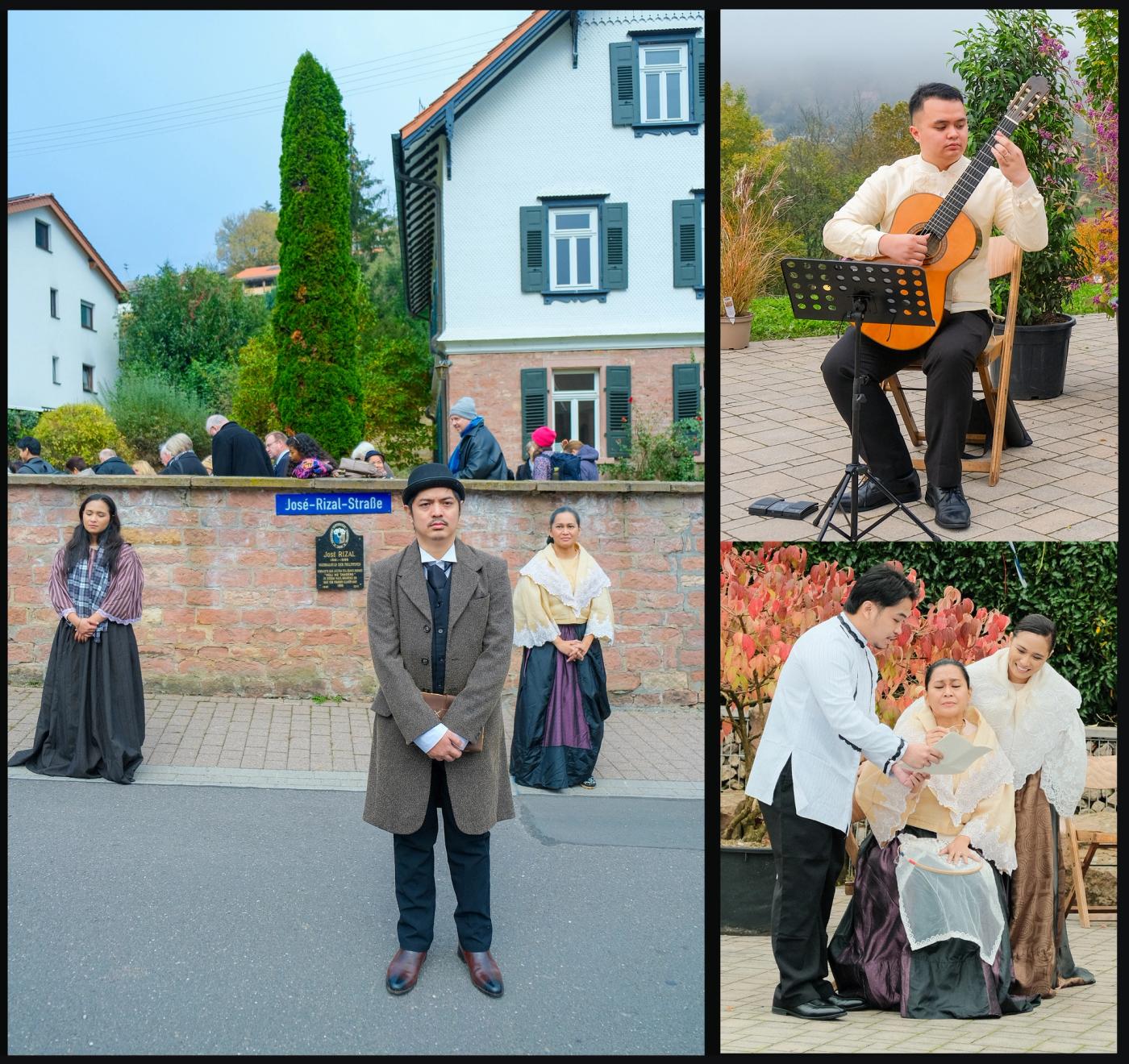
Walking in Rizal’s footsteps in Heidelberg had given each of us participants a new appreciation for his journey—not just as a National Hero but as a man who worked tirelessly to understand and better the world. Ambeth stressed that Rizal’s legacy is more than his statues in plazas or his presence in textbooks. It is his ability to inspire reflection, make us notice the unnoticed, and challenge us to grow. Heidelberg, for many of us, is no longer just a historic town; it has become a place where Rizal’s spirit lingers, reminding us to think deeply, live fully, and aspire for a better world than the one we found ourselves in. The very reason why people read, write, and publish books: to be part of an ongoing story of transcendence. To somehow make a mark.
That very evening, my photographer and I would find ourselves in Karlsplatz staring at the Sebastian-Münster-Brunnen backdropped by the dramatically lit ruins of Heidelberg Castle poised upon the stony hilltop, as participants in tours led by either the “hangman’s daughter” or the “night watchman” congregated near the fountain. Rizal had a view of these very ruins from his apartment. On certain occasions, there would be fireworks and the castle would glow red against the velvet night.
What was the man thinking? We imagined how textbook Rizal would look at the hilltop schloss and contemplate the rise and fall of royals, the resilience of the Filipino spirit amid the decay of colonial oppression, the duality of beauty and impermanence in life, the inescapable lessons to be gleaned from history—or how he’d been waiting for the moment of Philippine independence for all his life, oh Lord. The real, all-too real Rizal, on the other hand, would probably be dreading the thought of another budget breakfast the next morning—starring potatoes, forever potatoes—before heading out into the city of romantics, scholars, and philosophers who love long walks.
The Philippines’ participation as Guest of Honour at the 2025 Frankfurter Buchmesse is presented by the National Book Development Board (NBDB), at the forefront of promoting the Philippine book industry and overseeing the nation’s preparations for the fair; the National Commission for Culture and the Arts (NCCA), which coordinates cultural initiatives and curates the Philippine presentation for the event; the Department of Foreign Affairs (DFA); and the Office of Senator Loren Legarda.
A version of this story first appeared in The Philippine Star, 2024. Print edition.


