Ronald Ventura’s ‘Kalupaan’: Appetite for reconstruction
Saints in hard hats and a bird nesting in a construction site: Ronald Ventura asks what progress costs, in the first show at Cloudgrey Gallery.
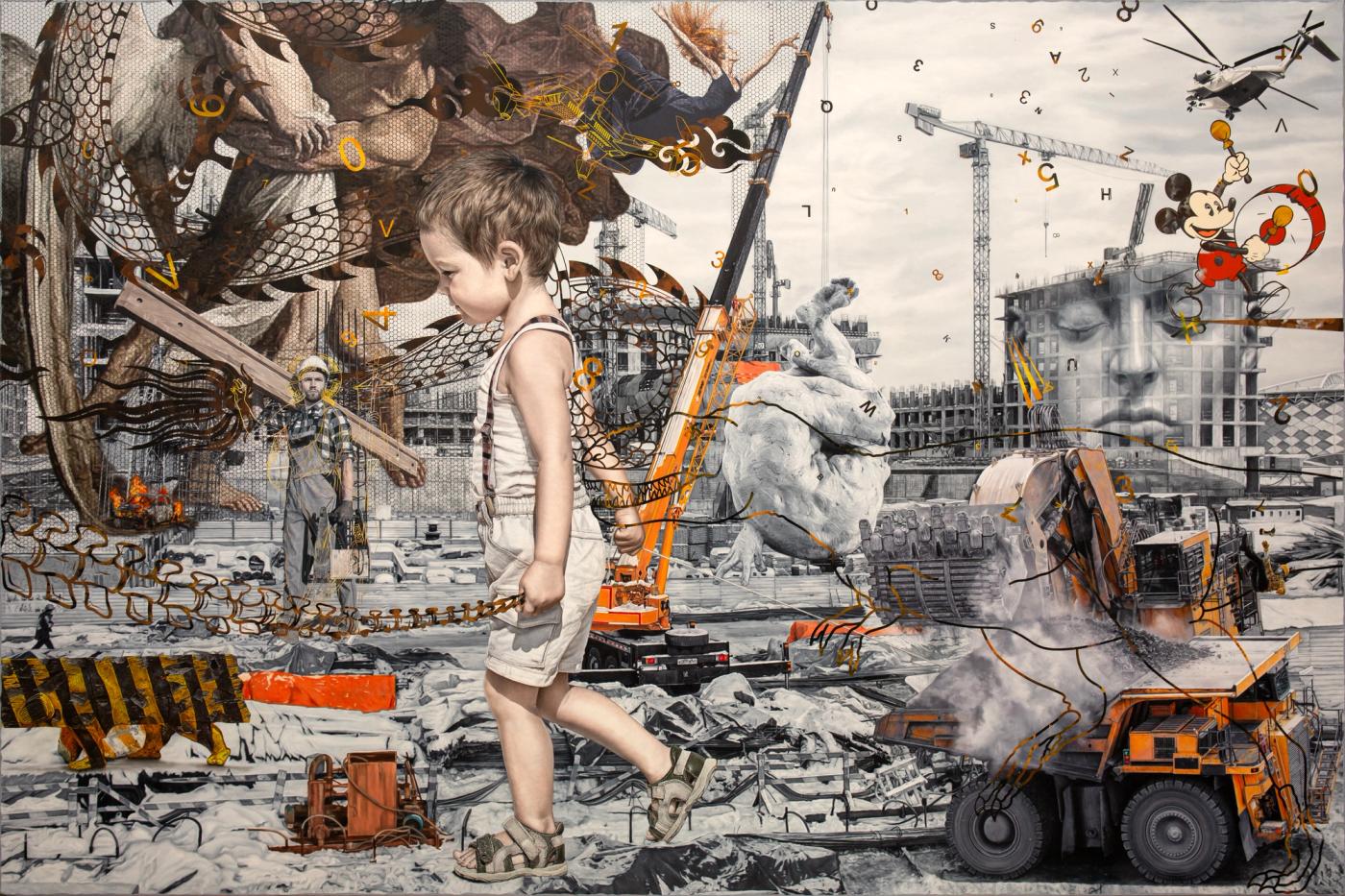
The Earth groans beneath the weight of steel and ambition as we regard this storehouse of images: Jacob wrestling with an angel; a dance of dragons and ballerinas; a boy holding the tailbone of a dinosaur; a haloed construction worker; a space shuttle jutting out from a woman’s body; a constant excavation.
In Kalupaan (Earthen), Ronald Ventura drags us—kicking, screaming, mesmerized—into a world where progress is both a spectacle and a dirge. His paintings are characterized by construction sites, the ghosts of forests and fields smothered beneath concrete, with their echoes replaced by the relentless hum of machinery. Here, the past isn’t just buried; it is obliterated, bulldozed into irrelevance. Ventura, ever the alchemist of chaos, blends hyperrealism with the grotesque, juxtaposing childhood innocence with industrial brutality, mythology with capitalist carnage. In doing so, he confronts the viewer with a crucial question: What is the true cost of transformation?
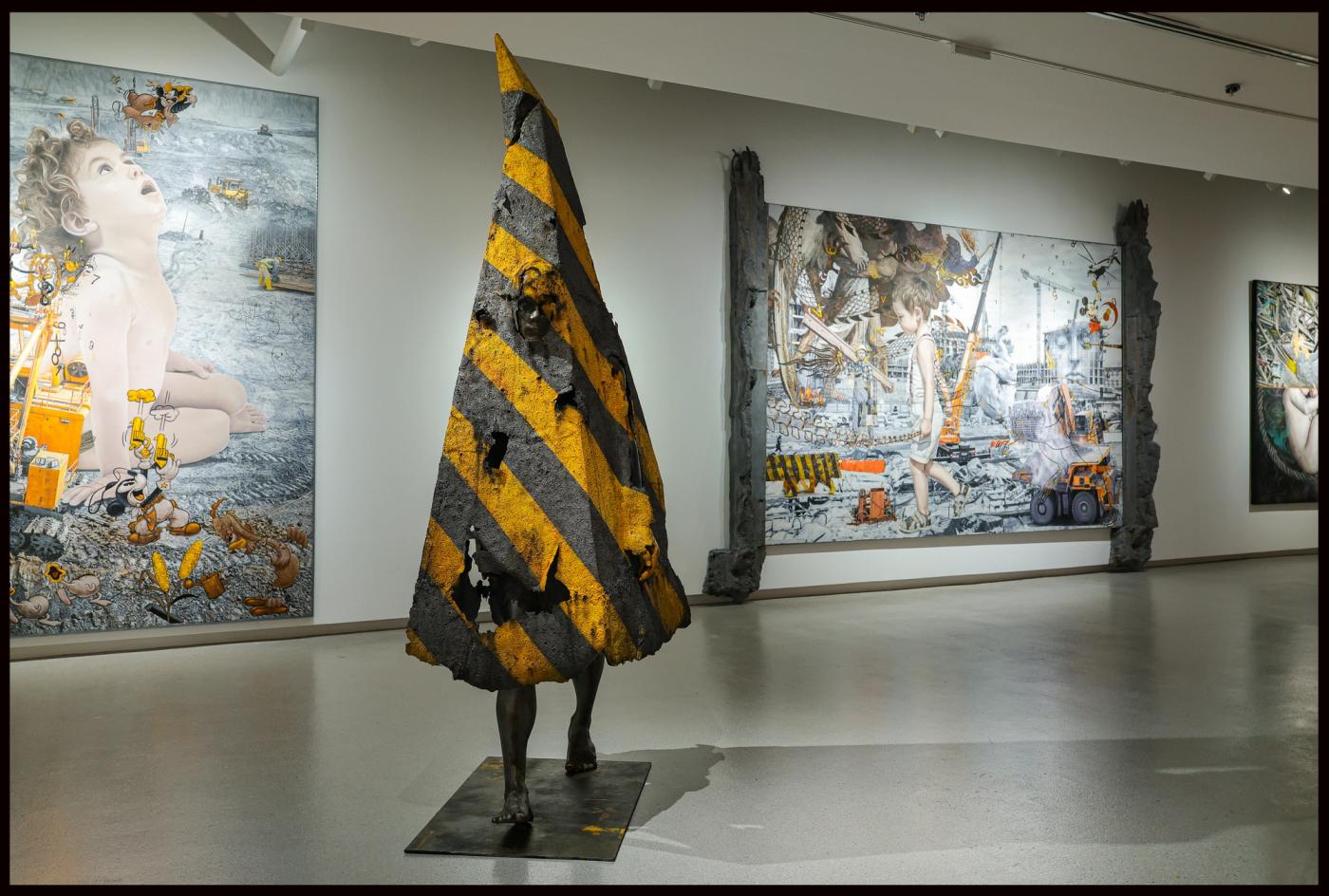
Ventura’s Kalupaan is the inaugural solo exhibition at Cloudgrey Gallery, an art space in the heart of Bonifacio Global City, seamlessly blending contemporary art, design, and culture. Nestled within the Grand Hyatt Manila Residences, the gallery is part of a unique trio alongside the Kenneth Cobonpue showroom and Fable Café + Lounge, creating an immersive experience where art and lifestyle intersect.
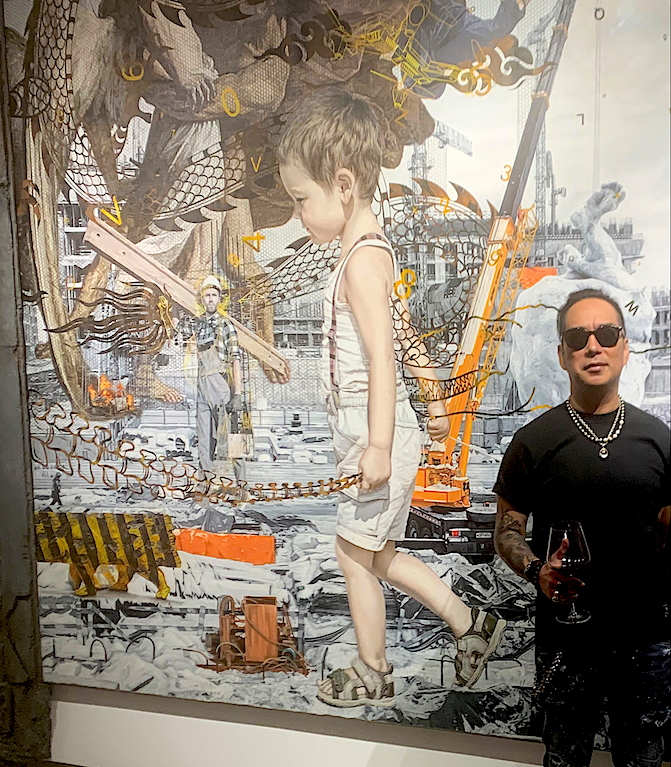
According to Cloudgrey director and curator Ruel Caasi, the gallery will showcase a thoughtfully curated selection of works from Philippine and Southeast Asian artists, highlighting both emerging talents and established voices. Caasi explains, “Each piece invites viewers to engage, reflect and connect with the region’s evolving artistic landscape. The gallery will be a space for dialogue, inspiration, and discovery.”
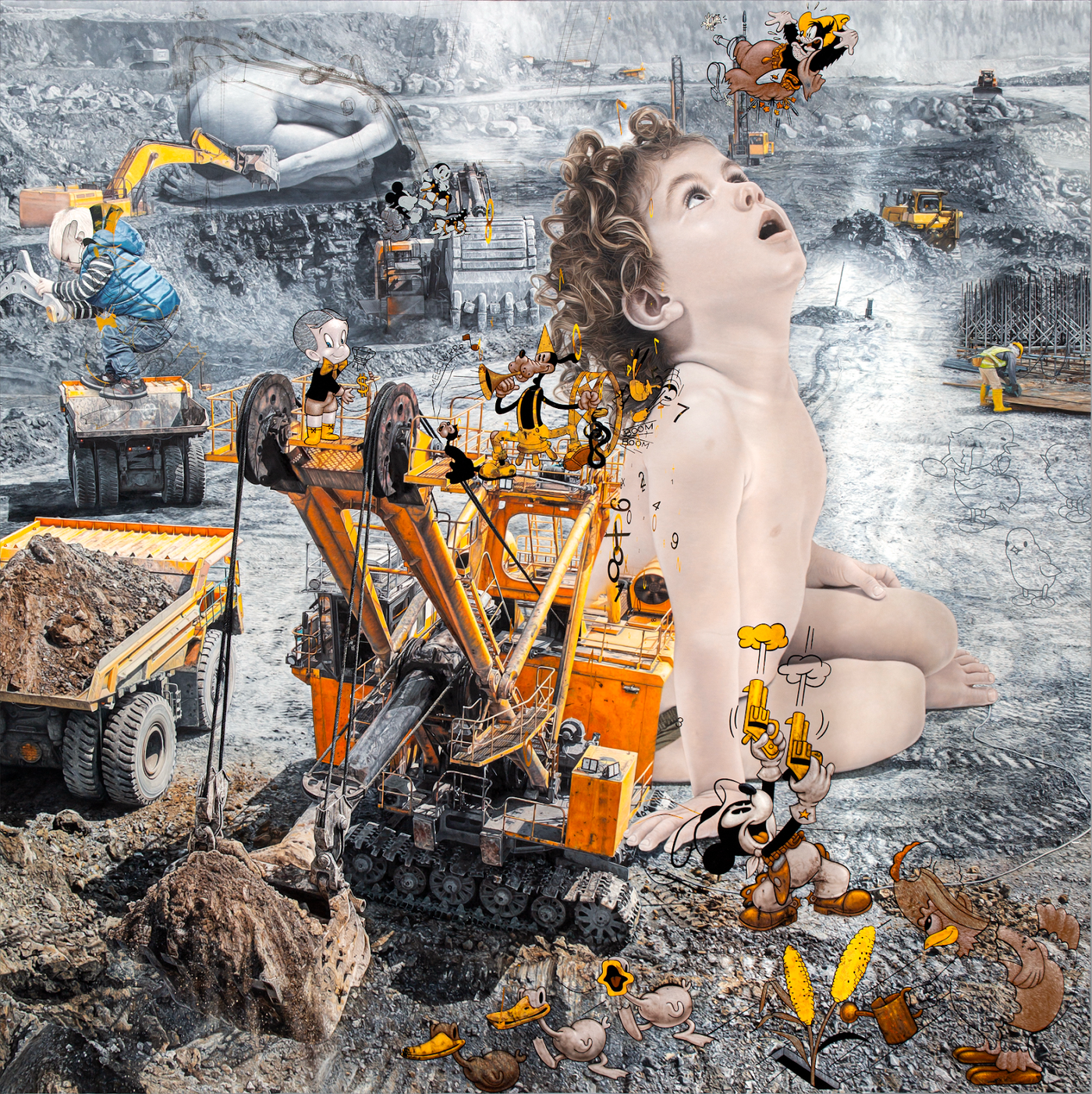
Poking out the undiscoverable is one of Ventura’s preoccupations. His latest artworks situate themselves within the chaotic landscapes of rapid urbanization—unapologetically mechanical, brutally indifferent. The grayscale backgrounds of his paintings, populated by skeletal construction sites, looming cranes, and unfinished high-rises, paint a stark portrait of progress stripped of romanticism. Yet, amid the industrial sprawl, Ventura injects bursts of color—small but potent reminders of what is being eroded. The child in the foreground of one of his most striking compositions serves as an anchor in this visual storm: a lone figure navigating a world already shaped by forces beyond his control. He is at once a bystander and a participant, bound to an inheritance of concrete and steel.
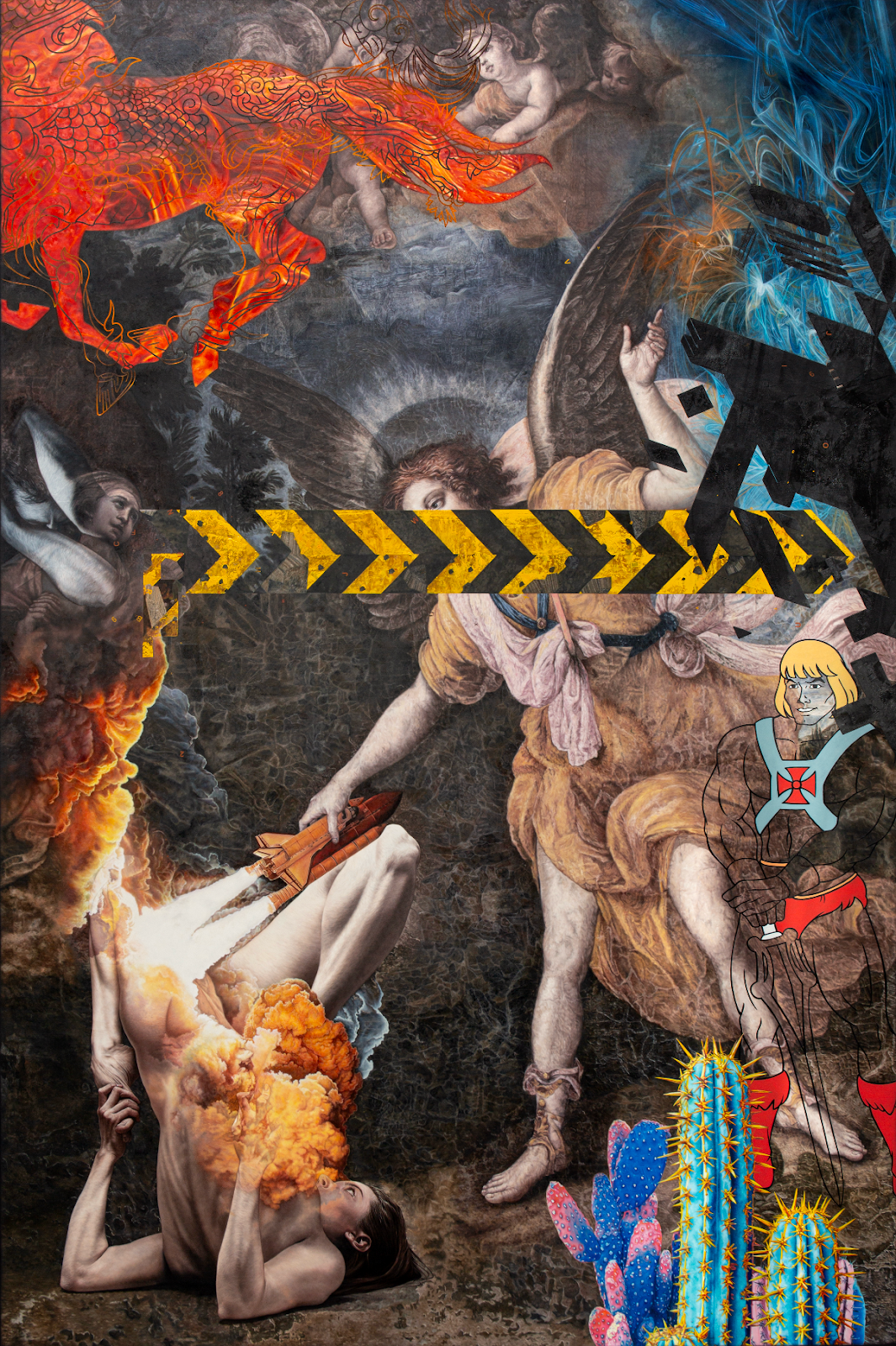
A recurring motif in Kalupaan is the figure of the construction worker, not merely as a laborer but as a reluctant martyr. The contrast is biting: In a world obsessed with growth, those who build it are often rendered invisible, their sacrifices sanctified but never truly acknowledged. Ventura’s workers exist within the wreckage of progress, both its creators and its casualties.
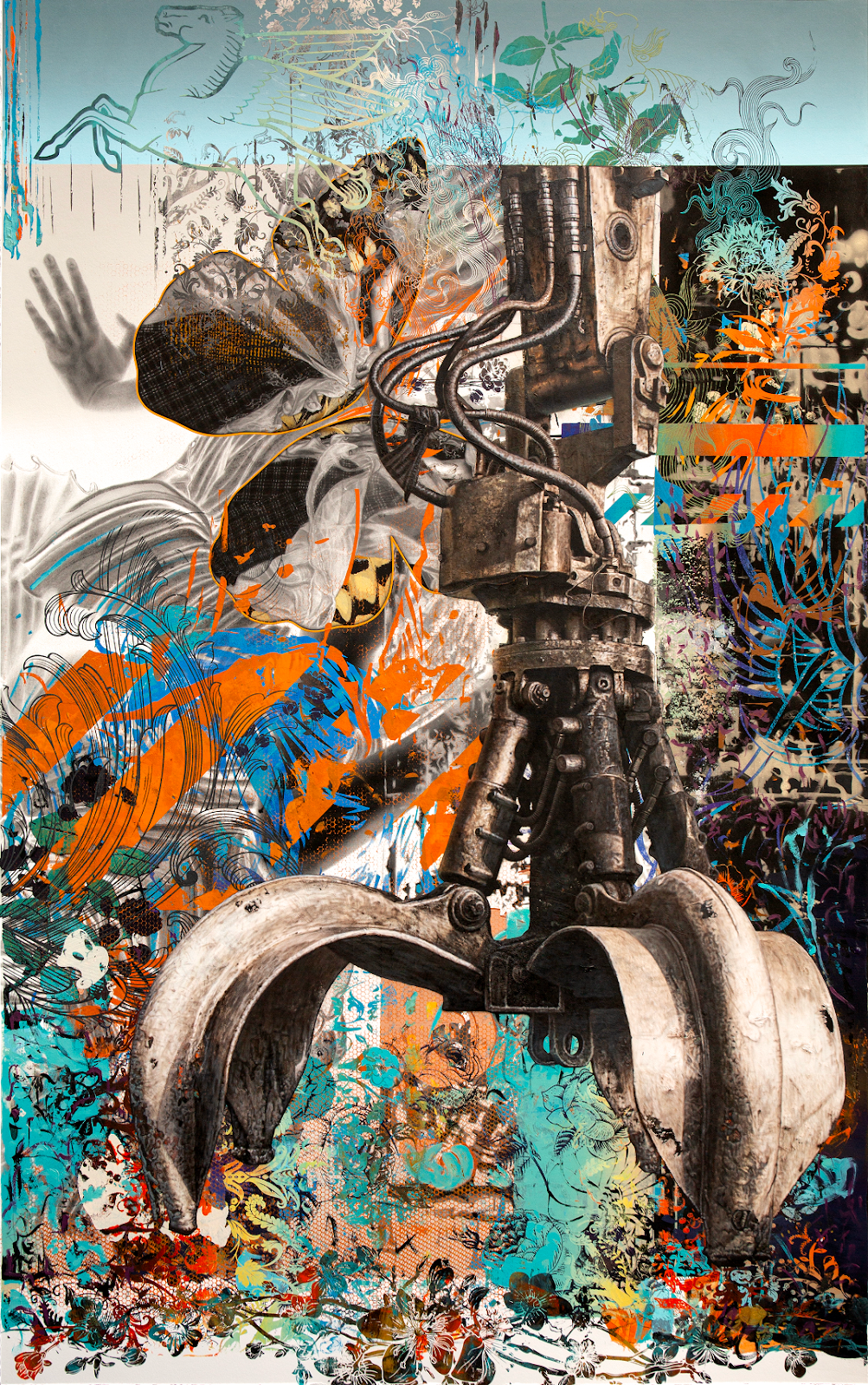
A painting titled Metal Lotus plays with irony. Ventura explains, “A lotus is usually a symbol of beauty and purity, but here, it’s metallic—mechanical, massive, and possibly destructive. The contrast raises questions about industrialization and its impact on nature.”
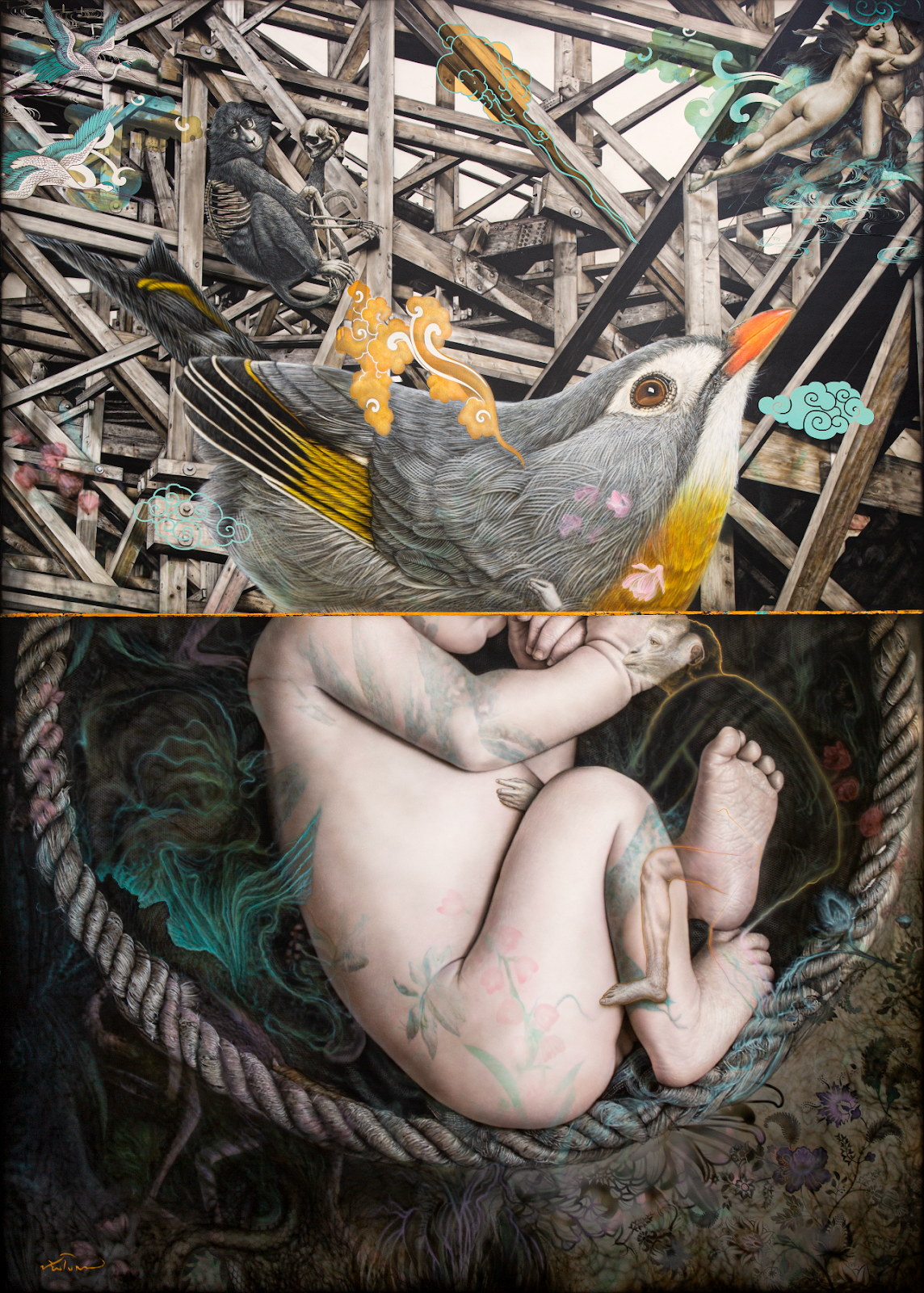
Another piece depicts a bird’s nest juxtaposed with a baby in a basket. Inspired by the story of baby Moses in his papyrus basket, perhaps? “It symbolizes incubation, construction, and the merging of nature with artificial structures,” points out the artist. “The bird appears to be in a nest, but it’s actually in a construction site, questioning the idea of home and stability.”
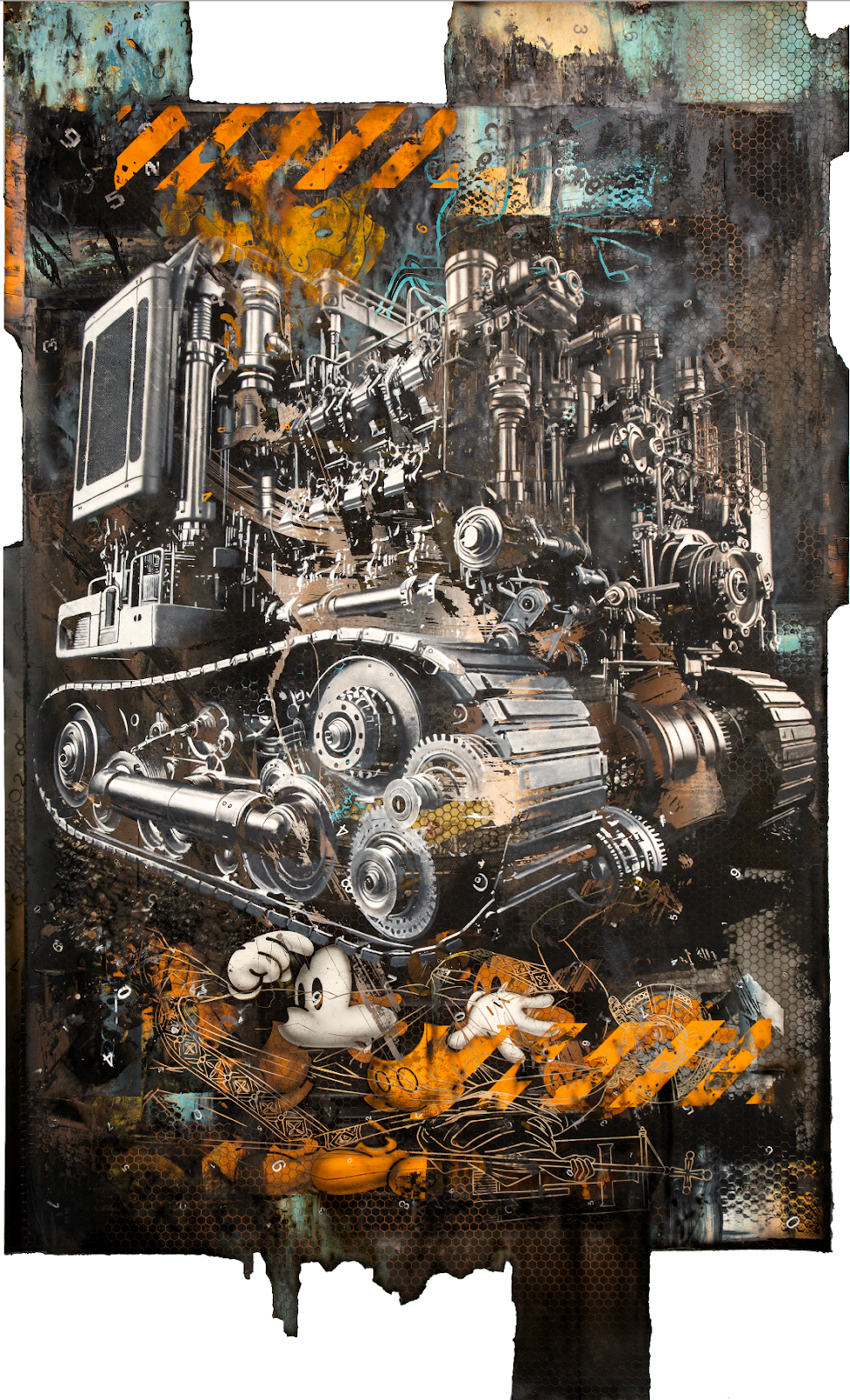
Shall we call what’s transpiring around us progress or erasure? What Ventura ultimately lays bare is the paradox of modern development. To build something new, something else must first be destroyed. Kalupaan forces its viewers to wrestle with this reality—does progress justify the erasure of the past? Can a future be truly sustainable if it is constructed upon displacement and loss? His chaotic yet masterfully composed works embody this contradiction, each layer revealing an uneasy coexistence between what is being created and what is being buried.
The most effective artists do not shove down answers, but ask unsinkable questions. Ventura does the same. His canvases are battlegrounds where history and future claw at each other, where saints wear hard hats and Mickey Mouse wades through the wreckage of civilizations. Kalupaan is a requiem for land turned into ledger entries, for childhoods traded for high-rises, for the myth of progress that demands sacrifice without consequence. The question lingers like dust in the air: When the last building stands, when the final plot of land is paved over, will we recognize the world we have built? Or will we stand among the ruins, wondering what was lost?
Cloudgrey Gallery is on the second floor of the Grand Hyatt Manila Residences in Bonifacio Global City (BGC), Taguig. For information, email info@cloudgrey.gallery or visit cloudgrey.gallery on Instagram.
A version of this story first appeared in The Philippine Star, 2025. Print edition.


