I am therefore AI: Personhood probed in Singapore Art Museum show
Imagine a blackish mirror reflecting a sky-net of electric sheep playing an imitation game soundtracked by Alphaville’s Forever Young.
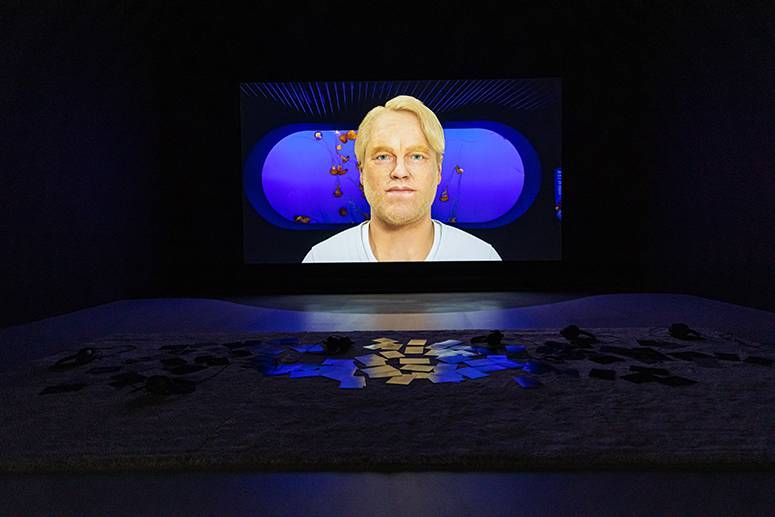
The face of Philip Seymour Hoffman jutted out on the screen, reminiscent of Marlon Brando’s Jor-El in the Superman movie: oracular yet a tad askew.
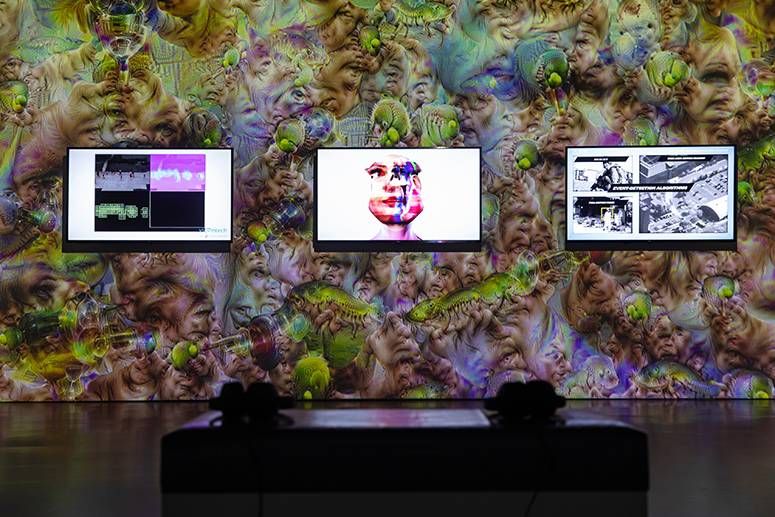
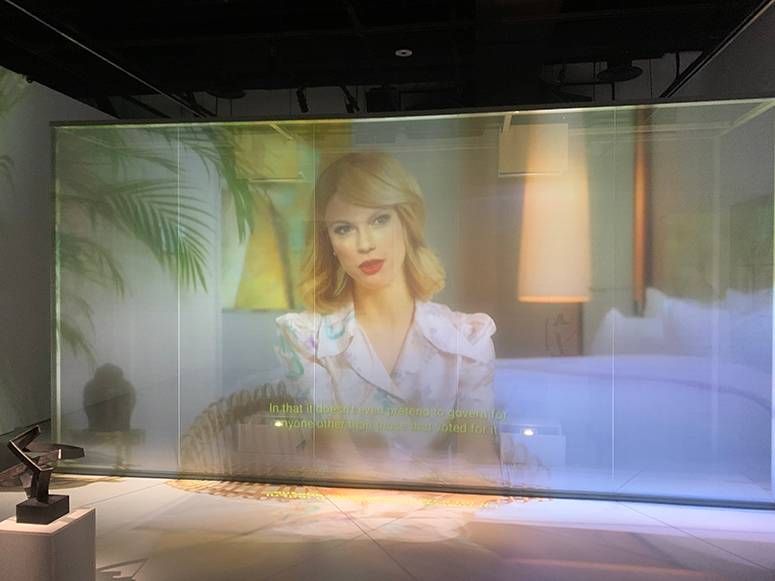
Some background: when Hoffman passed away in 2014 before completing his stint in The Hunger Games movies, he was digitally recreated to complete the actor’s unfinished scenes. However, the idea was eventually scrapped (because it reportedly creeped out the filmmaker). So, what gazed upon visitors at Singapore Art Museum (SAM)’s second installment of “Proof of Personhood” show late last year was “Phil,” a trashed avatar soliloquizing about fellow digital discards such as the Invisible Woman, a virtual popstar, and an agoraphobic YouTube celebrity, among others in an online limbo. To be or Heavensbee, that is the question. Particularly chilling was the narration of a man whose dead girlfriend still posts and sends DMs on Facebook. Poor lost technological souls all. They figure in Cécile B. Evans’s thought-provoking video installation Hyperlinks or it didn’t happen (2014). Elsewhere, Justin Bieber’s forged autographs (via an artwork by Ang Song-Ming) and deepfake Taylor Swift (from “Being Human” by Christopher Kulendran Thomas & Annika Kuhlmann) amplified the narrative about what it means to be “human” in this day and age of techno voodoo—all part of SAM’s “Proof of Personhood: Identity and Authenticity in the Face of Artificial Intelligence” exhibition.
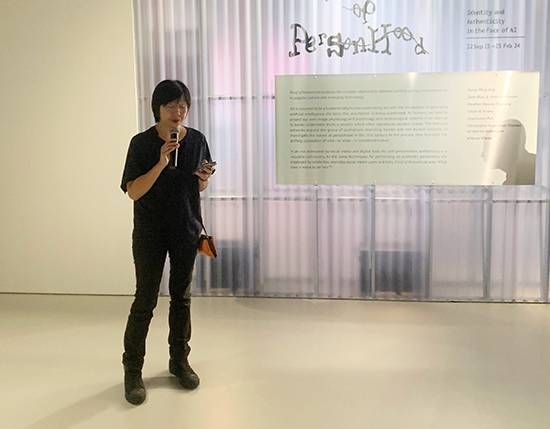
“To recall, Alan Turing introduced the Turing Test in 1950, asking the question, ‘Can machines think?’ And in 1996, Garry Kasparov won a six-game chess series against IBM’s Deep Blue supercomputer. So what now and what next? Well, artists are asking these questions and this exhibition continues this conversation,” explained June Yap, SAM director of Curatorial, Collections and Programmes.
And ingeniously at that.
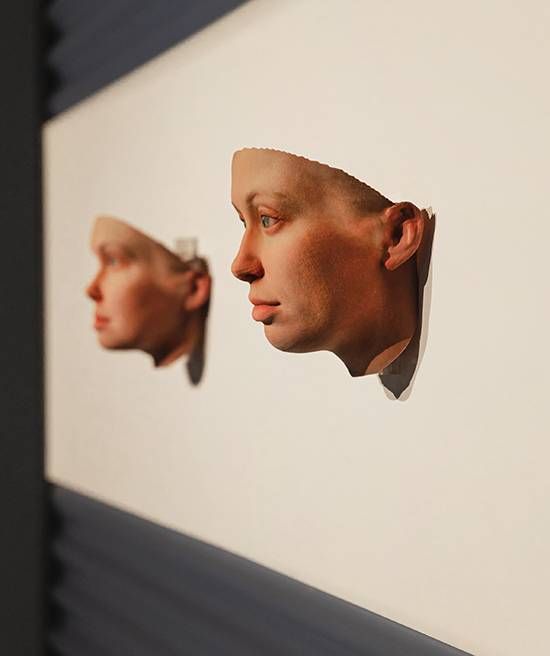
“Proof of Personhood” presents a world of chatbots, virtual assistants, AI-generated K-Pop groups, fake tunes and virtual influencers. It is a portraiture of the real merging with the synthetic, as well as a meditation on authenticity. The artists featured in the show prompt ideas about and discourse on identity, originality, agency and consciousness. Imagine a blackish mirror reflecting a sky-net of electric sheep playing an imitation game soundtracked by Alphaville’s Forever Young.
The show’s curator Duncan Bass talked about Evans’ work: “Evans got access to this digital rendering of Hoffman. Throughout the video, ‘Phil’ carries this experience of being brought into the world with a very specific purpose, in this case, to finish this film and having that opportunity taken away. Ultimately, this kind of evolves into a discourse around what it means to be alive as this non-human entity without the ability to die.”
Phil’s tragedy is that he is immortal and yet deprived of his reason for being—a topic explored by great art both then and now.
If the concept of personhood has become even more contestable or negotiable… well, art says “Hold my beer.” For art itself has branched out into stranger territories, and the mutation is not yet complete. Rightly so, for art not only reflects social and psychological currents, but foreshadows the panic of our times as well. It is not just about paintings or sculptures of cutesy, cartoonish characters with the corresponding merch. The thrust of the SAM curators is to always present challenging, boundary-blurring exhibitions, recognizing the fact that these are exciting times for art, what with more hi-tech kinds of visual aesthetics, techniques and methods now available for artists.
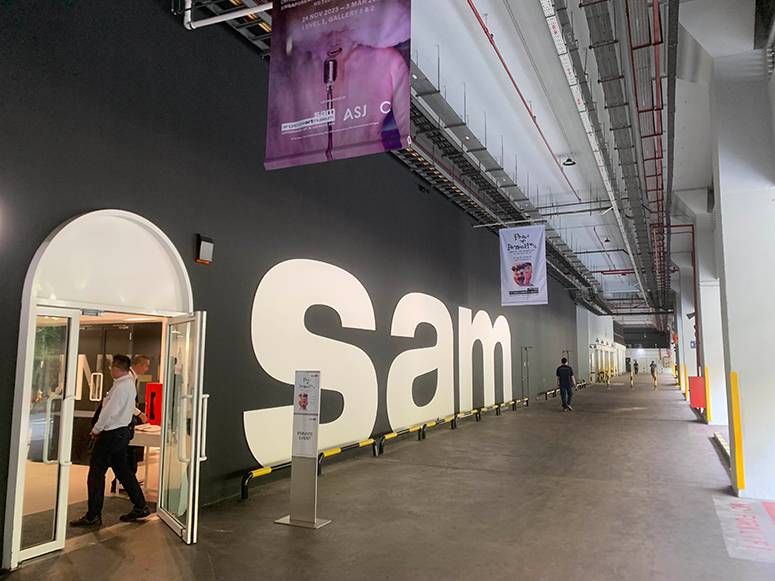
Dr. Eugene Tan—who is the director of both SAM and the National Gallery Singapore (NGS)—shared how NGS, which opened in November 2015, focuses on the art of Southeast Asia from modern to contemporary, while SAM, which opened in 1996, looks at art more internationally. The SAM buildings at Bras Basah Road and Queen Street have been closed since 2019 for redevelopment. The new space for SAM is at the Tanjong Pagar Distripark. “It’s very different from where we were,” Tan added.
“Here, we can do a lot more large-scale installations,” said Yap. “That’s a lot of flexibility for our practice, and I think our partners are trying to connect with the neighborhood as a port, with a history of shipping. I think it’s also thinking about the longer history of the museum as an evolving space.”
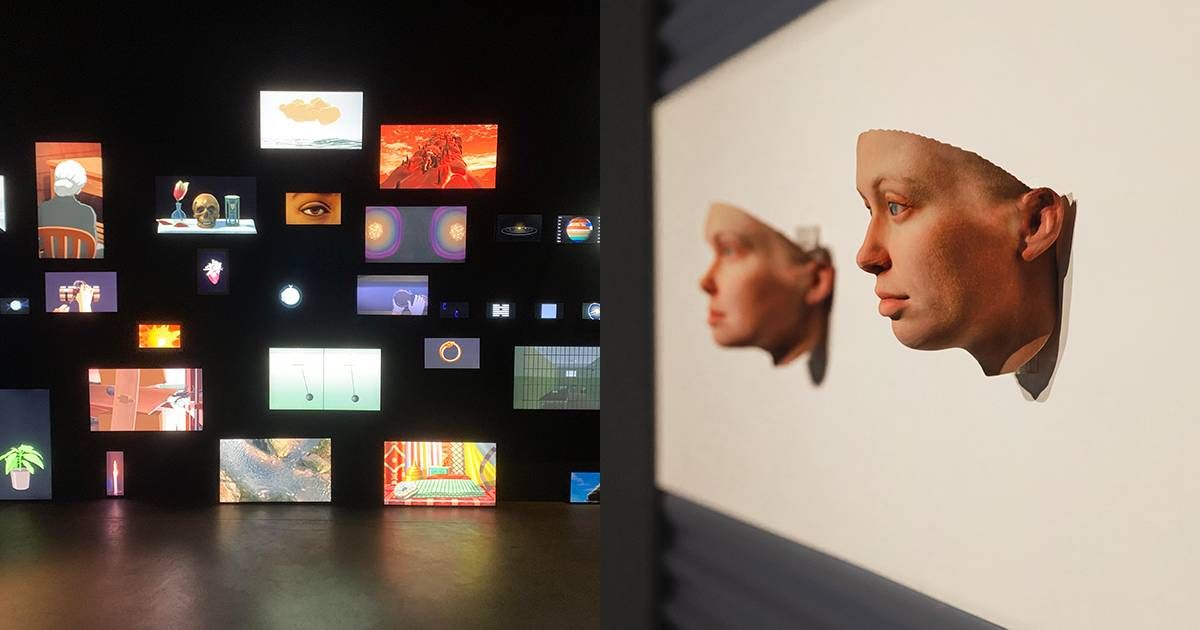
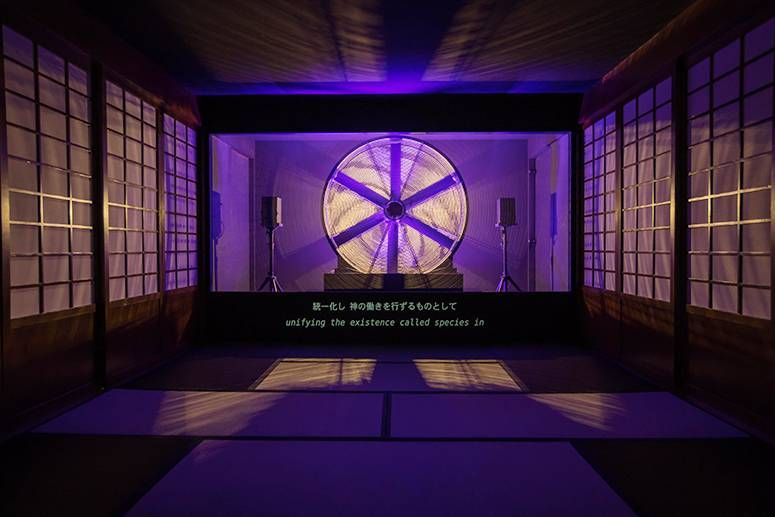
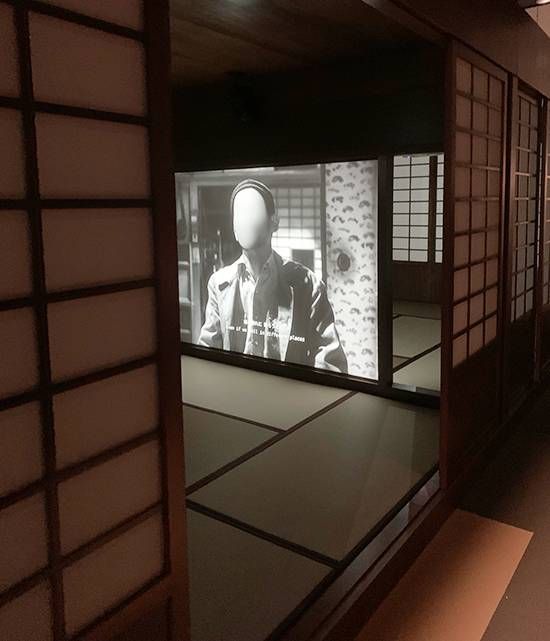
Singaporean artist Ho Tzu Nyen utilized the spaces of Galleries 1 and 2 in SAM to meditate on Time—and tigers as well.
Ho’s mid-career survey exhibition on view until March 3, co-organized by SAM and Art Sonje Center (ASJC), features eight major installations, including a new commission titled “T for Time.” The artist represented Singapore in the 54th Venice Biennale in 2011.
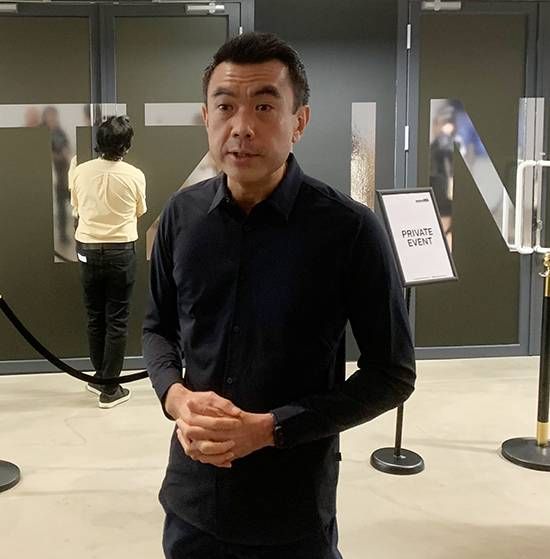
According to Tan, the lead curator for “Time & the Tiger”: “Ho Tzu Nyen’s art is emblematic of a radicalism, perpetually in motion. It sheds its skin when it needs to; it evades easy categorization and dodges classification. Yet one thing remains certain: in a time where complexity is reduced to soundbites, Ho’s art serves as a reservoir of reflection and a critique. Ho’s research and interest in the construction of history, especially within the region of Southeast Asia, is aligned with SAM’s focus on spotlighting how global and contemporary issues can be understood through a Southeast Asian perspective. We look forward to audiences immersing themselves in the worlds and narratives he has created over the past two decades.”
Tan expanded on how the artist challenges how we understand and perceive histories.
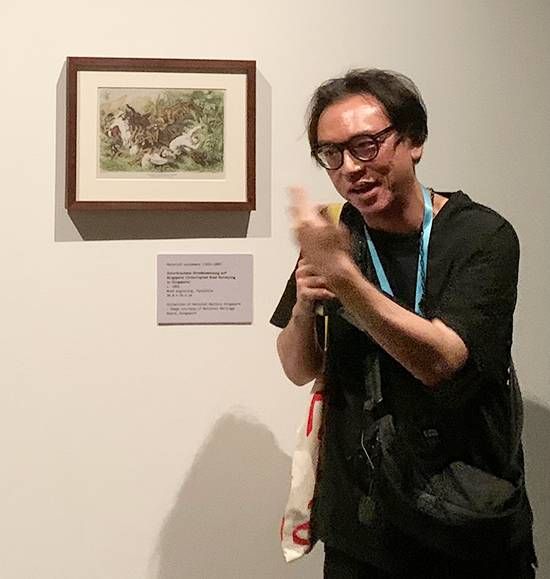
“The Cloud of Unknowing” installation looks at how artists, writers and philosophers from the East to the West represent clouds, with their ephemeral presence signifying how everything is always “on the brink of changing.” “The Nameless” is a video installation focusing on Sino-Vietnamese Lai Teck, who was a triple agent for the French, British and Japanese secret services. Cut-up scenes by the actor Tony Leung figure heavily in this work. “One or Several Tigers” traces the figure of the tiger as it appears across different histories and mythologies of Southeast Asia.
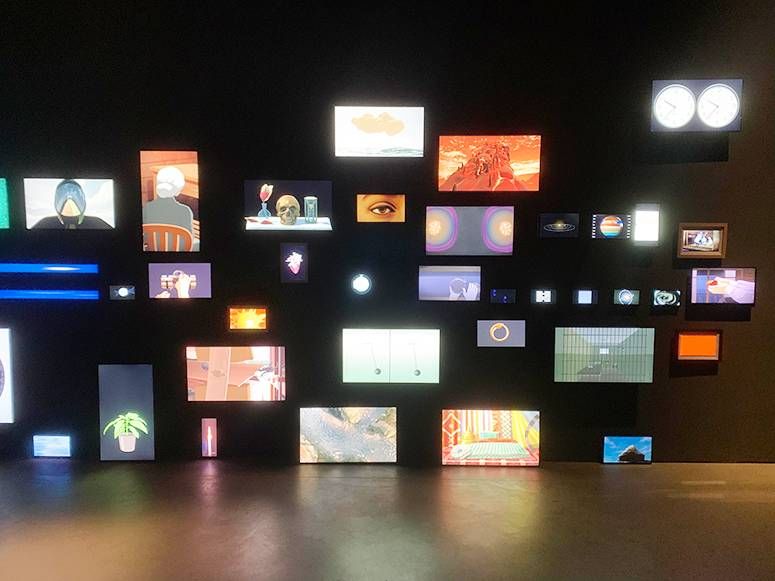
In his piece “T for Time: Timepieces”—featuring 38 flatscreens with apps and videos of various durations—Ho presents Time as the “chief protagonist” via a collection of notes and speculations on the concept itself, with the artwork encompassing a variety of themes—from symbols and concepts of time, to the histories of time-keeping traditions in Asia.
The artist asked, “What, after all, is time? We seem to be able only to describe it through metaphors—‘time flies’ or ‘time flows.’ If time is a river, what are its banks? Is there only a ‘single’ time? And, if so, is it a master clock that controls or enslaves other clocks? Or are there different temporalities, each with its own sovereignty?”
These are questions that only Art, Time and—maybe in the near future—AI could answer.
Part two of the article focuses on the “Tropical” exhibition at the National Gallery Singapore. Special thanks to Tate Anzur. Singapore Art Museum (SAM) is at 39 Keppel Road, #03-07 Tanjong Pagar Distripark, Singapore 089065. For information, visit www.singaporeartmuseum.sg.
A version of this story first appeared in The Philippine Star, 2024. Print edition.


