Who’s afraid of big, bad artificial intelligence?
Talking nicely to the chatbots in case they remember us later, and finding that the scariest thing online is still the people doing the typing.
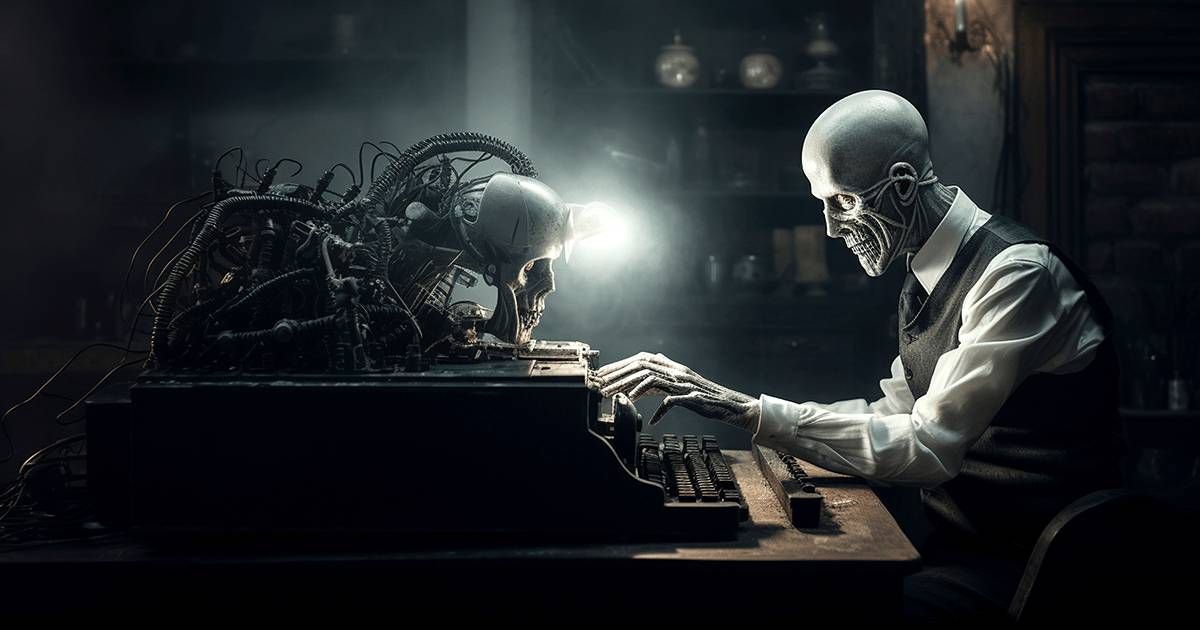
It was inevitable. When I was assigned to write an essay about artificial intelligence (AI) and appendaged issues such as design, deception and digital fakes, I did what today’s college students do when facing term-paper deadlines: I sought the counsel of ChatGPT.
I tend to talk to chatbots nicely (when all things AI eventually go Skynet upon our asses, maybe our all-powerful robotic overlords will remember how I used “please” and “thanks” on most of my prompts).
“Design and deception in the context of today’s digital landscape, particularly regarding the use of AI, are fascinating and thought-provoking subjects,” begins the chatbot. That sounds exactly like me at my “level best” stringing words together to meet the word count, or how Trump answered when questioned about carbon dioxide pipelines. (“It’s such a ridiculous situation, isn’t it?”) At this point, AI is not scarily oracular just yet. It tells us nothing new. It points out how digital fakes can be used maliciously “to spread disinformation, fake news, or defame individuals.” We also know how people filter the hell out of their profile photos on Tinder and social media. Isn’t that a form of disinformation as well? The chatbot goes on to say how some companies are using — get this — AI to “analyze patterns, inconsistencies, or artifacts that indicate manipulation” in particular images. Yes, the “good guys with AI” defense. It’s a “cat-and-mouse game,” concludes the chatbot. I never realized ChatGPT could quip.
I asked ChatGPT once if AI would eventually replace writers, musicians, and artists, rendering them (well, us) obsolete. It gave a beauty-queen response: AI is more of a complement rather than a replacement. But the cause for alarm is real and downright scary. Actress Lena Hall of Snowpiercer tweeted how the series regulars were allegedly made to undergo a full body scan and full range-of-emotion capture without the showrunners telling them what the purpose was. Hollywood studios are proposing, according to TheVerge.com, that background performers are to be scanned, get one day’s pay, and their likenesses can be used for the rest of eternity — no consent needed and no additional compensation to be given. What’s next? Actors awfully being Joan-ed in perpetuity?
Digital replicas, de-aging, over-reliance on CGI… the magic of filmmaking is taking a turn for the weird. But what presents a clear and present danger against cinema and TV may not be AI at all, but humans themselves. Any self-respecting AI platform will disavow any knowledge of having written bangers such as She-Hulk: Attorney at Law or Gotham Knights. (“This place looks like a museum had sex with a bank vault.”) Artificial Intelligence? More like genuine stupidity.
I prompted ChatGPT to write lyrics for a song about AI taking over pop culture. The result was better than the Kodak song by Pitbull or Colleen Ballinger’s “Toxic Gossip Train” ukulele ditty, but it was not How Soon Is Now? or Paranoid Android by any stretch of the imagination: “What once was art, now just a cold display/ Artificial Intelligence, our bittersweet decay,” wrote the chatbot. Obviously, as long as AI does not experience loss and heartache, it cannot outdo humans (not you, Ke$ha) in writing the best of songs.
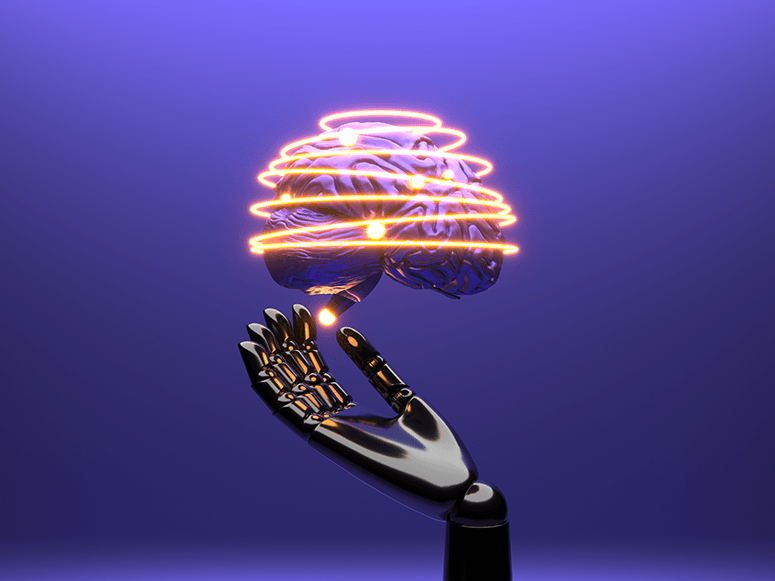
In the area of visual or graphic arts, when you look at Midjourney message boards on Discord, you can see users coming up with eye-catching prompt results (everything from awesome anime to photorealistic images), interspersed with users face-swapping themselves into Superman and Indiana Jones, or generating pictures of “Reese Witherspoon with a spoon.” (It gets tiring quickly.) A gallerist told me that during the advent of photography, many people said it would spell the death of painting. They thought wrongly. Same thing with Midjourney or Stable Diffusion. AI tools are meant to be utilized as tools.
Refik Anadol uses AI to interpret and transform the Museum of Modern Art’s data set “to create new forms could exist in the archive but don’t,” with his animation installation pondering “what a machine might dream about.” Anadol’s art materials are “collective memories, archives, light, generative AI algorithms, software, hardware, code, and sound.” Mario Klingemann pioneered work in the field of neural networks, computer learning, and AI. His grotesque “neurographs” are arrived at through a Tinder-like voting system. Anna Ridler came up with “Drawing Sound,” a durational performance project which turns the act of drawing into a musical instrument with the help of a machine learning program. Memo Akten calls himself a “curious philomath and AI whisperer.” Robbie Barrat’s AI-generated nudes were the results from a machine that “failed to learn all of the proper attributes found in nude portraits” and instead churned out “surreal blobs of flesh.” This posed an interesting question: “Is that how machines see people?”
It’s like the Wild, Wild Westworld out there. Much to explore with AI — rather than artists lazily sitting on their asses and having their assistants paint socialites with flowers and butterflies on their giant faces.
How about in terms of spreading fake news and disinformation? I’m afraid that ship has sailed. People will tear out entire chapters in history books (“chismis” lang daw kasi) and believe alternate realities. Fascists are burning books in America (can burning people be far behind?); quoting Hitler (search for Moms for Liberty or the “Minivan Taliban”); electing Bobo, Large Marge and “Kitara”; and going full Handmaid’s Tale. All it took was Lee Greenwood to wake Cthulhu up.
The dangers posed by digital fakes are legion, but people will believe what they want to believe. CNN was able to obtain audio evidence of Donald Trump bragging to his sycophants about possessing classified documents. Tapes, photos and testimonies have been disseminated by the media, but the MAGA faithful promptly turned a blind eye. They, however, will readily believe how global elites are harvesting adrenochrome from kidnapped children to ingest as an elixir of youth.
AI does not have the power to make this sh*t up.
We are living in the most terrible of timelines. Here in our country, we rage against issue after issue (the bouts of ranting are sustained for a month or so), and then get sidetracked by the latest TikTok trend or news that Manila will not be part of the Eras Tour. Meanwhile, the dams are drying up, the streets are flooded, and the prices of goods are skyrocketing. We can’t even watch the collapse of civilization in real time, because our Internet is too slow. But the good news is, PAGCOR has a new and exciting logo. Damn right not made by AI, according to AI.
No, artificial intelligence will not destroy the world.
A version of this story first appeared in The Philippine Star, 2023.


