Moving in Stereo: Why do audio fools fall in love?
Soundproofing is not acoustic treatment, the way Ryan Adams is not Bryan Adams. The never-ending build of a listening room, failing better.
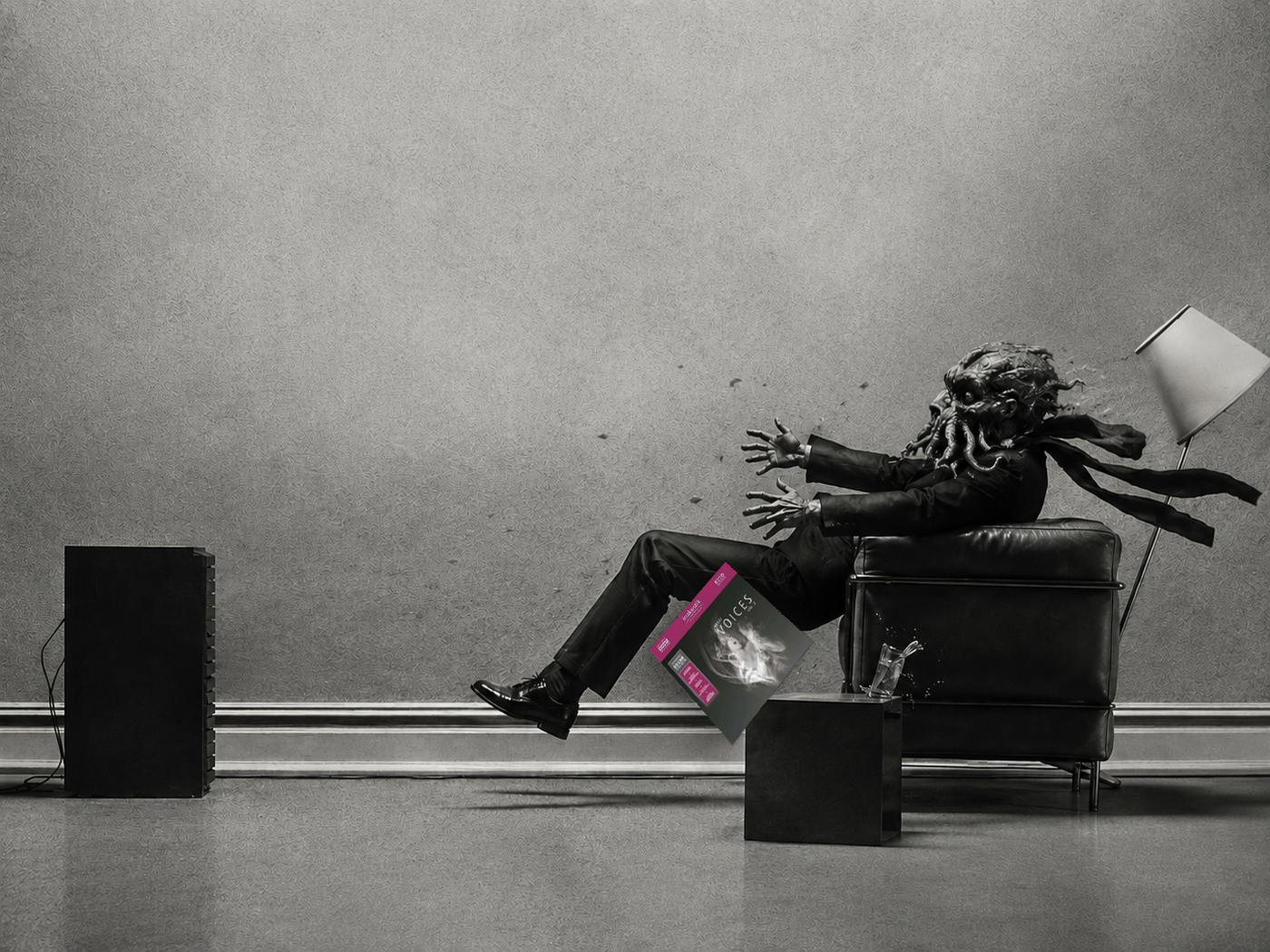
It’s like comparing Ryan Adams to Bryan Adams. Soundproofing differs from acoustic treatment in a listening room.
Soundproofing is what’s needed when you have an old, balding neighbor who works in one of those government regulatory offices who has a predilection for KTV sessions (for all occasions, even wakes), belting out performance levels of Dying Inside or 25 Minutes. Those 25 inescapable minutes would seem like an eternity, with his gargling, preening vocal-work rattling inside your skull like loose change till kingdom come. Soundproofing, if done right, will block baldie’s vocals.
On the other hand, installing acoustic treatment (bought or DIY’ed) allows you to enjoy your sound system in the best way possible. Acoustic treatment is about optimizing the sound within your own listening space. It involves strategically placing materials like absorbers, diffusers and bass traps to enhance the acoustics for a more enjoyable audio experience. This ensures that when you’re immersed in your favorite vinyl record (“Led Zeppelin II” mastered by Robert Ludwig), every note and nuance is clear and balanced, free from unwanted echoes or distortions, with every piece of sonic lemon squeezed till the juice runs down. You could still hear Right Said Fred and his Carpenter wife (Sabrina, not Karen) caterwauling nearby, but your own music is so damn good and loud to make you give a flying toss.
When I started my audio journey, I had to do lots of research and rely on friends who share the same hobby such as Leonard Co, Tony Rodriguez, Wendell Rupert Alinea, and my brother Dennis. Audio groups on Facebook are helpful — although you have to wade through the sludge of “now playing” posts, most of which brandish obligatory “Female Audiophile Voices” records; lyrics; or some copy-paste captions from Wikipedia. (“The Beatles were an English rock band formed in Liverpool…”) Thanks, Boomers. And there is always this one bloke who comments, “Let the music play,” or “It’s all about the music.”
I characterize those years before I was able to buy my first set of aspirational audio components as the dark ages; being able to listen to a Marantz monster receiver or Fisher valve amplifier, vintage JBL standmounts, an SL1200 with an Ortofon Black cartridge was like ushering in an age of enlightenment.
You get to hear music as intended during recording sessions. Each instrument is accurately positioned. (The guitar solos of Paul, George and John in The Beatles’ The End emanate, respectively, from the left to the right to the phantom center speaker.) The size of the mouth of the singer is human, dead center. (I once heard Dominique Fils-Aimé’s Birds in someone else’s music room and you’d think it was Victor Wembanyama crooning.) The low-end is tight, fluid, with depth and extension. (Jaco, Stanley, Jonesy, Geddy… their bass should sound almost palpable.) The dynamic range is wide. (Refrain from listening to stereo where everything sounds loud, compressed, and magnetically dead as in “Death Magnetic.”) Overall, the entire experience should be non-fatiguing, magical.
This journey toward audio nirvana is filled with the slings and arrows of outrageous expenses and changing tastes. In one moment, I was satisfied with the aggressive JBLs; in the next, I hankered for the more laid-back Tannoys. Now, my mainstays are the Rogers LS3/5a, which are iconic bookshelves developed for the British Broadcasting Corp. (BBC) in the ’70s. These are speakers that excel in midrange clarity and detail, providing an accurate representation of vocals (realistic, almost holographic) as well as acoustic instruments.
When I first got them, the woofer of one speaker was not functioning, so I contacted a repairman with a promising alias: “Sound Pathologist” or something. Annoyingly, he offered to buy the pair off me for “less than P10k,” since he described my Rogers as defective and already “phased out.” What a quack! With the help of my friend Wendell, I was able to get the speakers repaired, reconditioned, and now — oh, Doctor, my ears! — they sound glorious. I haven’t really played Mastodon or Lamb of God with those bad boys, but the Atlantic 75th Anniversary Series records by Analogue Productions (CSN, STP) sound so bloody good.
But good gear is not enough. The listening room itself is crucial, an essential component. Even not-so-expensive equipment (like my stereo system) will sound good in an acoustically treated space. Thankfully, my girlfriend tolerates how the space has been transformed into something that resembles a recording studio with an arsenal of acoustic panels, practically uninhabitable.
My latest purchase is a pair of diffusers inspired by the Acoustic Grove System (AGS) freestanding tuning units from Japan. It is said that the inside of a forest is “an ideal acoustic space where a range of trees brings out a crisp, clear and rich sound-space — from low to high frequencies.” Hmmm, imagine hearing the ethereal voice of Diamanda Galás in the middle of a dark, moonlit forest.
Nelson de Leon of Truwave Acoustics, who understands my audio maladies, agreed to make a similar pair for me. He explained, “(When you put them in your listening room,) the soundstage should be wider when placed on first reflection points on the side walls. Now, ‘wider’ is not necessarily better. Depends on the overall image, its size, as well as if your speakers are warm-sounding or not.”
The man truly understands audio. He gets lunatics like me who obsess over hearing the sound of horse-drawn sleigh going from far left to far right in Roger Waters’ Too Much Rope, to be followed by a speeding Ferrari going in the opposite direction. Listening to “Amused To Death” or Moving In Stereo on Bluetooth speakers is off the table. For me, it’s come hell or hi-fidelity.
When Nelson had the diffusers delivered, I went to work right away. I took away the absorbers (also made by Truwave) and replaced them with the new, well-crafted free-standers made of wood and black paper core. Tied the room together.
There I sat, staring at my Roon streaming queue of Steven Wilson and Robert Smith, surrounded by a leaf storm of immersive sound. Lost in a forest. Until the insistent lamentations of “Larawang Kupas” drifting from the neighbor’s house shattered the sweetest of illusions.
For information on Truwave Acoustics, visit truwaveacoustics.com, email info@truwaveacoustics.com, call or SMS (+63)9176262588 / (+63)9688807686.
A version of this story first appeared in The Philippine Star, 2024.


