Yamazato: Hotel Okura Manila’s space for delicious rituals
Yamazato offers something more than just a meal. It serves time itself, delicately sliced and artfully arranged, to be held with care and chopsticks.
You know it’s a different kind of restaurant when you walk inside and the outside world collapses. You are transported away from Manila’s frantic chaos and that ever-present grayness, and your surroundings dissolve into warm wood tones, soft light and the disciplined stillness of a sushi counter where knives glint gracefully against fish. There’s something ritualistic in the air—like a sacred tea ceremony or that balletic duel with chopsticks to get to that last bit of holdover morsel.
We are at Yamazato in Hotel Okura Manila. (The royal “we” meaning all three of us: yours unruly, Avee T. the photographer, and Julius the abstractionist, a fan of all things Nippon.) Our friends at Megaworld and Newport World Resorts have pulled out all the stops to ensure that we experience Yamazato in all its fiery glory and ocean freshness with all three Yamazato chefs taking part in preparing the menu.
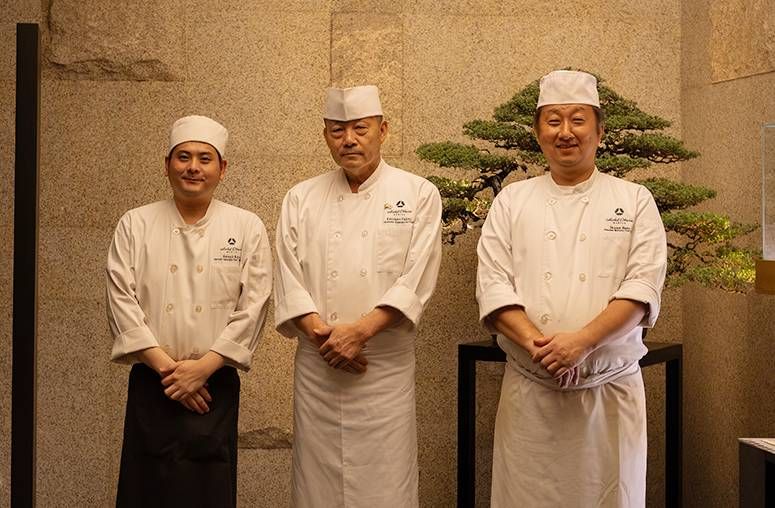
At the counter, specialty sushi chef Ikuma Sato stands with quiet authority, his hands moving with the precision of a calligrapher. “So today,” someone asks, “where is the fish from?”
“From Kumamoto Prefecture, Kyushu Island.”
The answer is simple, but the story it holds is vast: early morning markets, the frantic energy of fish auctions, the silent transactions of seafood flown across the seas. Here at Yamazato, Sato’s sushi is a meditation on that journey—where a single piece of toro is less about indulgence and more about what an artisan can conjure with the watery harvest.
And then there’s the fire.
At the teppanyaki counter, specialty teppan chef Katsuji Kato prepares for battle. Avee T. has a shot of chef Kato just as fire engulfs the Wagyu and we hear the hiss, smell the sizzle, and see the chef’s face beaming through the blaze. His blade then glints under the warm lights, slicing through thick cuts of beef with the confidence of a man who knows the exact moment fat will surrender to flame. He has done this countless times. We are told that Kato-san is the quietest of the three, but with his knife, he speaks through steel. The result is a saucerful of sorcery: how soft and juicy the cuts of steak are, disappearing swiftly like Daredevil from our plates.
And presiding over it all, like a shogun surveying his domain, is executive chef Keiichiro Fujino. Decades of experience weigh in his voice — years spent crafting kaiseki meals for diplomats, mastering the art of sequencing flavors, balancing salt and sweetness, texture and temperature, indulgence and restraint. The push and pull of it all. “Kaiseki is about timing,” he would say in effect. “You have to listen to the seasons.”
Trust the Japanese on this: there is no greater wonder than tasting the ephemeral.
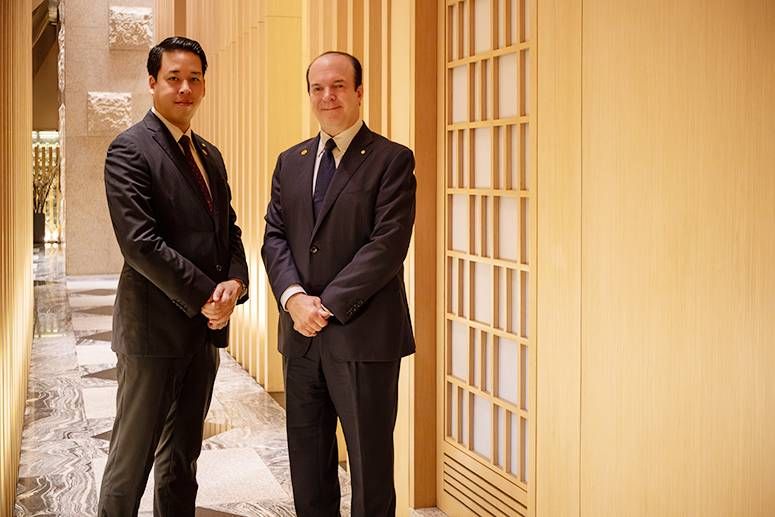
“Our strength is that we have three chefs,” explains Yoki Takeuchi, Hotel Okura Manila director of restaurants. “If there was only one Japanese chef, everything would be inspired by that person. But with three, we can collaborate and gather each of their skills.” Like culinary Avengers assembling.
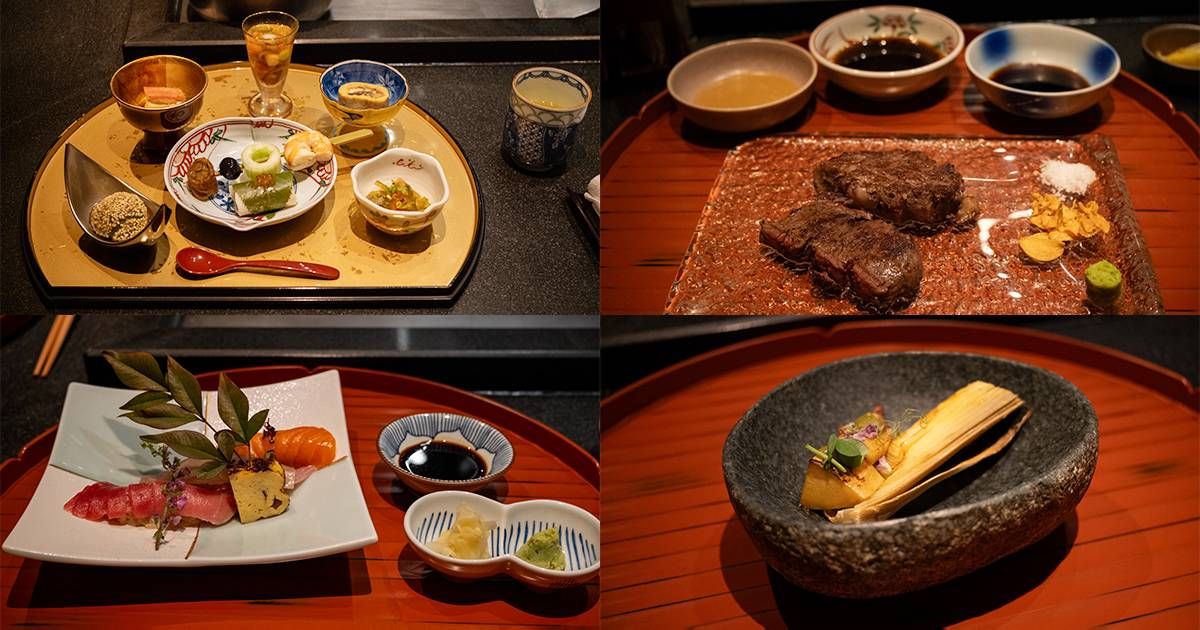
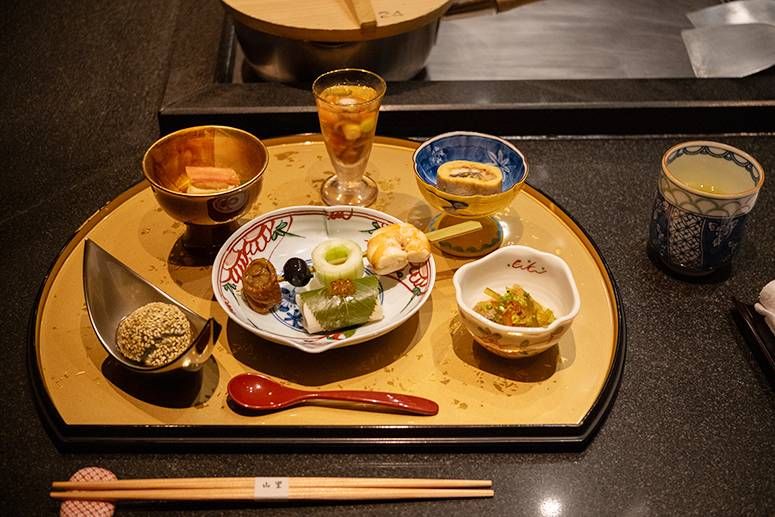
This is why what we are having—the Special Collaboration Kaiseki menu—feels layered, nuanced. It begins with some Spring-inspired appetizers. One component is a bite of grilled goma dofu (sesame tofu) with sea urchin sauce and a hint of brandy. “All Yamazato restaurants serve this,” chef Fujino mentions. “It is our signature.” We also partake of umaki (Japanese rolled omelet with unagi, or eel); Japanese oysters from Hiroshima flavored with curry; and skewers with anago (saltwater eel), olive and cucumber.
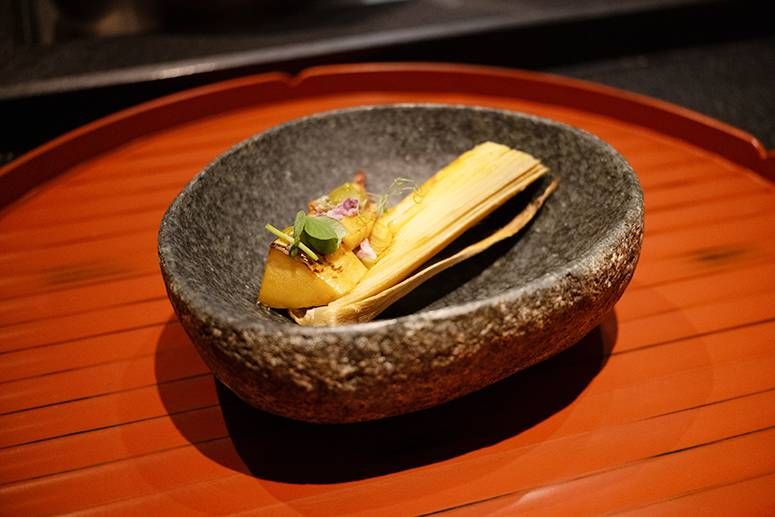
What follows are some sautéed seasonal Japanese bamboo shoots. I think there are parts here purely for artful effect, but I wolf it down, anyway.
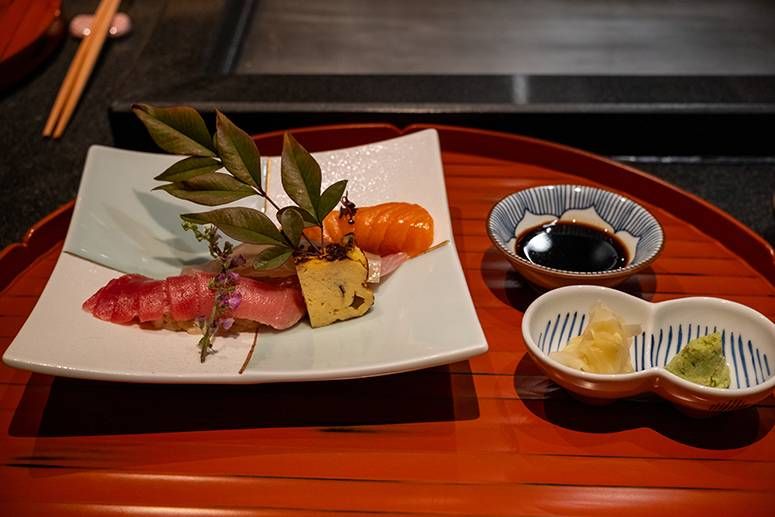
Then come the three-kinds-of-seasonal-sushi platter, including chutoro (medium-fatty tuna), shima-aji (striped jack), and salmon, crafted by chef Sato. I think no two nights at Yamazato are ever the same; what arrives on your plate is dictated by the tides, the migrations of fish, the temperature of distant waters. And what is even greater about all this is we get to watch the masters at work.
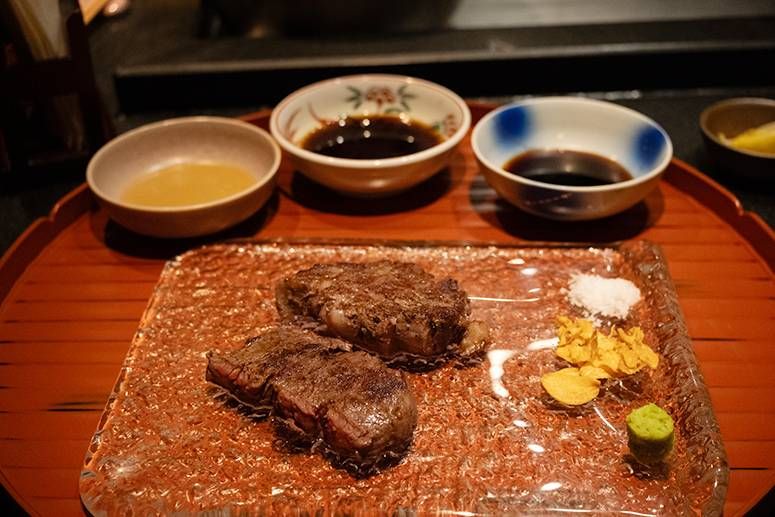
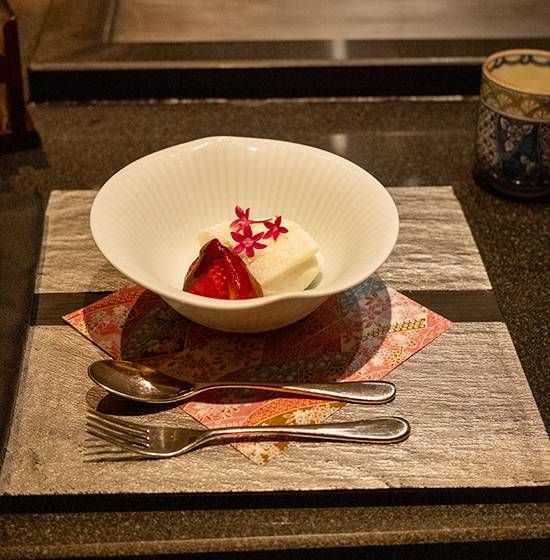
And then, the finale—teppanyaki, where heat, speed and chef Kato take over. Wagyu tobanyaki, grilled beef on ceramic, with a sauce based on beef stock and soy. “Toban means ceramic,” the chef explains. “Yaki means grilled.” Simple words, but the dish itself is complex—marbled F1 tenderloin cooked with care and precision, with a hint of umami lingering on the tongue. Accompanying the main dish was a serving of garlic rice and miso soup. How do you say, “Bitin!” in Japanese? The meal concluded with a dessert of vanilla ice cream with mochi and fruits, offering a sweet and refreshing finish to the kaiseki experience.
But Yamazato is more than just food.
The space itself is a paradox—minimalist yet intricate, serene yet alive. The sushi counter, designed to resemble Japan’s local sushi shops, is intentionally simple. “They want people to focus more on the food,” someone says, “more than the place.”
Yet, every detail in the restaurant is deliberate. The paper designs on the walls? Inspired by Japanese plum flowers. The wood, stone accents, the shoji screens—each element is a reminder that in Japan, beauty is often found in restraint.
Even the clientele tells a story. This is where corporate titans from the automotive industry come to discuss million-dollar deals over plates of uni.
“They know what to expect from Hotel Okura,” says Jan William Marshall, GM of Hotel Okura Manila. “It’s not just about the food—it’s about the standard.”
That standard has been set since the early Sixties by the flagship restaurant in Hotel Okura Tokyo, which is in the Toranomon area, across from the US Embassy. Marshall explains how that legacy extends beyond Japan.
“We were the first traditional Japanese restaurant to get a Michelin star in Europe. It’s in our hotel, Hotel Okura Amsterdam.” The space, with a magnificent Japanese garden and pond, has the same transformative power as well with kimono-clad servers pouring every drink meditatively. “That restaurant is still operating today, and, kind of similar to us, has a teppanyaki, sushi and main dining area. But (here in Manila) we also have shabu-shabu.”
Yamazato at Newport World Resorts continues this tradition of fine dining. “I don’t think there’s any hotel or restaurant in the Philippines that features three Japanese chefs.” And while some restaurants tweak their recipes to cater to local tastes, Yamazato remains true to its heritage.
“A lot of our customers—Filipinos, Koreans, Chinese, whatever nationality—understand that we try to do what we can for the local market. But we are fairly consistent with keeping the high standards of more traditional Japanese fine dining.” The word elevated aptly describes the experience.
What does he order when he visits Yamazato? “The tamago is very good, all the noodles are good. Any sushi is good. Everything’s good. Honestly, everything is good.”
We wholeheartedly agree while nursing our second Asahi Dry and imagining there’s a Tokyu Hands or Disk Union store just outside these doors.
There is a moment—maybe at the sushi counter, maybe as the Wagyu crackles over the flames—where you realize this is more than just a meal. It is a ritual, a lesson in precision, a confrontation with something ancient and exacting.
A session at Yamazato does not end when you leave the restaurant. You finally understand how nature, the tides and the seasons play a major part in the quality of ingredients; how impermanence is in itself a delicacy; and how—in the hands of masters—food becomes more than just food.
It may have been said before, but Yamazato offers something more than just a meal—it serves time itself, delicately sliced and artfully arranged, to be held with care and chopsticks.
A version of this story first appeared in The Philippine Star, 2025. Print edition.


